Bathroom Exhaust Fan Installation in New York
A fan that hums and moves no air is a mildew problem in waiting. We replace dead and noisy fans, add one where the room never had it, and make sure the air actually leaves the building.
- Calls answered 24/7
- Sized to the room
- Vented outdoors, never into the ceiling

- Airflow check on the old fan and duct
- Fan sized to the room and wired to the right control
- Discharge point confirmed before we close up
A bathroom exhaust fan in New York should move about 1 CFM per square foot of floor, so a 50 square foot bath needs roughly 50 CFM, and it must discharge outdoors or into an approved shaft. A straight replacement is usually a same-visit job; a new fan needs a new duct path.
Rather ask a person?(929) 755-0293What a bathroom fan job really involves
The fan is the easy part. What keeps the room dry is the duct behind it: how long it runs, how many bends it takes and where it ends. A strong fan pushing through crushed flex duct into a closed ceiling does less than a modest one on a short, straight run outside.
So we check the path first. Many apartment bathrooms tie into a shared shaft or riser with a roof fan, and the building decides what may connect to it; houses usually run through the joists to a wall or roof cap. Then the wiring: a switch, timer or humidity control, and a unit rated for the spot if it sits over the tub. If the bathroom still lacks GFCI outlets near the sink, we mention it while the plates are off.
Updated September 2026
What changes the price of a fan job
Two fan jobs that look alike can differ by an afternoon of labor.
- Existing duct or new routeReusing a sound duct is quick; a new path through joists or masonry is where the hours go.
- Housing sizeA retrofit that fits the old opening avoids patching the ceiling.
- Power at the locationThe existing light circuit is simple; a new circuit or a pulled neutral adds work.
- ControlsSwitch, timer, humidity sensor or fan-light combo each change the parts list.
- AccessA top floor with roof access beats a finished ceiling between two occupied units.
Swapping the fan yourself versus calling us
| Task | Doing it yourself | With us |
|---|---|---|
| Matching the housing | Easy if the model is still sold | Retrofit kit or new housing, ceiling patched |
| Checking the duct | Usually skipped, so the mirror still fogs | Airflow and discharge confirmed |
| Over a tub or shower | Easy to buy a unit not rated for it | Rated unit, protected as the maker requires |
| Adding a circuit | Needs a licensed electrician and a city permit | Filed and inspected where required |
A motor swap with the breaker off suits a careful homeowner; new ducts, circuits and fans over the tub are where mistakes hide.
Three versions of the fan job
Replacing a Noisy or Dead Fan
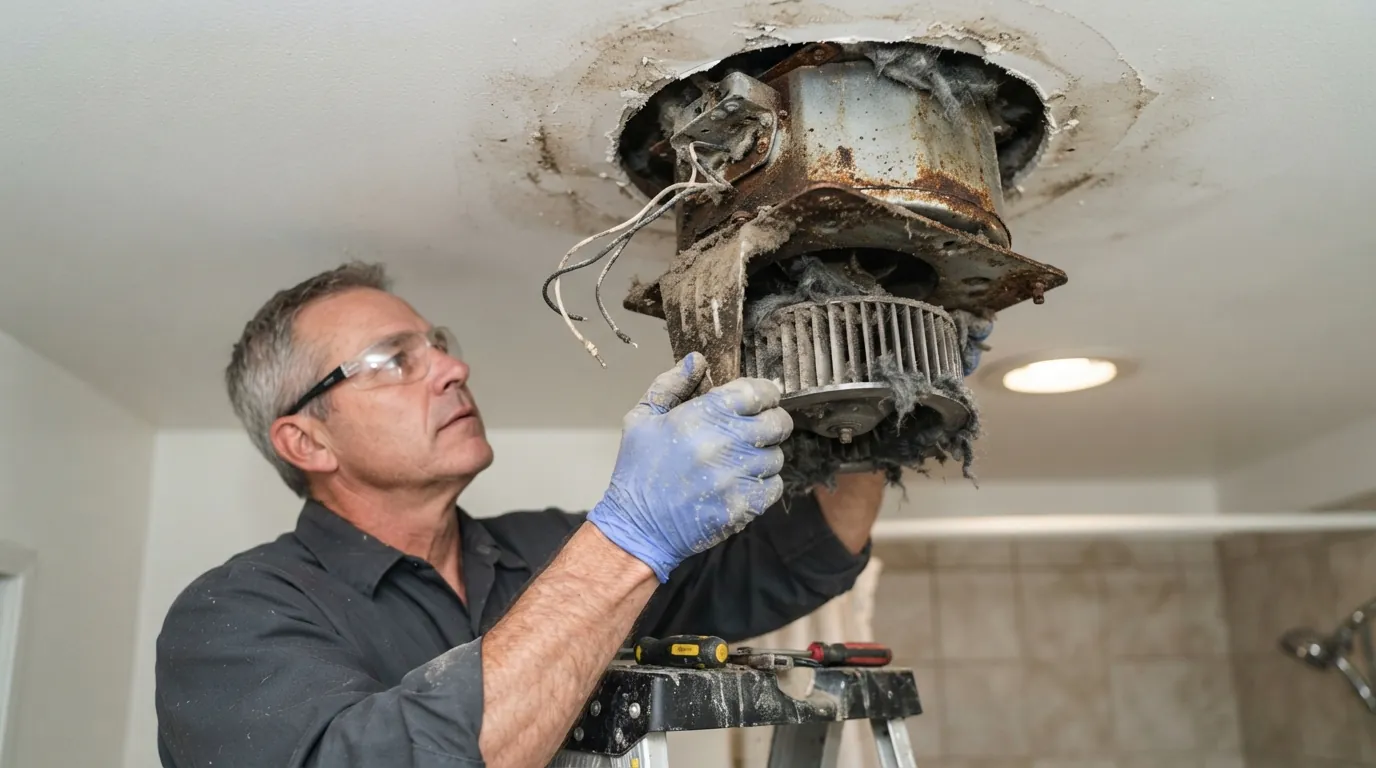
The usual complaint is a fan that rattles or hums without moving air. Sometimes the motor is fine and the damper flap is stuck or the housing is packed with lint; sometimes the bearings are done. If the housing size matches, we fit a new motor and grille or a retrofit kit in the same opening. If it is rusted or an odd size, we replace it and patch the ceiling edge. A tissue held to the grille tells us whether the duct is the real problem.
Adding a Fan Where None Exists
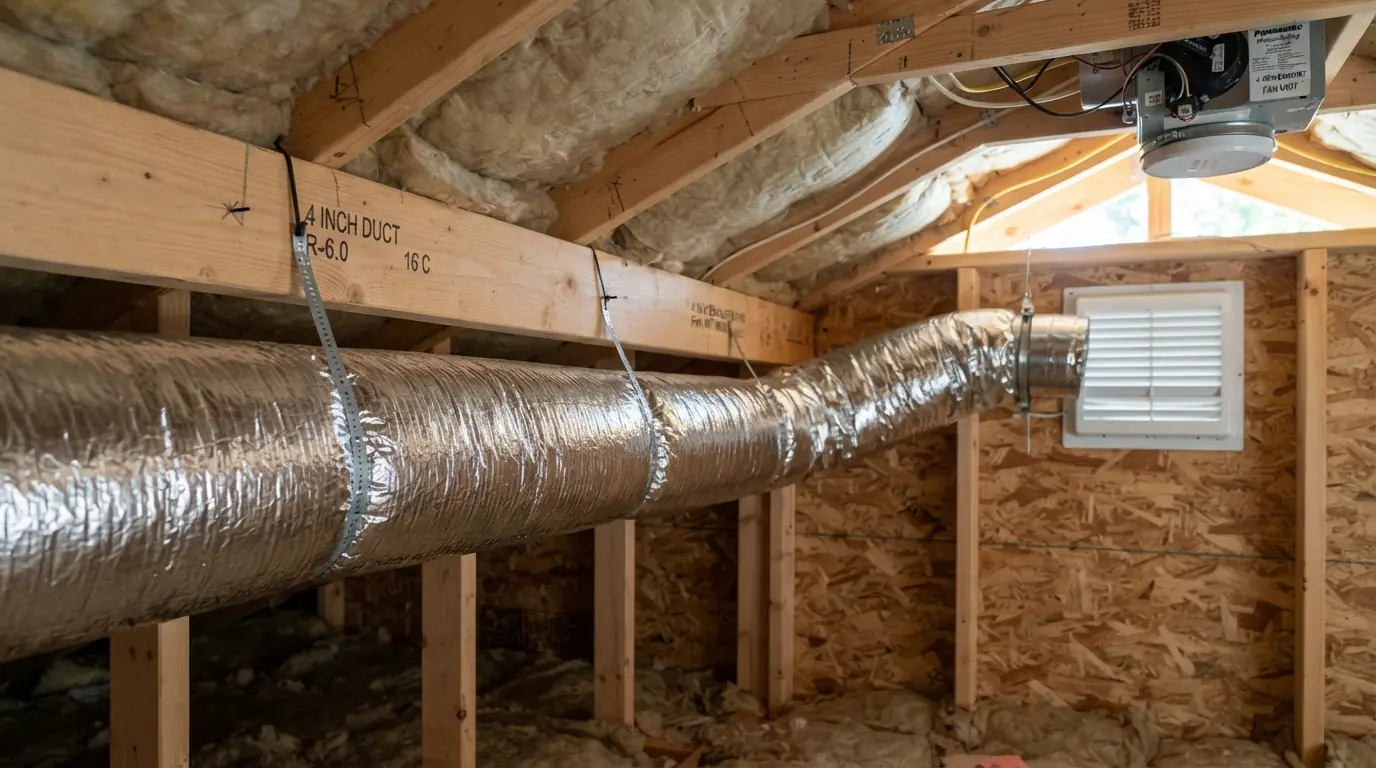
Bathrooms built with a window usually got no mechanical exhaust, and nobody opens that window in February. Adding a fan means finding a duct route: through a joist bay to an outside wall, up through the roof on a top floor, or into a building shaft where the managing agent approves it. We map the route, then bring power from a suitable circuit. Venting into a ceiling cavity or closet is not something we do; it only hides the moisture.
Humidity-Sensing Fan Controls
Most people switch the fan off as they leave, which is exactly when the steam is still in the air. A humidity control or countdown timer runs it until the room dries without anyone remembering. Most of these controls need a neutral wire in the switch box, and the setting is adjustable so the fan does not run all afternoon on a humid July day. Prewar boxes often lack one, so we either pull a neutral in or choose a timer that works without it, and we tell you which before anything is bought.
Why New York bathrooms stay damp
More than half of New York City homes are in buildings raised before 1947, and many of those bathrooms were planned around a window and a radiator rather than a fan. Renovation work now falls under the city's electrical code, which expects GFCI protection in bathrooms and a permit for any new circuit. A fan added during a remodel gets wired properly the first time; a straight swap on the existing circuit usually needs no filing.
How a fan visit runs
Airflow and duct check
Test the old fan and confirm where it discharges.
Choose the fan with you
Sized to the room, with a noise rating you can live with.
Power and switching
Right circuit, neutral in the box where the control needs one.
Install and seal
Housing secured, duct taped, exterior cap or shaft checked.
Test and clean up
Tissue test, control checked, ceiling edge patched.
Signs the fan is not doing its job
- Mirror fogged ten minutes later
The fan runs but barely moves air.
- Mildew on the ceiling
Moisture is settling instead of leaving.
- Peeling paint at the grille
Condensation from a cold, uninsulated duct.
- Rattling or grinding
Worn bearings or a wheel rubbing the housing.
- Tissue falls off the grille
The simplest airflow test there is.
- Warm or discolored housing
An overheating motor. Switch it off.
Bathroom fan questions
About 1 CFM per square foot, 50 CFM minimum; long ducts need more.
No. It must end outdoors or in an approved building shaft.
Only with the building's approval; a powered fan can push air into a neighbor's unit.
A like-for-like swap generally does not; new circuits do, and we file them.
A loudness rating. At or under 1 sone, most people forget the fan is running.
Yes, with a unit rated for that location.
A swap into the existing housing is short; a new duct route is what takes time.
Related work in the same system
Get the bathroom fan working properly
Call any hour. Tell us whether the fan is dead, loud or missing, and we will tell you what the visit involves.