Outlet and Switch Repair in New York
An outlet that stops working usually has a reason two rooms away. We trace the circuit back to the fault, repair the connection that failed, and replace only the devices that actually need it.
- Calls answered 24/7
- Fault traced, not guessed
- GFCI and AFCI devices
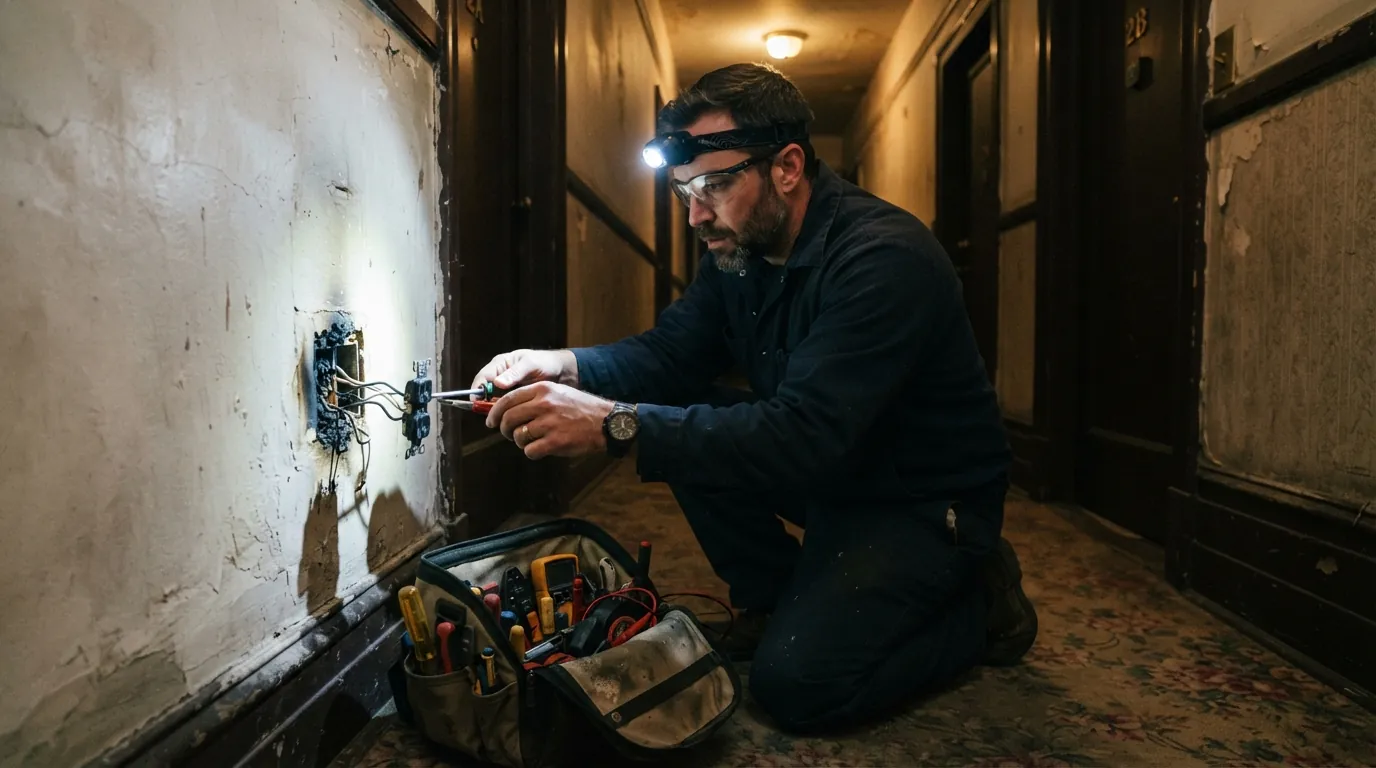
- Circuit traced from the dead device
- Failed connection or device replaced
- Every outlet on the circuit tested
A dead outlet in a New York apartment is most often caused by a tripped GFCI upstream, a loose backstab connection, or a failed device, and a plug-in tester finds which in minutes. A warm or discolored outlet is different: it signals a heating connection, so switch that circuit off at the panel and call.
Rather ask a person?(929) 755-0293What an outlet or switch repair involves
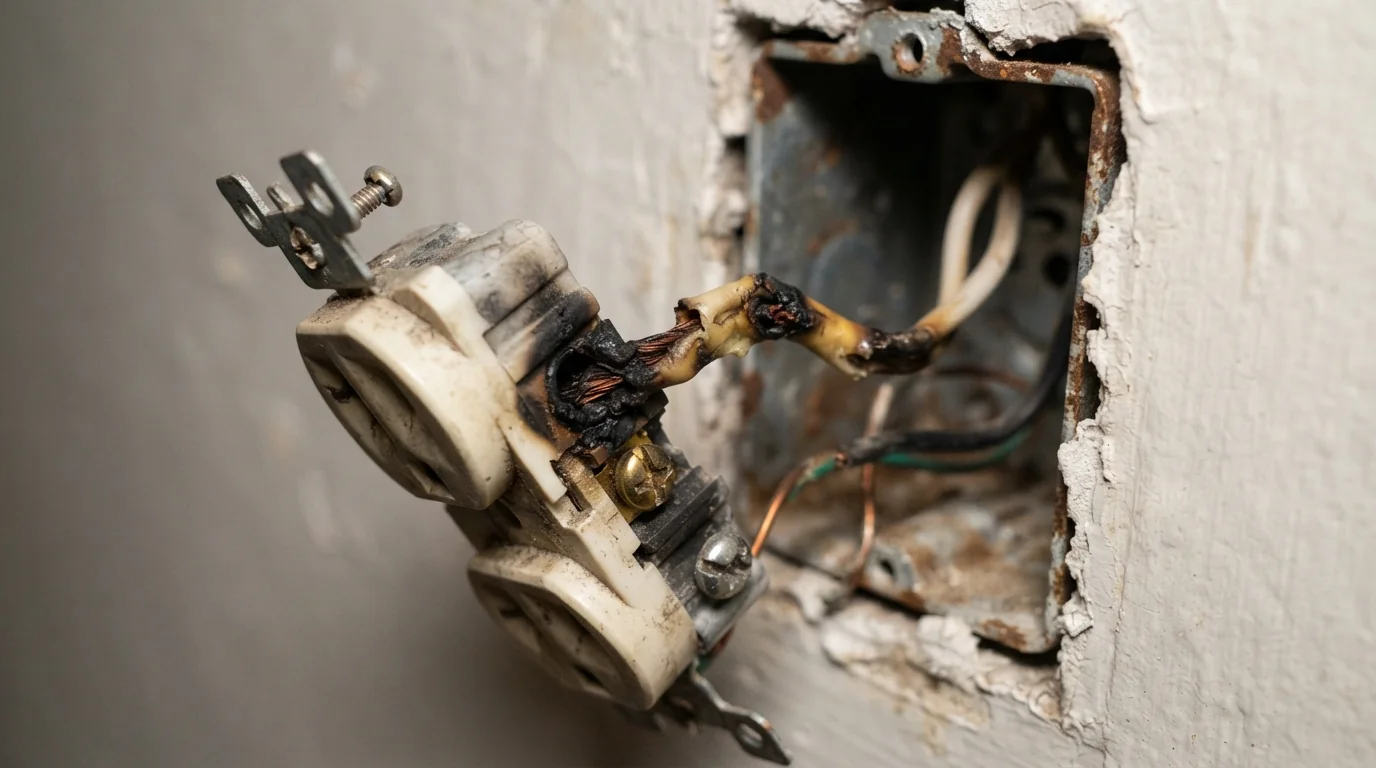
Outlets and switches fail at their connections far more often than in the device itself. Older installs used push-in backstab terminals, which loosen as the copper heats and cools, and one loose connection can kill every outlet downstream of it. Replacing the dead outlet without finding that connection fixes nothing.
So we test first: which devices are dead, which GFCI protects them, where the circuit starts at the panel. The repair is usually a proper screw-terminal connection, a new device where the old one is cracked or burned, and a check of the rest of the circuit. If the circuit trips for load reasons rather than a fault, the answer is often a new dedicated circuit.
Updated September 2026
Signs an outlet or switch needs attention now
- Burning smell near an outlet
Turn the circuit off and call.
- Brown or melted plastic
A connection is overheating.
- Plug falls out of the outlet
Worn contacts no longer grip.
- Switch sparks or crackles
A failing contact inside the switch.
- Outlets dead in several rooms
A tripped GFCI or a loose upstream connection.
- Tingle when touching a switch plate
Possible fault to ground. Stop using it.
How an outlet repair visit runs
Tell us what stopped working
Which outlets, which rooms, anything warm or burned.
Test the circuit
GFCIs, breaker and each device checked in order.
Find the fault
The failed connection or device located.
Repair
Screw-terminal connections, new devices where needed.
Test everything on the run
Each outlet and switch checked before we leave.
The four outlet and switch problems we see most
Dead Outlet
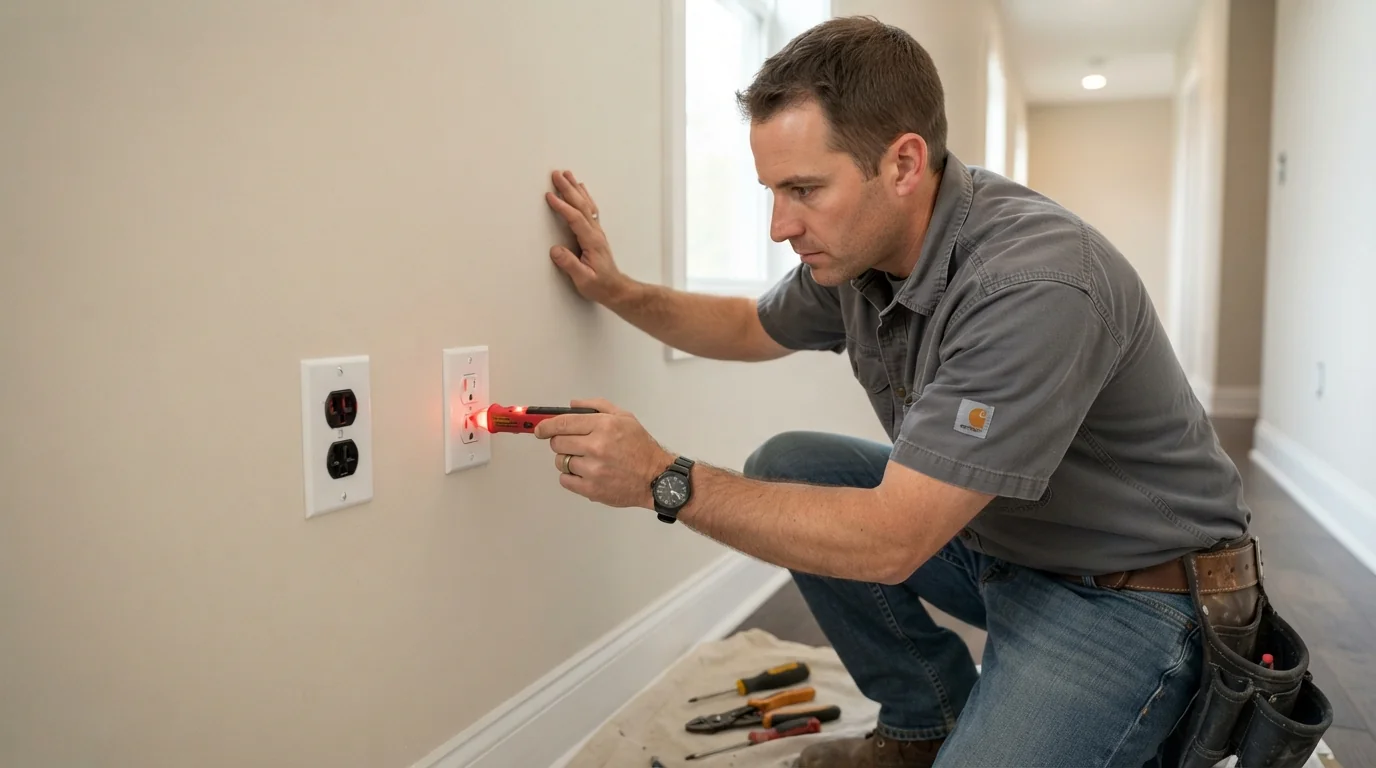
Before anything else, check the GFCI outlets in the bathroom, kitchen, garage and outside, because one of them often protects outlets in other rooms. If none is tripped, the likely cause is a loose connection at the last working outlet on the circuit, not the dead one. We find it with a tester, remake the connection on screw terminals, and check the rest of the run so the same failure does not repeat in a month, and we label which GFCI protects which rooms.
GFCI That Will Not Reset
A GFCI that will not reset is either doing its job or at the end of its life. If something downstream is leaking current, such as a wet outdoor outlet or a damaged appliance cord, the device trips immediately. If it has no power on its line side, it cannot reset at all. And GFCIs wear out; newer models test themselves and lock out when they fail. We check each possibility in that order before replacing anything, and we tell you which appliance or outlet was tripping it.
Discolored or Warm Outlet
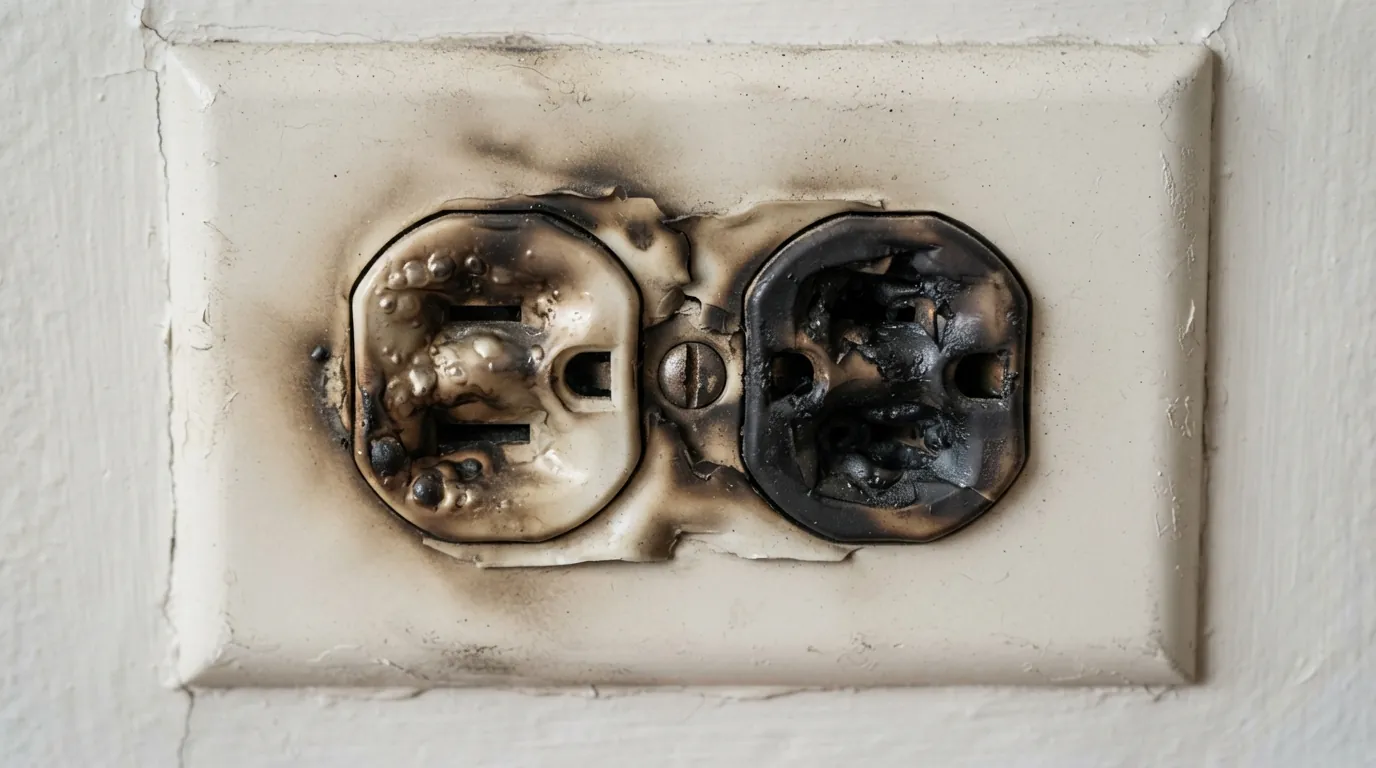
Brown or melted plastic around the slots, a plug that feels hot, or a faint burning smell means a connection is heating under load. Stop using it and turn off the circuit. The cause is usually a loose terminal, a worn contact that no longer grips the plug, or a heater or AC drawing more than the circuit should carry. We replace the device, cut back any heat-damaged wire, and deal with the load if that caused it, which sometimes means moving a heater to its own circuit.
Loose Switch or Backstab Failure
A switch that feels loose, crackles, or makes the lights flicker when touched usually has a failing internal contact or a loose wire behind it. In older buildings the switch may be the original, with brittle insulation on the conductors. We replace the switch, remake the connections on screw terminals, and check the box for heat damage. If the switch controls LED fixtures, we confirm the replacement is rated for LED loads, so the flicker does not simply return with a new switch.
Outlet trouble in older homes on both sides of the river
In Warwick, GFCI outlets for kitchens and open-ground repairs are among the most common calls, often in houses where the wiring predates grounded circuits. In the city the rules are clear for a straight swap: replacing a broken outlet with the same type is generally exempt from a permit, while any new circuit is filed. The code there also expects GFCI protection within six feet of a sink, so a kitchen repair often brings the counter outlets up to date.
Fixing it yourself versus calling us
| Task | Doing it yourself | With us |
|---|---|---|
| Resetting a GFCI | Safe and worth trying first | We trace why it keeps tripping |
| Swapping a dead outlet | Often misses the real loose connection | Fault found upstream first |
| Warm or burned outlet | Not a DIY job | Device and heat-damaged wire replaced |
| Ungrounded boxes | Easy to install three-prong outlets unsafely | Grounded or GFCI-protected and labeled |
Resetting GFCIs and breakers is exactly what you should try first. If an outlet is warm, burned or sparking, leave the circuit off and call.
What sets the cost of an outlet or switch repair
Most repairs are short; finding the fault is where the time goes.
- Time to traceA dead run with no obvious cause takes longer to find than to fix.
- Number of devicesSeveral failing outlets in one visit cost less each.
- Device typeGFCI, AFCI and smart devices cost more than standard ones.
- Heat damageBurned wire has to be cut back or replaced.
- After-hours visitsNight and weekend calls can carry a different rate.
Outlet and switch questions
Usually a tripped GFCI or one loose upstream connection.
Yes. Stop using it and turn off the circuit until it is repaired.
Moisture, a damaged cord, or a worn GFCI; we check each.
Only with a ground path or GFCI protection, labeled as required.
Yes, calls are answered 24/7.
A like-for-like swap is generally exempt; new circuits are filed.
Push-in terminals that loosen with age.
Related work in the same system
Get the dead outlet traced and fixed
Call any hour. If anything is warm or smells hot, turn the circuit off first.