Electrical Service for Property Managers in New York
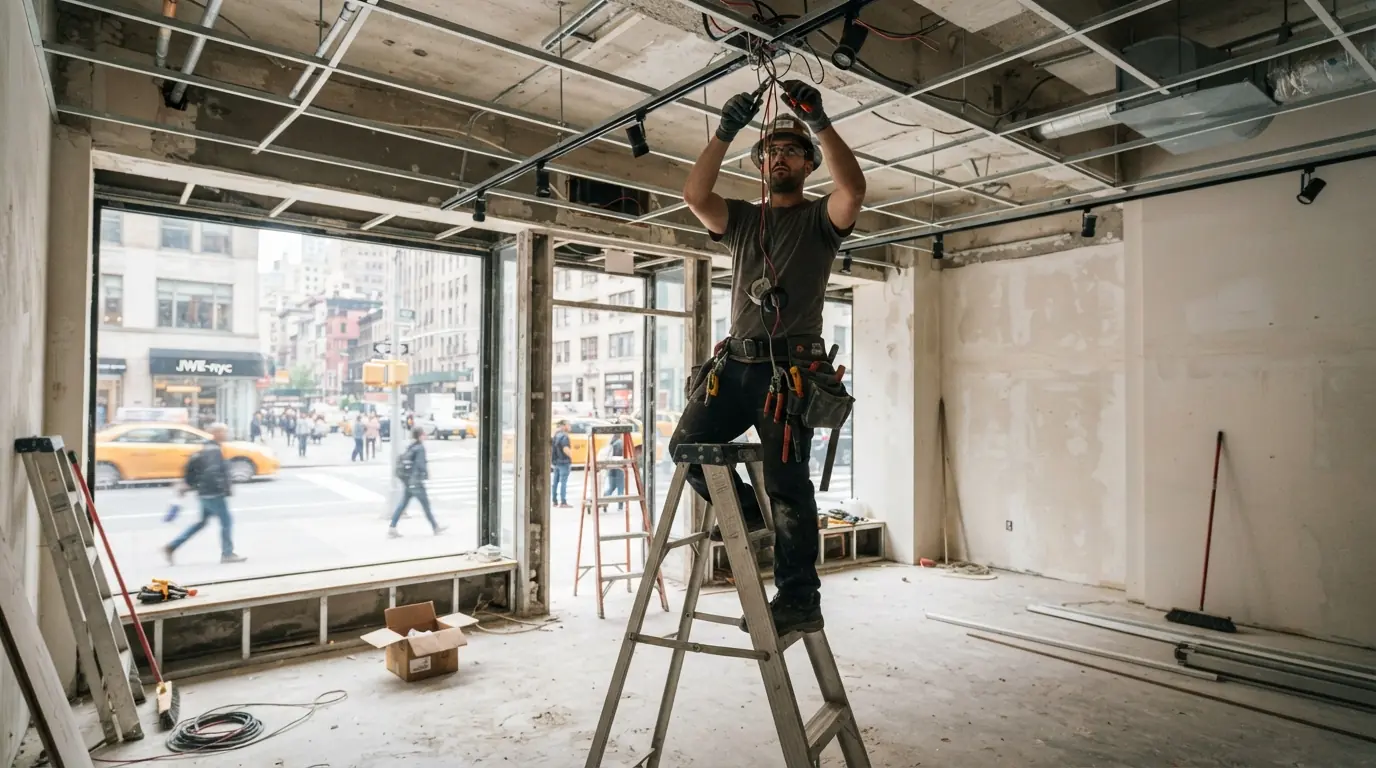
A managing agent needs three things from an electrician: a fast answer, a fixed problem and a clear record. We handle tenant repairs, common-area lighting and meter room work, and send the documentation you need for the file.
- Calls answered 24/7
- Written report after every visit
- Works with supers and agents
- Tenant complaint or common-area issue logged
- Repair made and photographed
- Report sent to the managing agent
Property management electrical service in New York covers tenant complaint repairs, common-area and hallway lighting, and periodic review of meter rooms and electrical closets, with written documentation after each visit. Buildings of six or more units hold 62 percent of the city's homes, so most of this work sits inside shared systems a super has to coordinate.
Rather ask a person?(929) 755-0293What a building service relationship includes
- 24/7 answering for supers and managing agents
- Access coordinated through the super
- Diagnosis of apartment versus building wiring
- Photo report after every visit
- Common-area lighting and exit sign checks
- Periodic meter room and closet review
- Planned scope for larger riser or feeder work
What working with a managed building involves
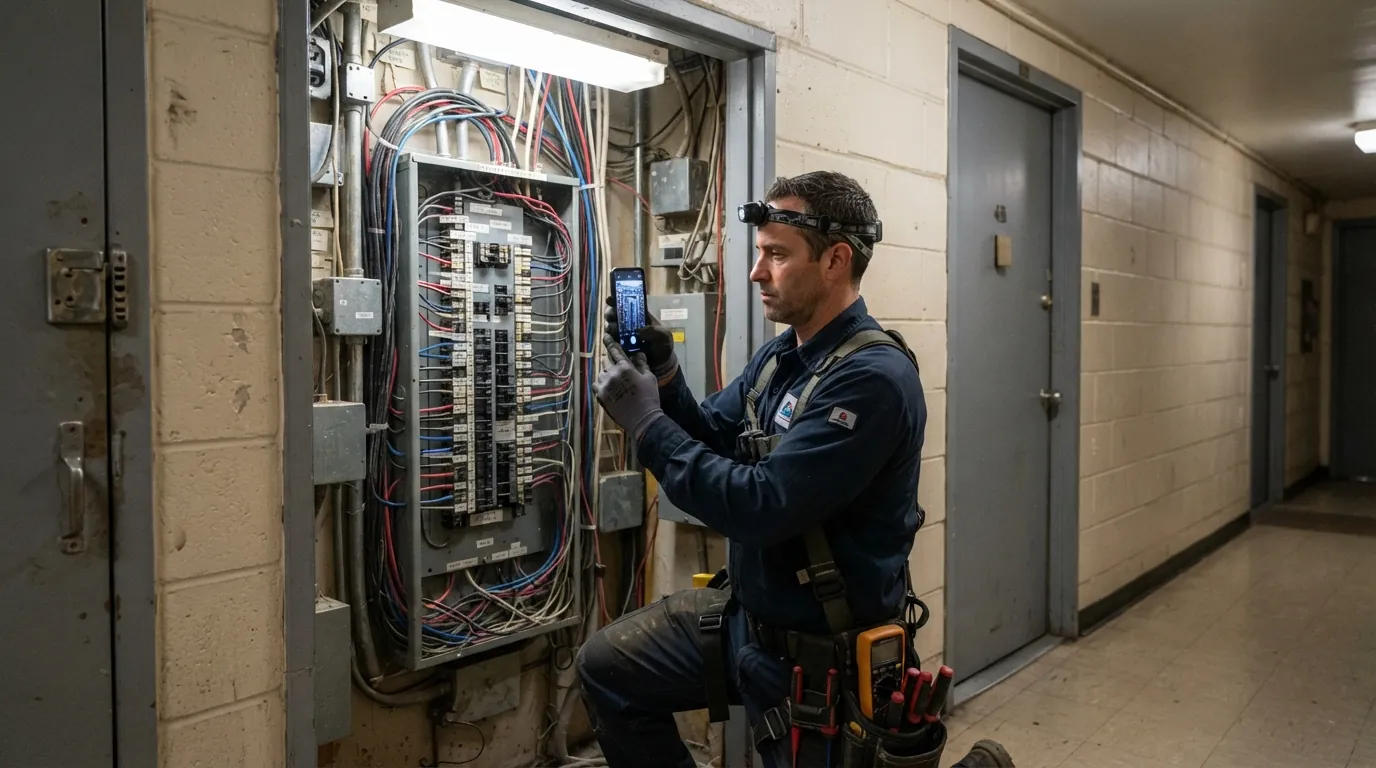
Building work is a coordination job as much as an electrical one. A tenant complaint arrives through the super or the managing agent, access has to be arranged, and the fix has to be recorded so the next person knows what was done. We answer any hour, schedule around the tenant and the super, and send a short written report with photos after each visit.
Beyond single repairs, managed buildings benefit from periodic review: meter rooms, electrical closets, common-area lighting, exit signs. That is where small problems are cheap to fix before they become a violation. When one is already open, see DOB violation correction.
Updated September 2026
Three kinds of building work
Tenant Complaint Repairs
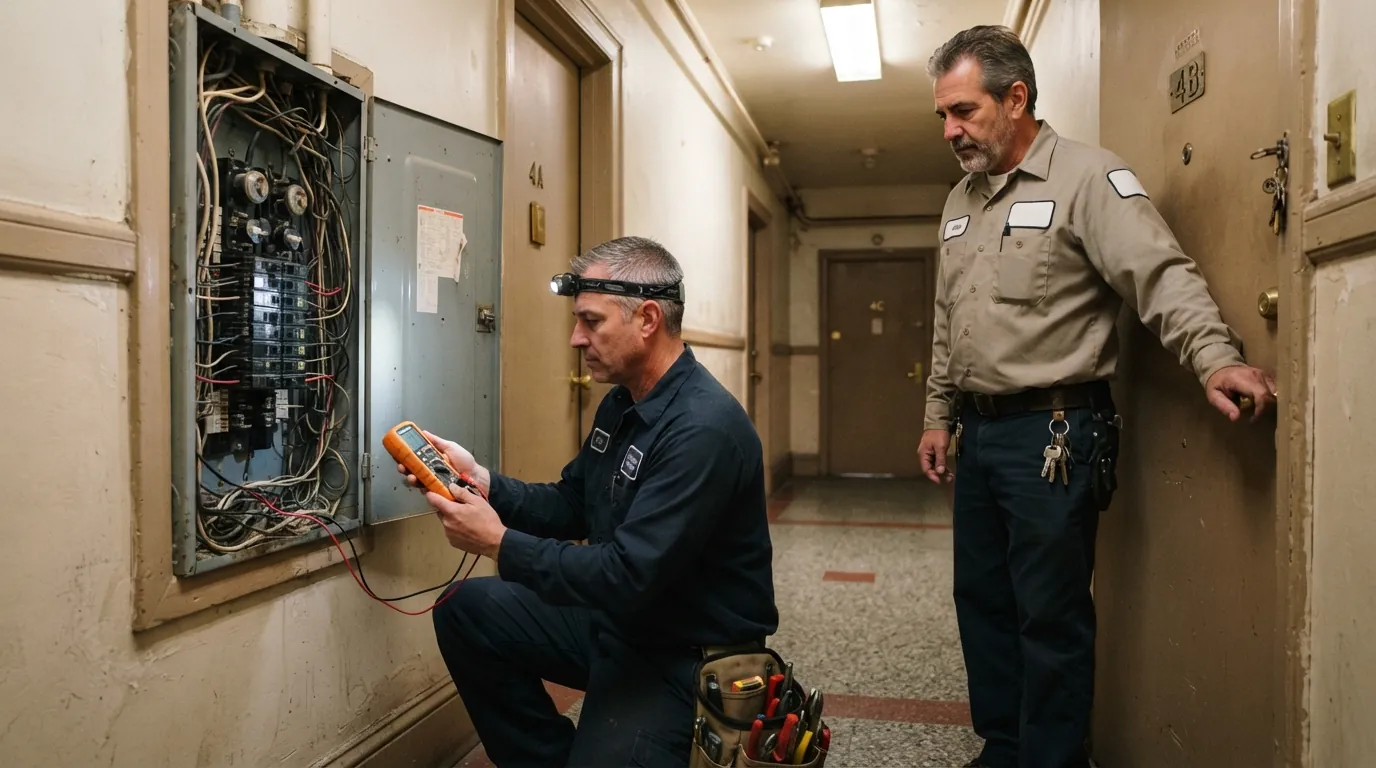
Most calls begin as a tenant complaint: outlets dead in one room, a breaker that keeps tripping, lights flickering. We coordinate access through the super, diagnose the fault, and fix it or explain what the building needs to decide. The managing agent gets a short report: what was found, what was done, and whether the cause sits in the apartment or in building wiring, which matters for who pays. Repeat complaints on the same line get flagged so the building can plan a permanent fix.
Planning range (national sources, 2026): $75 to $150 per hour; service call fees $79 to $179. Coastal-market pricing and building access change the figure; this is a planning band, never a quote.
Common-Area and Hallway Lighting
Hallways, lobbies, stairwells and basements are the building's responsibility and the first thing residents notice. We repair and replace common-area fixtures, convert them to LED where it makes sense, and check that timers, photocells and sensors are doing what they should. Exit signs and emergency lights on those circuits are tested at the same visit, and the super gets a list of what was changed. Failing timers and contactors are replaced so the lights stop running all day.
Meter Room and Electrical Closet Review
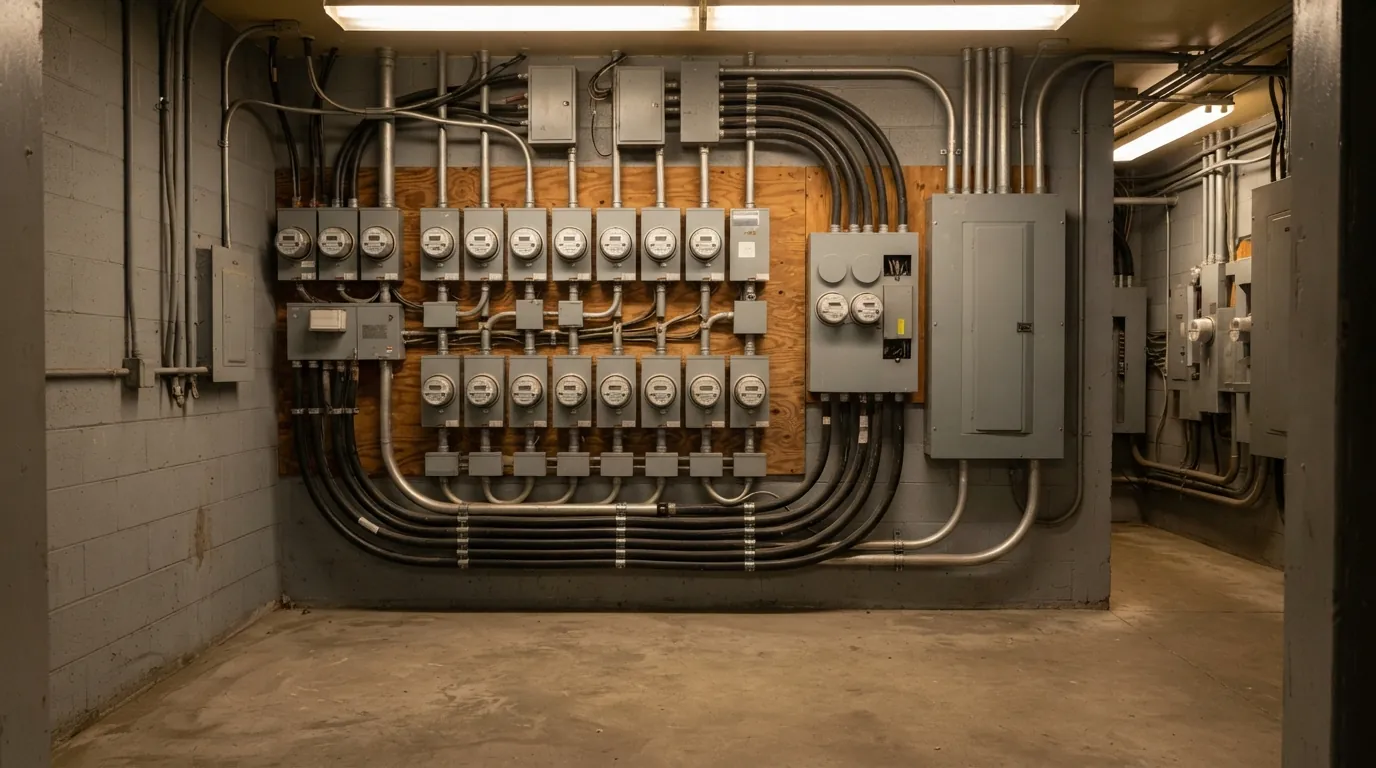
Meter rooms and electrical closets collect problems quietly: storage blocking the working space, missing covers, corroded connections, unlabeled feeders. A periodic review walks through them, photographs what we find, and ranks items by urgency. Some are quick fixes done on the spot. Others, like a riser feeder showing heat damage, need planning and a scheduled shutdown, and we lay those out with the options, the likely cost range and the kind of advance notice residents will need before any shutdown.
How building service runs
Call comes in
From the super, agent or tenant, any hour.
Access arranged
Coordinated with the super.
Diagnose
Apartment wiring or building wiring identified.
Repair or plan
Fixed on site, or scoped if it needs a shutdown.
Report
Photos and a short write-up sent to the agent.
Why building records matter in the city
Sixty-two percent of city homes are in buildings of six or more units, and over half are in buildings of twenty or more, so a single electrical problem can touch dozens of households. The Department of Buildings can also issue OATH violations for electrical code breaches, and closing one requires documented correction. A building that keeps a clear record of electrical work finds both situations far easier to manage.
What drives the cost of building service
Access and coordination shape the bill as much as the repair.
- Access arrangementsWaiting on keys or tenants adds billable time.
- Apartment or building wiringRiser and feeder work is larger than a device repair.
- After-hours callsNight and weekend emergencies can carry a different rate.
- DocumentationPhoto reports are included; formal surveys take longer.
- Planned versus emergencyScheduled review work costs less than emergency calls.
Building problems worth a call
- Repeated tenant complaints on one line
Often a shared feeder or riser issue.
- Hallway lights failing floor by floor
Aging fixtures or a failing timer or contactor.
- Warm meter sockets or feeder lugs
Heat at a connection. Needs attention soon.
- Storage in the meter room
Blocks the required working space.
- Exit signs dark or on battery
Life-safety equipment that must work.
- Unlabeled feeders and breakers
Slows every future repair.
Property management questions
Yes, access and scheduling usually go through the super.
Yes, a short written report with photos.
Yes, the report states where the fault sits.
Yes, testing and replacement.
Yes, with a ranked list of findings.
Yes, calls are answered 24/7.
Yes, we correct the work and prepare the documentation.
Related work in the same system
Set up electrical service for the building
Call any hour. Supers and managing agents reach the same line as tenants.