Hot Tub and Pool Wiring in New York
Water and electricity meet on purpose at a hot tub or a pool, which is why the rules are strict. We run the feed, install the GFCI disconnect within sight, and bond the equipment so there is no voltage difference anyone can feel.
- Calls answered 24/7
- GFCI disconnect within sight
- Bonding done and inspected
- Spa or pump nameplate and location checked
- Feed, GFCI disconnect and bonding installed
- Inspection before the tub is filled
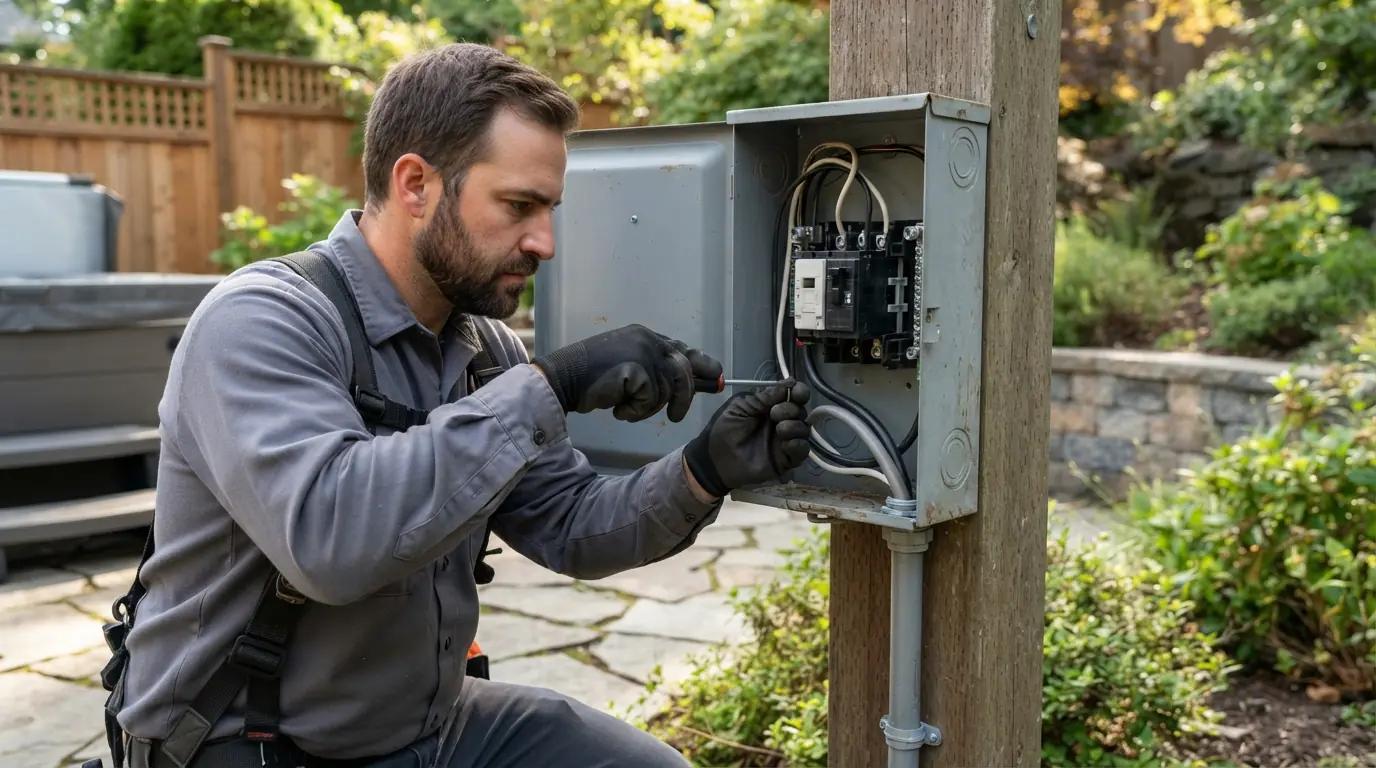
Wiring a hot tub at a New York area home usually means a dedicated 240 volt circuit, often 50 amps, to a GFCI-protected disconnect installed within sight of the tub but at least five feet from its water, then bonding the tub's metal parts. Pool pumps and equipment also need GFCI protection and an equipotential bonding grid around the pool.
Rather ask a person?(929) 755-0293What hot tub and pool wiring involves
A hot tub's nameplate sets the circuit size, and most full-size tubs need a 240 volt circuit with a GFCI disconnect near the tub. The disconnect lets someone cut power while standing where they can see the tub, and the GFCI shuts it down if current leaks into the water. Plug-in 120 volt spas are different, but still need a dedicated, GFCI-protected outlet.
Pools add bonding: metal parts of the pool, the pump motor, rails, ladders and the water itself are tied together so there is no voltage difference between them. We coordinate with the pool or spa installer on where equipment lands. If the panel is short on capacity, see subpanels or a panel upgrade first.
Updated September 2026
What moves the cost of hot tub and pool wiring
Distance from the panel is usually the biggest factor.
- Distance and trenchingA long buried run from the house is most of the cost.
- Panel capacityA 50 amp spa circuit may need panel space or an upgrade.
- Equipment countPumps, heaters, lights and automation each need circuits.
- Bonding scopeIn-ground pools need a full perimeter grid.
- CoordinationTiming with deck, patio and pool installers.
Plug-in spa or hardwired hot tub
| Factor | 120 volt plug-in spa | 240 volt hardwired tub |
|---|---|---|
| Power | Dedicated GFCI outlet | Dedicated circuit to a GFCI disconnect |
| Heating while jets run | Often one or the other | Both at once |
| Installation | Simpler | Feed, disconnect and inspection |
| Best for | Small spas, occasional use | Full-size tubs, year-round use |
Plug-in spas are convenient but heat slowly in a New York winter. For year-round use, most owners want the 240 volt tub.
Hooking it up yourself versus calling us
| Task | Doing it yourself | With us |
|---|---|---|
| Extension cord to a spa | Dangerous and against every manufacturer's instructions | Dedicated protected circuit |
| Disconnect placement | Easy to put too close to the water | Within sight, at the required distance |
| Bonding | Usually missed entirely | Done and inspected |
| GFCI testing | Rarely done | Tested at install and shown to you |
Setting the tub and filling it is the owner's part. The feed, the disconnect and the bonding belong to an electrician.
Two kinds of water-side wiring
Hot Tub 50 Amp GFCI Feed
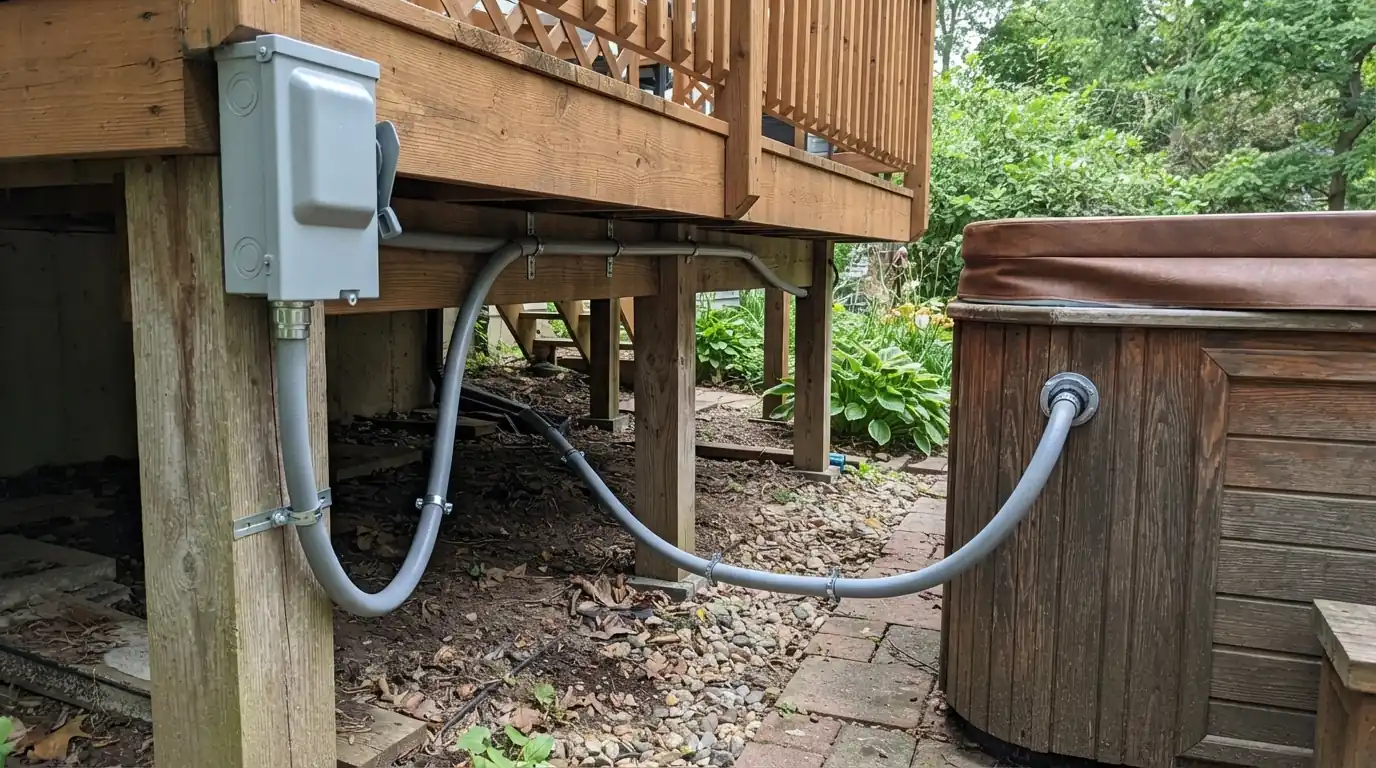
Most full-size hot tubs call for a 240 volt feed, commonly 40 or 50 amps, run from the panel to a spa disconnect with a built-in GFCI breaker. The disconnect goes within sight of the tub and at least five feet from the water's edge, and the final run to the tub is in liquid-tight conduit or as the manufacturer specifies. The feed is usually buried from the house, so the route and trench depth are planned with the deck or patio work.
Pool Pump and Equipment Bonding
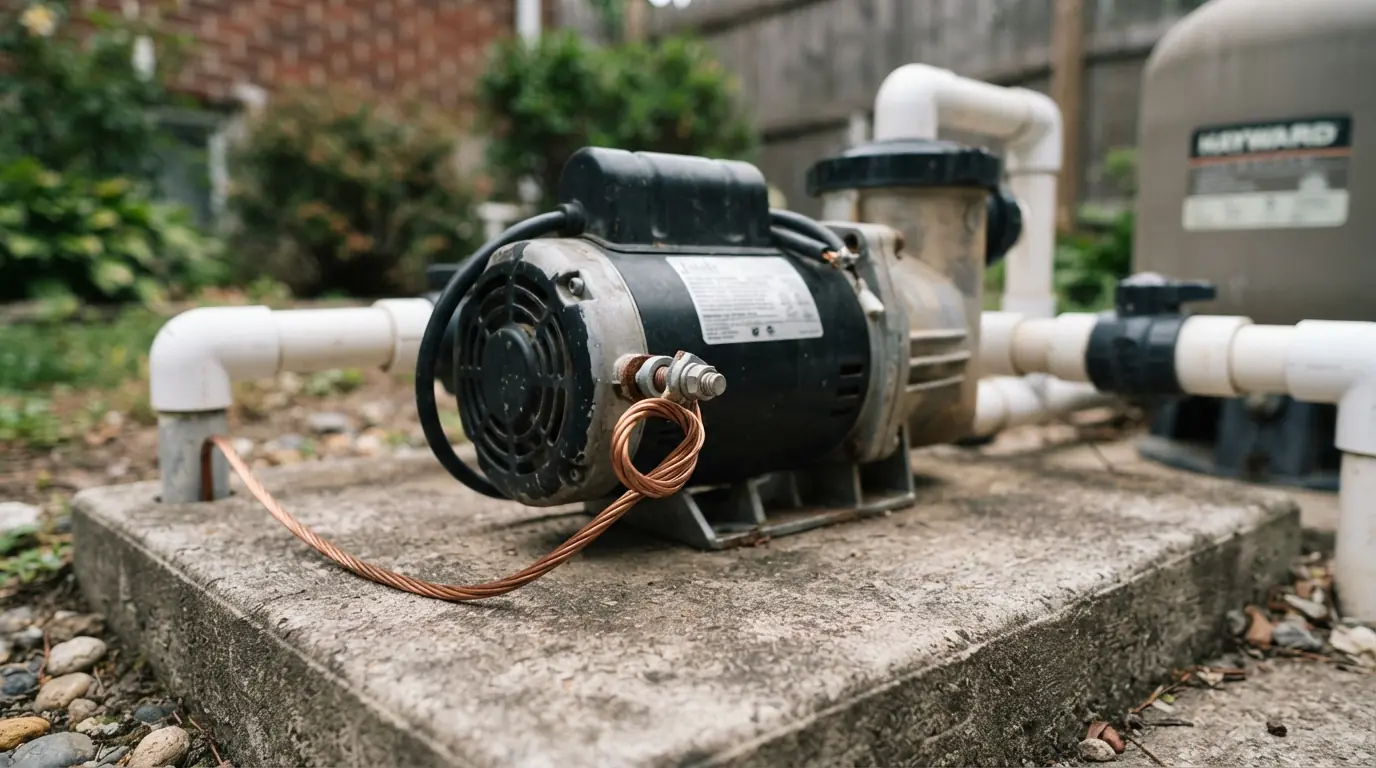
Pool pumps, heaters, lights and automation need GFCI-protected circuits, and everything metal near the pool needs bonding with a heavy copper conductor. For in-ground pools, the bonding grid runs around the perimeter under the deck. We bond the pump and equipment pad, check that existing bonding is continuous, and install a proper disconnect for the pump. An inspector checks the bonding before the deck is poured or the pool is filled, so it is scheduled early with the pool installer and the concrete crew.
Pool and spa work upstate
Outside New York City, the state now works from the 2023 NEC, with expanded GFCI protection and outdoor emergency disconnect requirements, and most of our pool and hot tub work sits in Warwick and across Orange County where backyards have room for it. Inspection follows the local building department, so we coordinate the bonding inspection with the pool installer's schedule before any concrete is poured around the pool.
How a hot tub or pool job runs
Read the nameplate
Circuit size and equipment needs confirmed.
Plan with the installer
Tub or equipment location, trench route.
File
Permit filed for the new circuits.
Install
Feed, GFCI disconnect, bonding and equipment circuits.
Inspect and test
Bonding and GFCI checked before filling.
Hot tub and pool wiring questions
Most full-size tubs need 40 or 50 amps at 240 volts.
Within sight of the tub and at least five feet from the water.
Only a 120 volt spa designed for it, on a dedicated GFCI outlet.
Tying metal parts and the water together so no voltage difference exists.
Yes, and the bonding is inspected.
Yes, usually in conduit at the required depth.
No, we do the electrical; the dealer sets the tub.
Related work in the same system
Get the hot tub or pool wired safely
Call any hour with the spa or pump model and where it will sit.