Under-Cabinet Lighting Installation in New York
Overhead lights put your own shadow on the cutting board. Under-cabinet lighting puts the light where you work. We hardwire it, hide the wiring, and put it on a dimmer so it doubles as the evening light.
- Calls answered 24/7
- Hardwired, no dangling cords
- Dimmable LED
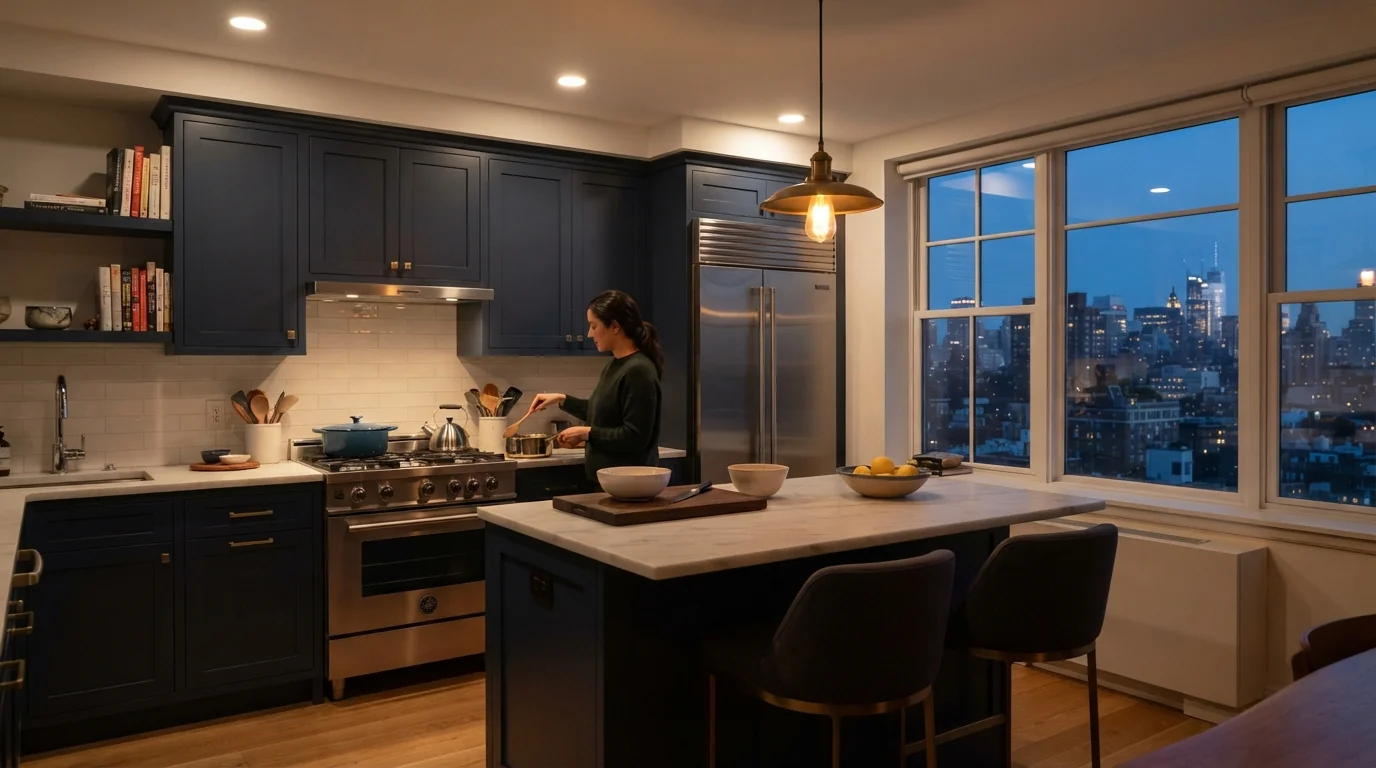
- Fixture type and color temperature chosen
- Power fed from a hidden source
- Dimmer set up and tested
Under-cabinet lighting in a New York kitchen is best installed as hardwired LED strips or puck lights fed from a concealed power source and switched from the wall, usually on a dimmer. Hardwiring removes the cords and plug-in adapters of stick-on kits, and LED fixtures stay cool enough to sit next to food storage.
Rather ask a person?(929) 755-0293What an under-cabinet install involves
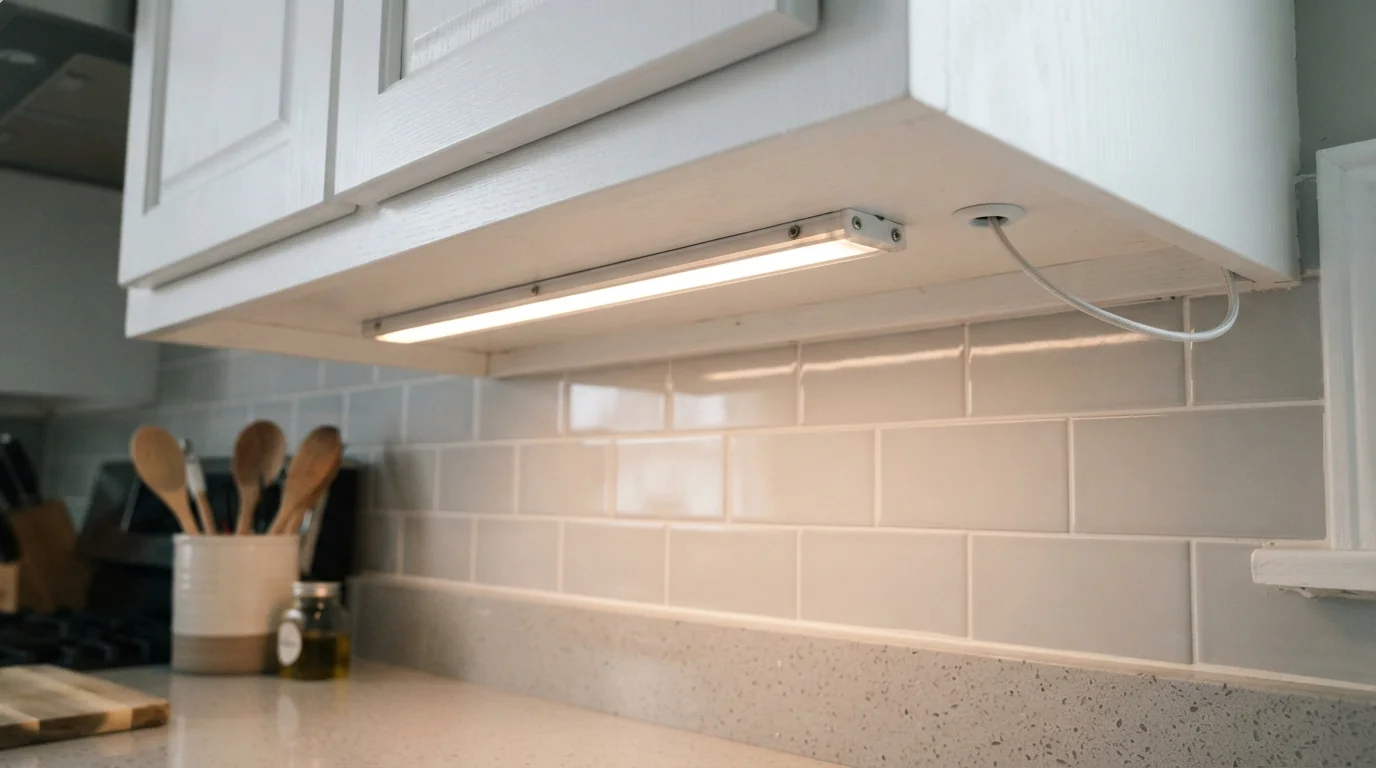
The fixtures are thin; the thinking is in the power. Hardwired systems need power at the cabinets, either from a nearby circuit brought up through the wall behind the backsplash or from a junction box above the cabinets. Low-voltage LED strips add a driver, which has to sit somewhere ventilated and reachable.
We choose the fixture with you, including color temperature and brightness, plan the route so no wire shows under the cabinet, and put the lights on their own wall switch or dimmer. The best time is during a remodel with the backsplash off, but most kitchens can be done without tearing it out. For the rest of the room, see recessed lighting.
Updated September 2026
What sets the cost of under-cabinet lighting
Getting power to the cabinets costs more than the lights.
- Power sourceAn accessible circuit nearby is quick; a new run is not.
- Backsplash on or offTile in place means routing above or through the cabinets.
- Fixture typeContinuous channels cost more than a few pucks.
- Driver locationLow-voltage systems need a reachable, ventilated driver.
- ControlsDimmers and separate switching add parts.
Which fixture suits the kitchen
| Factor | LED strip in channel | Linear bar | Puck lights |
|---|---|---|---|
| Light pattern | Continuous, even | Even, in sections | Pools of light |
| Driver | Separate, low voltage | Often built in | Varies by model |
| Best for | Long counters, modern kitchens | Most kitchens | Short runs, glass-front cabinets |
| Profile | Thinnest | Thin | Slightly deeper |
For work surfaces, continuous light usually wins. Pucks are better for display shelves and glass-front cabinets.
Stick-on kits versus a hardwired install
| Task | Doing it yourself | With us |
|---|---|---|
| Plug-in or battery kits | Cords to an outlet, batteries to change | No cords, wall switch control |
| Brightness | Often too dim for prep work | Sized for the counter |
| Dimming | Rarely smooth | Matched dimmer, full range tested |
| New wiring in walls | Needs a licensed electrician in the city | Done and filed where required |
Battery lights are a fine stopgap for a rental. For a kitchen you own, hardwired light is brighter and has nothing to recharge.
Two ways to light the counters
Hardwired LED Strip Systems
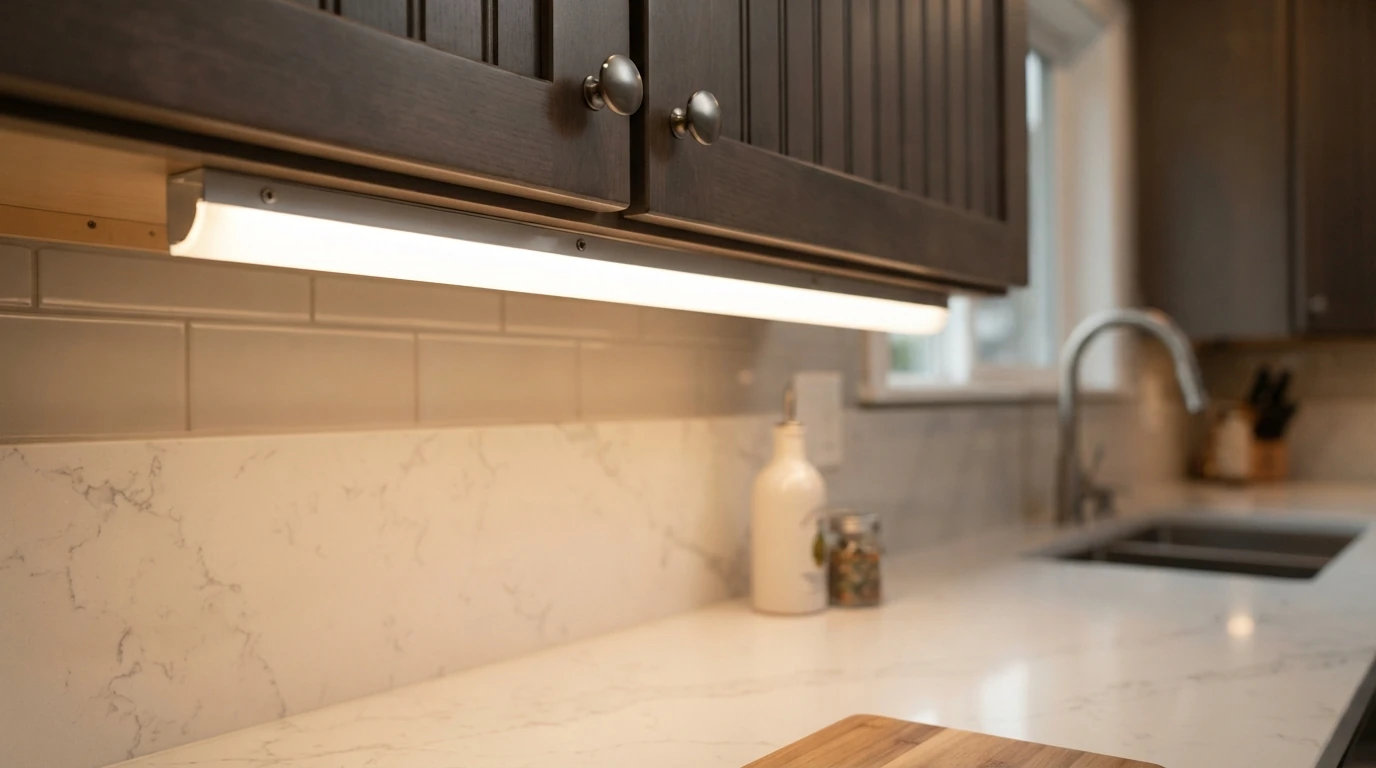
Continuous LED strips or linear bars give an even wash of light along the whole counter, without the spotty look of individual lights. They run on low voltage from a driver, which we place inside a cabinet or above it where it can be reached later. The strip sits near the front edge of the cabinet so the light falls on the work surface rather than glaring off a glossy backsplash. Aluminum channels with diffusers hide the individual diodes and keep the strip cool.
Puck Lights and Dimming
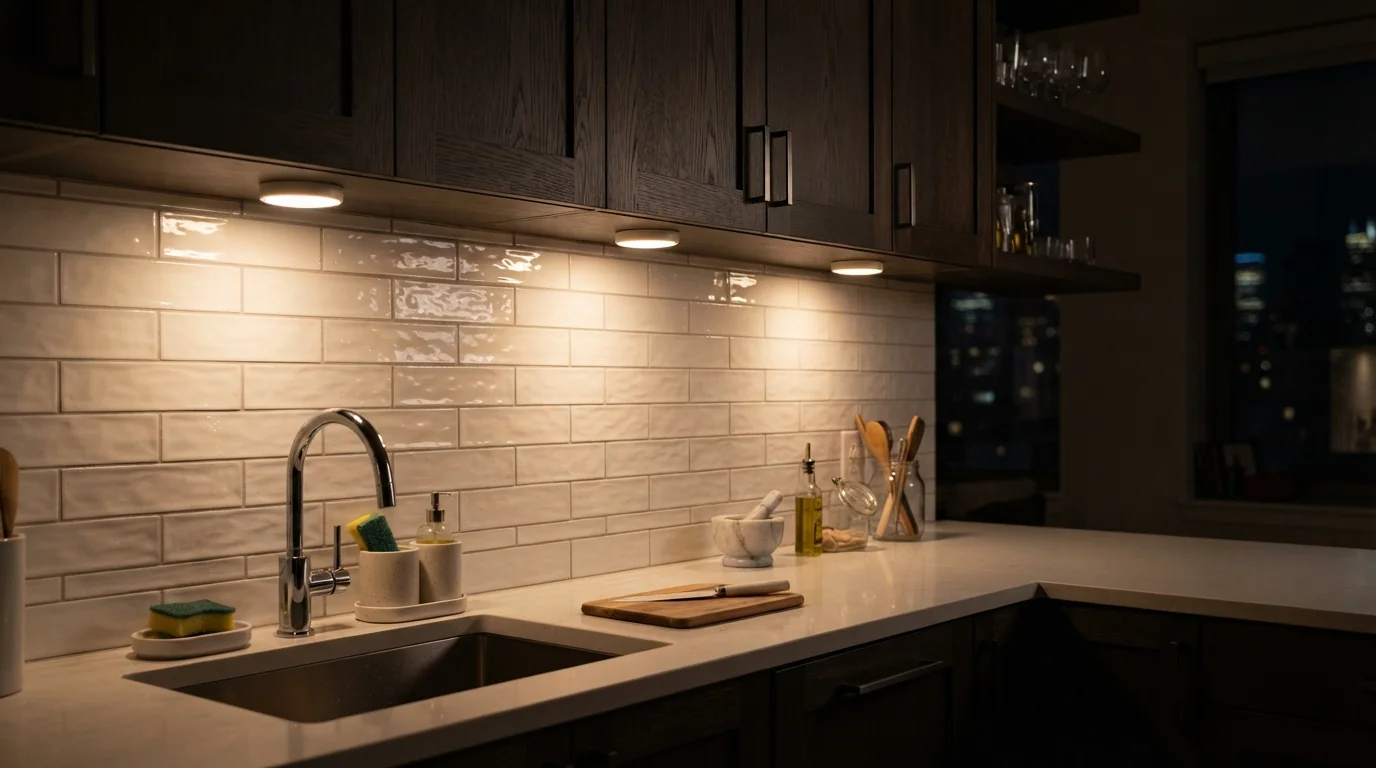
Puck lights are small round fixtures spaced along the cabinet bottom. They suit shorter runs and kitchens where a pool-of-light look is wanted, and many are line voltage, which avoids a separate driver. Dimming is where installs often go wrong: the dimmer has to match the fixture or driver, or the lights flicker and buzz. We choose the dimmer with the fixtures, test the full range on site, and set the low end so the lights make a comfortable night light.
Why houses and apartments differ here
About 92 percent of housing near subway stops outside the central borough is three stories or less, and in those Brooklyn, Queens and Bronx houses a kitchen circuit can often be reached from the basement ceiling below. In an apartment there is no such space, so power for under-cabinet lights usually comes from above the cabinets or from the existing counter circuit behind the backsplash. The route decides how much of the wall we touch.
How an under-cabinet install runs
Choose the light
Fixture type, color temperature and brightness.
Find the power
Nearest suitable source and a hidden route.
Mount the fixtures
Near the front edge, wiring concealed.
Connect and switch
Driver placed, dimmer or switch installed.
Test and set
Full dimming range checked on site.
Under-cabinet lighting questions
Usually, by routing power above or through the cabinets.
Most kitchens look right around 2700K to 3000K.
They stay warm to the touch, not hot.
Yes, with a dimmer matched to the fixture.
Inside or above a cabinet, reachable for service.
Yes, but separate switching is more useful.
New wiring in the city is usually filed; we advise per job.
Related work in the same system
Light the counters properly
Call any hour with the counter length and a photo of the cabinets.