Infrared Thermal Scanning of Electrical Equipment in New York
Loose connections get hot long before they fail, and a thermal camera sees heat the eye cannot. We scan panels and switchgear while they carry load, rank every hot spot by severity, and fix what needs fixing.
- Calls answered 24/7
- Scanned under real load
- Report with thermal images
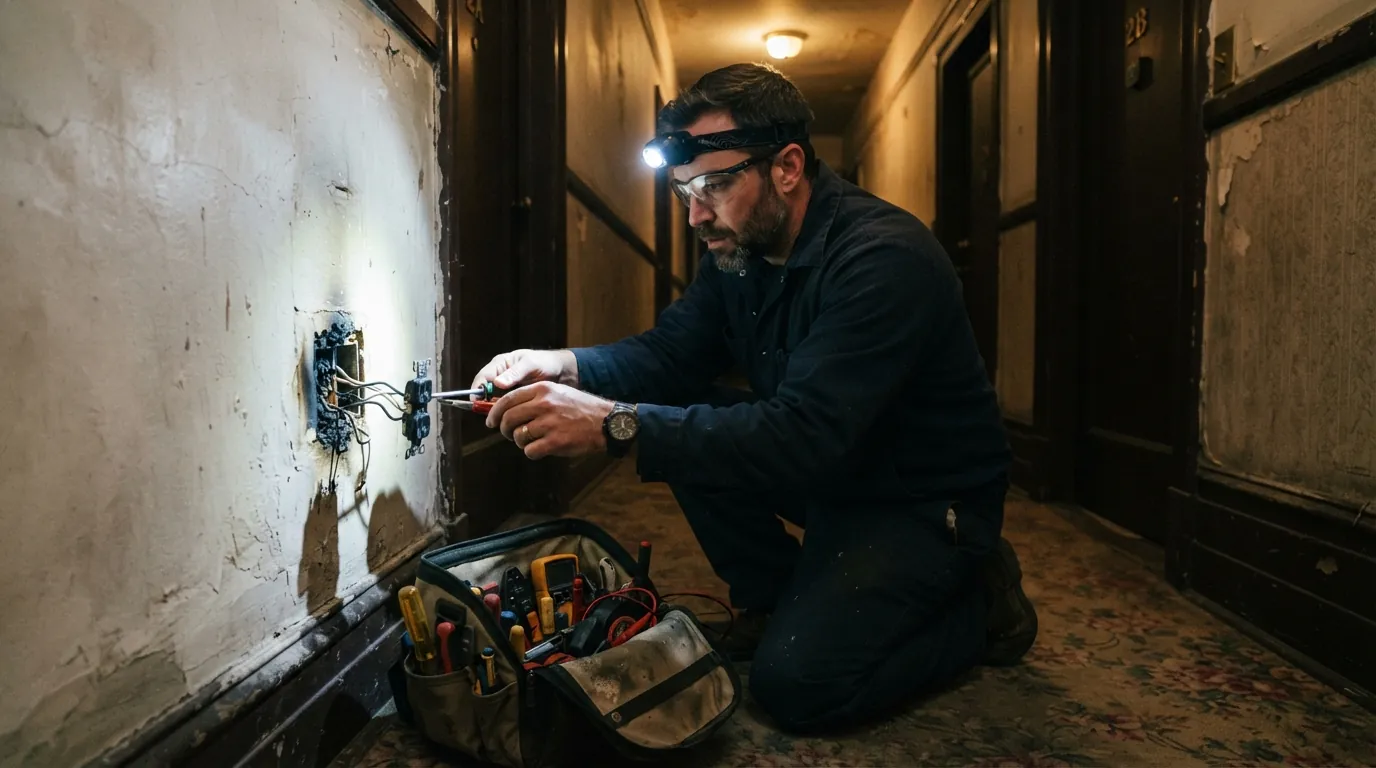
- Equipment list and load conditions set
- Thermal scan of every panel and switch
- Ranked report with thermal images
Infrared electrical scanning in New York uses a thermal camera to find overheating connections, breakers and conductors in panels and switchgear while they carry load, before they fail or start a fire. Results are ranked by temperature rise, and many insurers and property managers ask for a scan at least once a year for buildings and commercial spaces.
Rather ask a person?(929) 755-0293What an infrared scan includes
- Equipment list and access arranged
- Scan scheduled at normal or high load
- Covers removed safely for scanning
- Every accessible connection imaged
- Findings ranked by temperature rise
- Visible and thermal photos of each finding
- Written report and follow-up scan after repairs
What an infrared scan involves
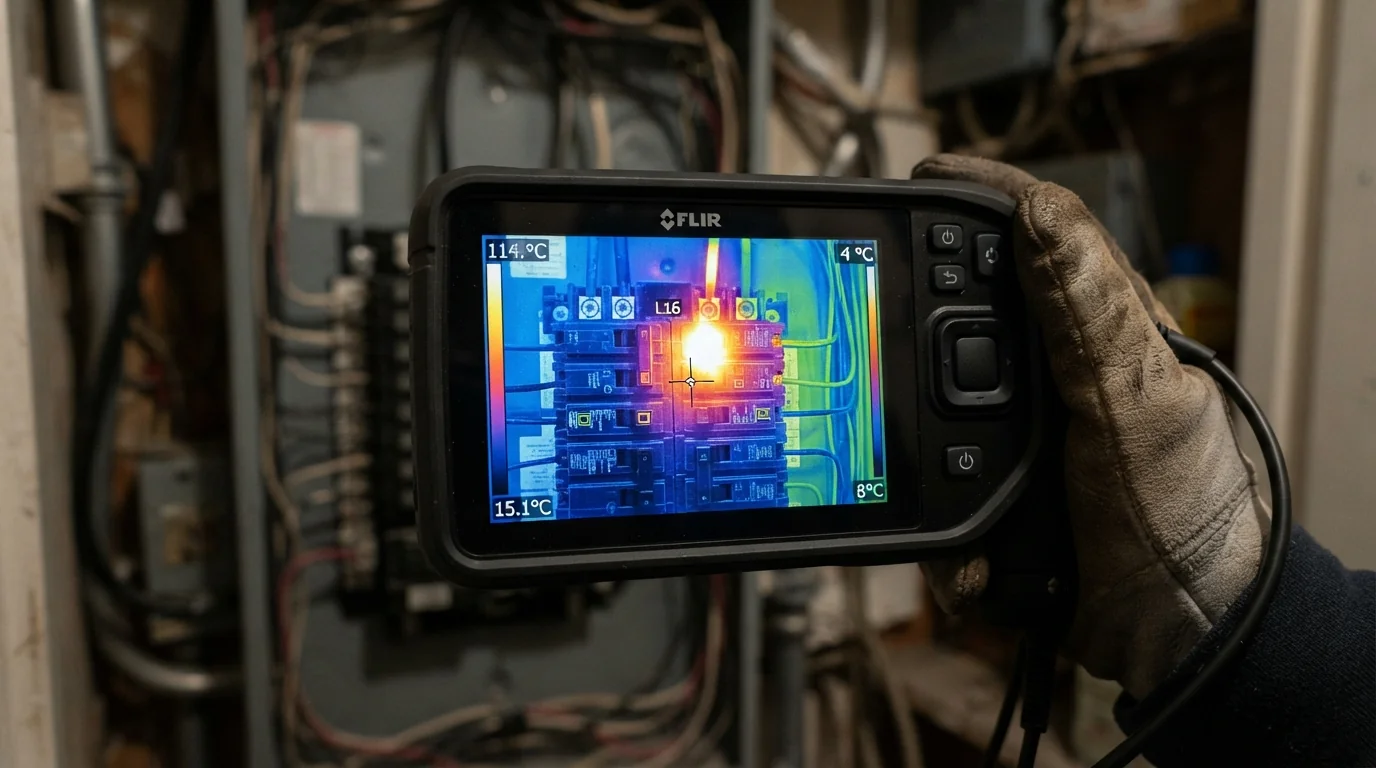
A connection that has loosened or corroded gets warmer under load, and it keeps getting worse until it fails. A thermal camera shows that heat as a bright spot on an image. Scans are done with the covers off and the equipment carrying normal load, because an idle panel hides the problem.
Each finding is photographed in visible light and thermal, measured against similar components, and ranked by how urgent it is. Some findings are a torque adjustment; others are a failing breaker or a damaged conductor that needs replacing. For a broader look at a home's wiring, see electrical safety inspections.
Updated September 2026
Three reasons to scan
Panel and Switchgear Thermal Scans
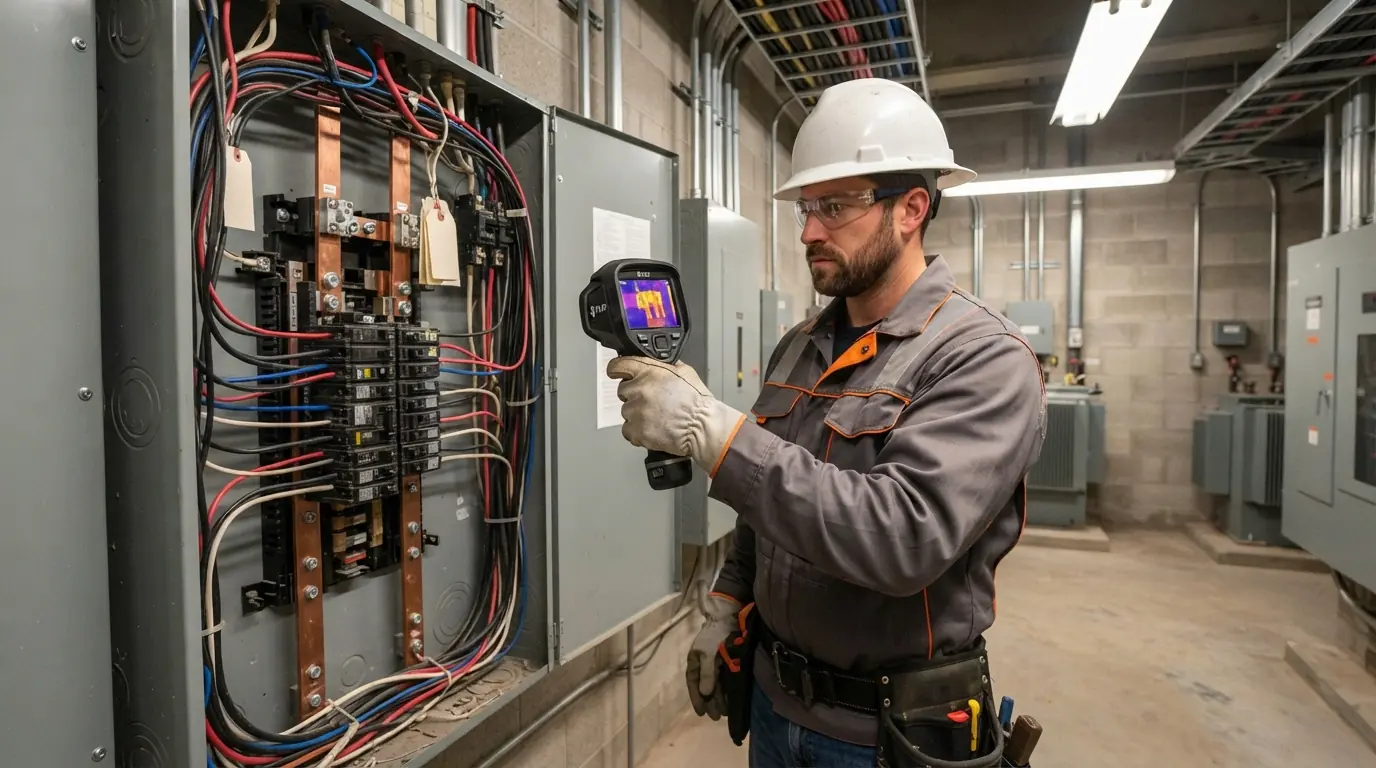
Buildings, restaurants, stores and offices carry heavy loads through panels and switchgear that rarely get opened. A scan covers the main switchgear, distribution panels, meter banks where access allows, and large equipment disconnects. We schedule it at a time of normal or high load, open the covers safely, and scan every accessible connection. The goal is a complete picture of the electrical system's condition, not just the panel that already looks worrying from the outside, and the scan is timed so tenants are not disturbed.
Scans for Insurers and Lenders
Insurers often ask commercial properties and larger residential buildings for an annual infrared scan, and lenders sometimes ask during a refinance. The report they want lists every piece of equipment scanned, every finding with images and temperatures, and what was done about it. We write the report for that audience, and a follow-up scan after repairs shows the problem is gone, which is usually what the insurer needs to close the request, and it goes on file for next year's comparison.
Follow-Up Scans After Repairs
A repair is only proven when the same connection scans cool under the same load. After tightening, replacing breakers or repairing conductors, we rescan the repaired points and document the result beside the original image in the same report format. Building owners who scan every year also get a comparison over time, which shows which equipment is aging and helps plan replacements before they become emergencies that shut down a floor or a store, when replacement is always more expensive.
How an infrared scan runs
Plan the scan
Equipment list, access and load timing.
Scan under load
Covers off, every connection imaged.
Rank findings
By temperature rise and risk.
Report
Images, measurements and recommended fixes.
Rescan after repairs
Proof the problem is gone.
Why buildings here benefit most
New York has a huge stock of older multi-unit buildings and dense commercial blocks, where one panel or feeder serves many tenants and a failure affects all of them at once. Meter rooms, risers and switchgear in those buildings are often decades old and rarely opened. A scan is one of the few ways to see their condition under real load without shutting anything down, which is why managers and insurers ask for it every year.
What sets the cost of a scan
Equipment count and access decide the price.
- Number of panels and switchesEach one is opened and scanned.
- AccessLocked rooms and tenant spaces need coordination.
- Load timingScans during peak hours may need after-hours help.
- Report detailInsurer reports need full documentation.
- Repairs foundFixes are quoted separately after the scan.
Signs a scan is overdue
- Insurer or lender requesting one
Often an annual requirement.
- Breakers or panels warm to the touch
Heat is already reaching the surface.
- Discolored insulation or terminals
Past overheating visible on inspection.
- Buzzing from switchgear
Loose or arcing connections.
- Equipment never opened in years
Unknown condition under load.
- Tenants reporting flicker or outages
Possible feeder or panel problems.
Infrared scanning questions
Loose, corroded or overloaded connections that are overheating.
Heat only shows when current is flowing.
Many insurers and managers ask for once a year.
No, scans are done with equipment running.
Yes, and we rescan to confirm.
Yes, it is written for that.
Rarely; they are most useful for buildings and businesses.
Related work in the same system
See the heat before it becomes a failure
Call any hour to schedule a scan for the building or business.