Temporary Light and Power for Construction in New York
Extension cords daisy-chained from a neighbor's outlet are how construction sites catch fire. We set up temporary light and power that is protected, labeled and inspected, and take it out cleanly when the permanent wiring is live.
- Calls answered 24/7
- GFCI-protected outlets
- Removed at close-out
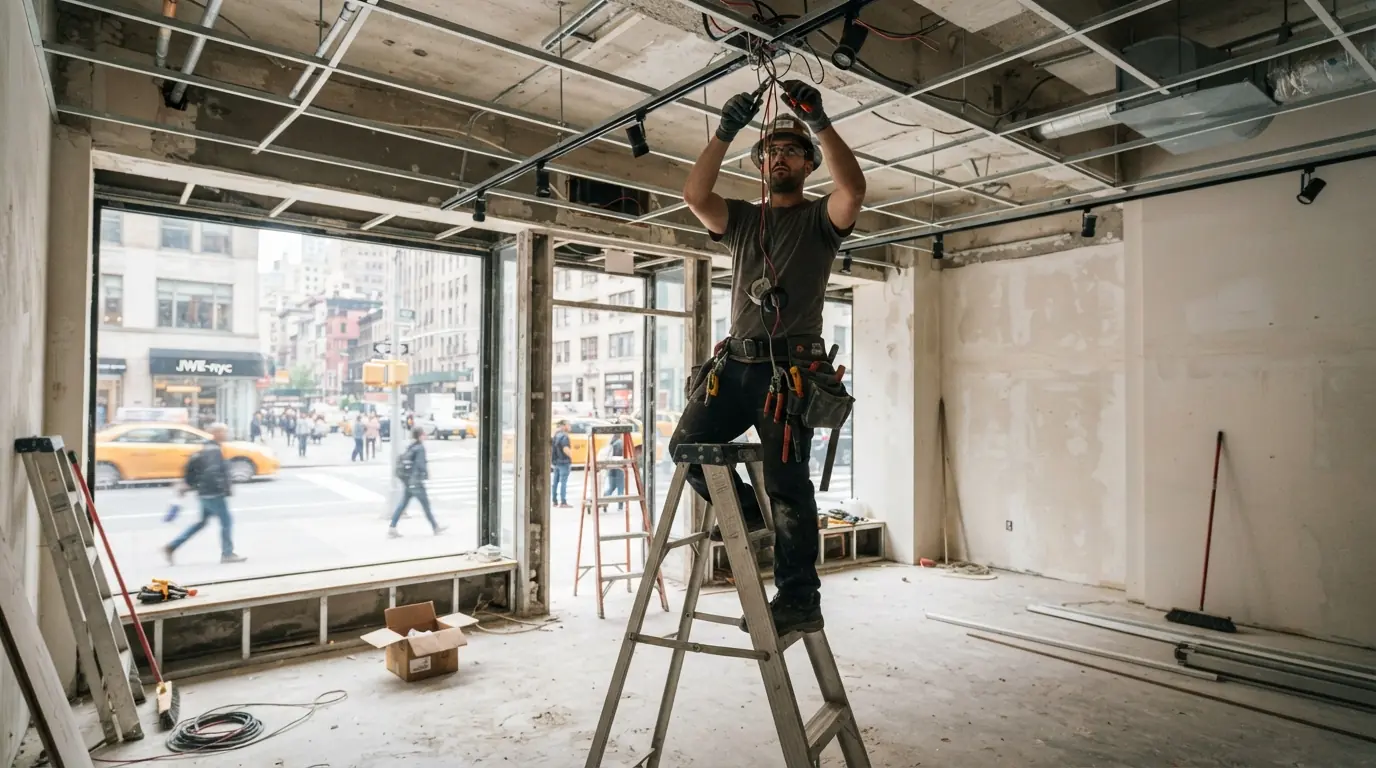
- Power source and loads for the trades planned
- Protected distribution and guarded lighting installed
- Removed when permanent power is live
Temporary construction power in New York means a protected source of light and power for a renovation or build-out, usually a temporary distribution panel with GFCI-protected outlets and guarded string lighting, fed from the building service or a utility temporary service. It is set up at the start, maintained during work, and removed once the permanent wiring passes inspection.
Rather ask a person?(929) 755-0293What temporary power involves
Every trade on a job needs power: saws, compressors, vacuums, heaters in winter, and enough light to work safely. Temporary power gives them protected outlets in the right places instead of cords snaking back to whatever outlet still works. Temporary receptacles on construction sites need GFCI protection, and lighting strings need guards on the lamps.
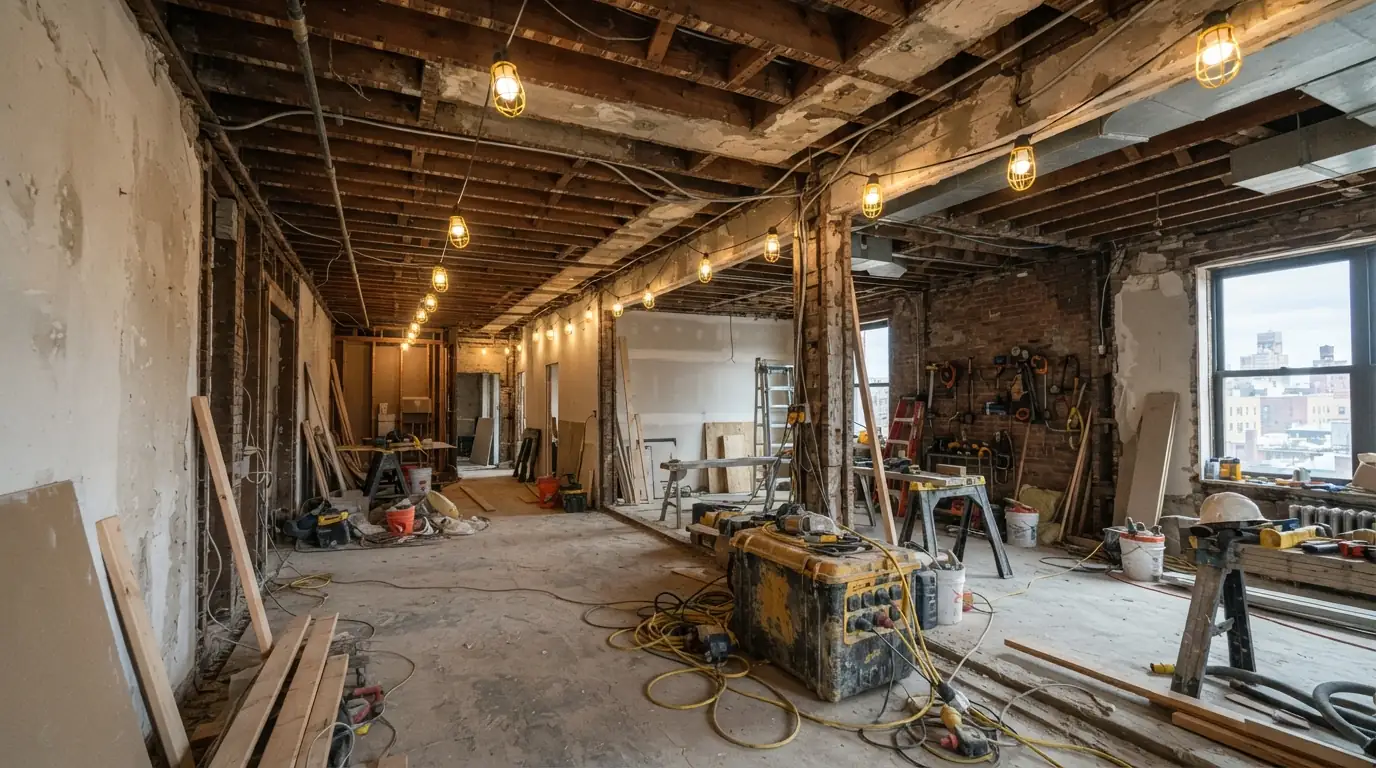
In a gut renovation the temporary setup is usually fed from the apartment's panel or a nearby circuit the building allows. On a larger build-out it may start with a temporary service from the utility. Either way, it is planned with the general contractor, then taken out when the permanent wiring from the renovation is live.
Updated September 2026
What sets the cost of temporary power
Job size and duration decide most of it.
- Size of the jobAn apartment needs far less than a multi-floor build-out.
- Power sourceA building circuit is simpler than a utility temporary service.
- DurationLonger jobs need more maintenance visits as layouts change.
- Lighting coverageStairs and egress routes need guarded lighting throughout.
- RemovalClean removal and restoration at the end.
Three temporary power setups
Temporary Light and Power for Renovations
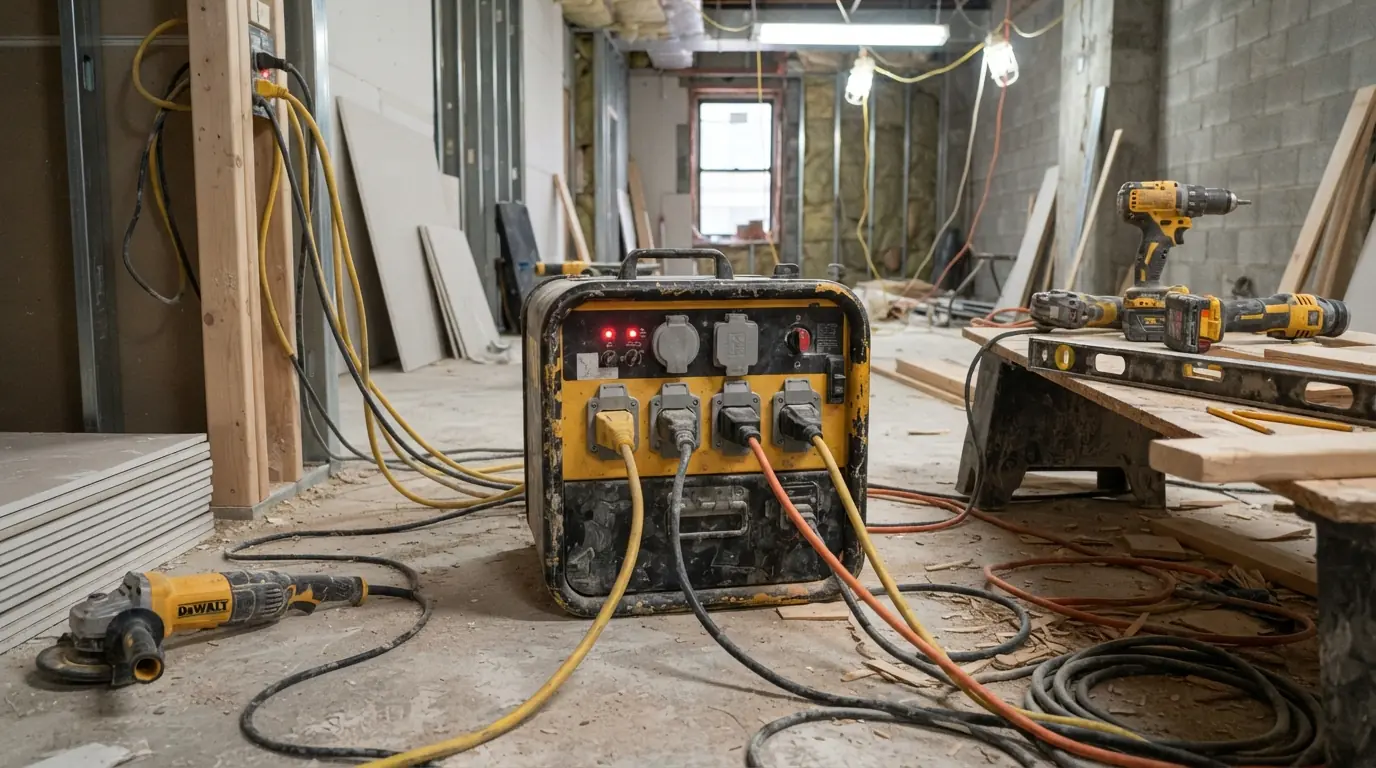
In an apartment or house renovation, the old wiring is often the first thing to come out, which leaves the trades with nothing. We set up a small distribution point with GFCI-protected outlets near where the work is, and run guarded lighting through the rooms. When the walls are open for rough-in, the temporary setup is placed so it does not block the new work. It stays in until the permanent circuits pass inspection and are energized, and we move it whenever the layout changes.
Construction Site Distribution
Larger build-outs and storefront fit-outs need more: a temporary panel or distribution centers on each floor, heavier circuits for equipment, and lighting for stairs and egress routes. We plan the layout with the general contractor so power sits where the trades will be, not where it is convenient to install. Cords are kept off walkways and out of water, and the setup is checked as the job progresses and layouts change, with damaged cords pulled out of service immediately.
Removing Temporary Power at Close-Out
Temporary power that stays in after a job is finished is a common hazard: forgotten cords in ceilings, outlets on circuits nobody documented. At close-out we remove the temporary distribution, lighting and any temporary feeds, confirm nothing temporary remains energized, and restore anything we tapped to its permanent state. The permanent panel directory is then accurate, which matters for the owner, for the building and for whoever works on the space next. The final walkthrough confirms every temporary feed is gone.
What a temporary power setup includes
- Loads planned with the general contractor
- Protected distribution near the work
- GFCI protection on temporary outlets
- Guarded lighting through work areas and stairs
- Cords routed off walkways and away from water
- Checks as the job layout changes
- Full removal and restoration at close-out
Temporary work and city sign-offs
In New York City the temporary setup comes out just before the part owners care most about: the final electrical sign-off. Sign-off requests for a certificate of occupancy are made in DOB NOW: Inspections, and permits issued under the old 2011 code before December 21, 2025 expire if the final sign-off is not issued within 24 months. Planning the close-out, including removing temporary power, keeps the sign-off on schedule.
How long temporary power stays in
It goes in on the first day the old wiring is off or the space is opened up, and it comes out when the permanent circuits have passed inspection and are energized. Between those dates we adjust it as walls go up and trades move through, and we coordinate the final removal with the general contractor so no trade is left without power for their last tasks.
How a temporary power job runs
Plan with the contractor
Trades, tools, heaters and lighting needs.
Choose the source
Building circuit or utility temporary service.
Set up
Protected distribution and guarded lighting installed.
Maintain
Adjusted as the job progresses.
Remove
Taken out once permanent power is live and inspected.
Temporary power questions
They overload circuits and are rarely protected; they are a common fire cause on sites.
Yes, on construction sites they do.
Often, if the panel and building allow it.
We do, at close-out, once permanent power is live.
Yes, sized to the equipment and trades involved.
Yes, the setup is planned around their schedule.
Nothing temporary stays energized, and the directory is accurate.
Related work in the same system
Power the job safely from day one
Call any hour. Tell us the size of the job and the start date.