Electrical Submetering for New York Commercial Buildings
Submeters show each tenant what they actually use. In New York City many commercial buildings are required to have them, and owners of smaller buildings add them for fair billing. We install them panel by panel, label every one to its space, and keep tenants running while we work.
- Calls answered 24/7
- Local Law 88 submetering
- Phased around tenants
- Tenant spaces and panels mapped
- Submeters installed and labeled
- Readings checked
Electrical submetering in New York means installing a meter downstream of the utility meter for each tenant space or floor, so the owner can measure and bill electricity by actual use. Local Law 88 required submeters by January 1, 2025 in many commercial tenant spaces. We map each space to its panel, install and label the submeters, and verify their readings.
Rather ask a person?(929) 755-0293What submetering involves
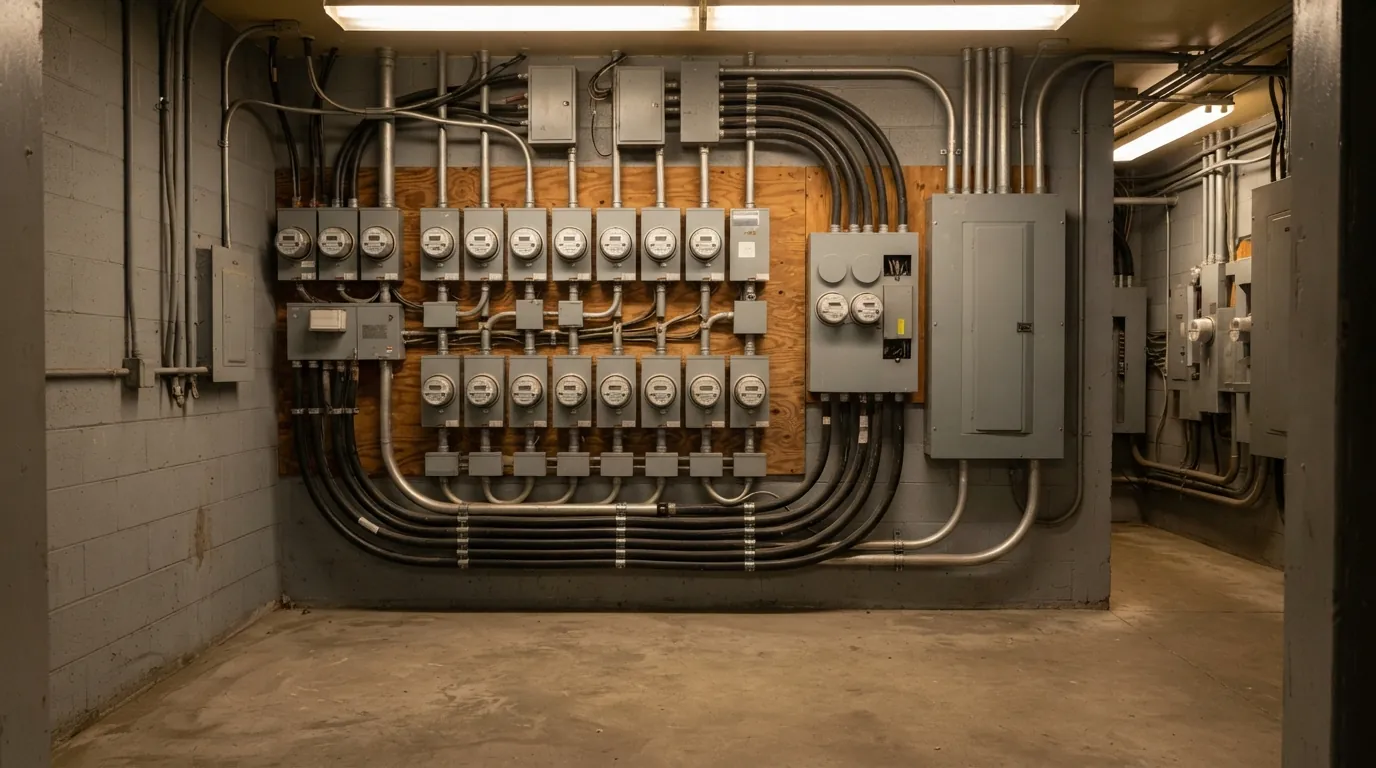
A building usually has one or a few utility meters, but many tenants. A submeter sits on the feeder or panel serving one tenant space or one floor and records what that space uses. The hard part is not the meter itself but the mapping: older buildings often have circuits from one tenant's space wandering into another's panel, which has to be untangled before a submeter measures the right thing.
We start by tracing which panels and feeders serve which space, then choose the submeter type that fits: panel-mounted meters with current transformers for most retail and office spaces, or a multi-point meter in the electrical room for a floor of small tenants. Where the work reveals overloaded or worn equipment, we flag it alongside our commercial electrical work rather than metering around it.
Updated September 2026
What sets the cost of submetering
Mapping old buildings is often the biggest variable.
- Number of spacesEach tenant space or floor needs its own meter.
- Panel layoutTangled circuits must be traced and sorted first.
- Meter typeRemote-read systems cost more than local meters.
- Occupied spacesNight or weekend work adds to the schedule.
- DocumentationRecords for reports and statements take time.
Three kinds of submetering work
Local Law 88 Tenant Submetering
For buildings covered by Local Law 88, each covered tenant space or multi-tenant floor needs its electricity measured by a submeter, with a report filed with the Department of Buildings and monthly statements to tenants after the deadline. New covered spaces created since then need submeters as they are built out. We map the spaces, install the meters, document which meter serves which space, and give the owner the records the report and the statements depend on, organized by floor and tenant.
Submeters for Retail and Mixed-Use Buildings
Smaller buildings that fall below the law's thresholds still add submeters, usually because a flat split of the electric bill has stopped feeling fair. A ground-floor restaurant and a quiet office upstairs use very different amounts. We install submeters on each commercial tenant's panel or feeder, choose meters that can be read on site or remotely, and label everything so the managing agent can read them each month without calling us, and so a new tenant can see exactly what their space is billed for.
Submeter Reading and Monthly Statements
A submeter is only useful if someone can read it reliably. We set up meters with clear tenant labels, verify their readings against the main meter so the totals make sense, and can connect them to a reading system that sends monthly data to the managing agent. When tenants move or spaces are combined, we update the mapping and the labels so the statements keep matching the space. If a meter disagrees with the main meter, we find out why before the next bill goes out, rather than leaving the owner to explain it.
What a submetering job includes
- Tenant spaces mapped to panels and feeders
- Stray circuits identified and sorted
- Submeters sized and installed
- Every meter labeled to its space
- Readings checked against the main meter
- Records for the owner and managing agent
- Mapping updated when spaces change
What Local Law 88 required
Local Law 88, as amended in 2016, required submeters by January 1, 2025 in non-residential tenant spaces over 5,000 square feet in New York City buildings over 25,000 square feet, and monthly consumption statements to tenants after that. Buildings that missed the date, or create new covered spaces, still need the meters, so submetering remains steady work in Manhattan and Midtown office buildings.
How long submetering takes
A few tenant spaces with clean panels can be metered in days. A building with tangled circuits takes longer, because the mapping comes first. We schedule panel work outside tenant hours where possible, so most tenants see a short planned outage at most.
How submetering runs
Map
Spaces traced to panels and feeders.
Plan
Meter type and locations chosen.
Install
Meters and current transformers fitted.
Verify
Readings checked against the main meter.
Document
Labels and records handed over.
Electrical submetering questions
It covered larger commercial buildings and tenant spaces; we can check yours against the thresholds.
No, dwelling units are excluded from the law's submetering requirement.
Yes, many can report monthly data to the managing agent.
Usually only briefly, and we schedule it outside their hours where possible.
We trace and sort them first so each meter measures the right space.
No, they sit downstream of it and measure each space's share.
Yes, we update the mapping and labels as spaces change.
Related work in the same system
Need submeters in your building?
Call any hour with the number of tenant spaces.