Sump Pump Wiring and Battery Backup in New York
A sump pump fails when you need it most: during the storm that knocked the power out. We give the pump its own protected circuit, add a battery backup, and wire a high-water alarm so a failure never goes unnoticed.
- Calls answered 24/7
- Dedicated protected circuit
- Battery backup and alarm
- Pump circuit and outlet checked
- Battery backup and alarm installed
- Tested with a filled pit
Sump pump wiring in New York means a dedicated circuit for the pump, protection that meets current code, a battery backup pump that runs when the power fails, and a high-water alarm that warns if either pump stops. National 2026 cost data puts sump pump installation at $500 to $4,000, averaging about $1,400.
Rather ask a person?(929) 755-0293What sump pump wiring involves
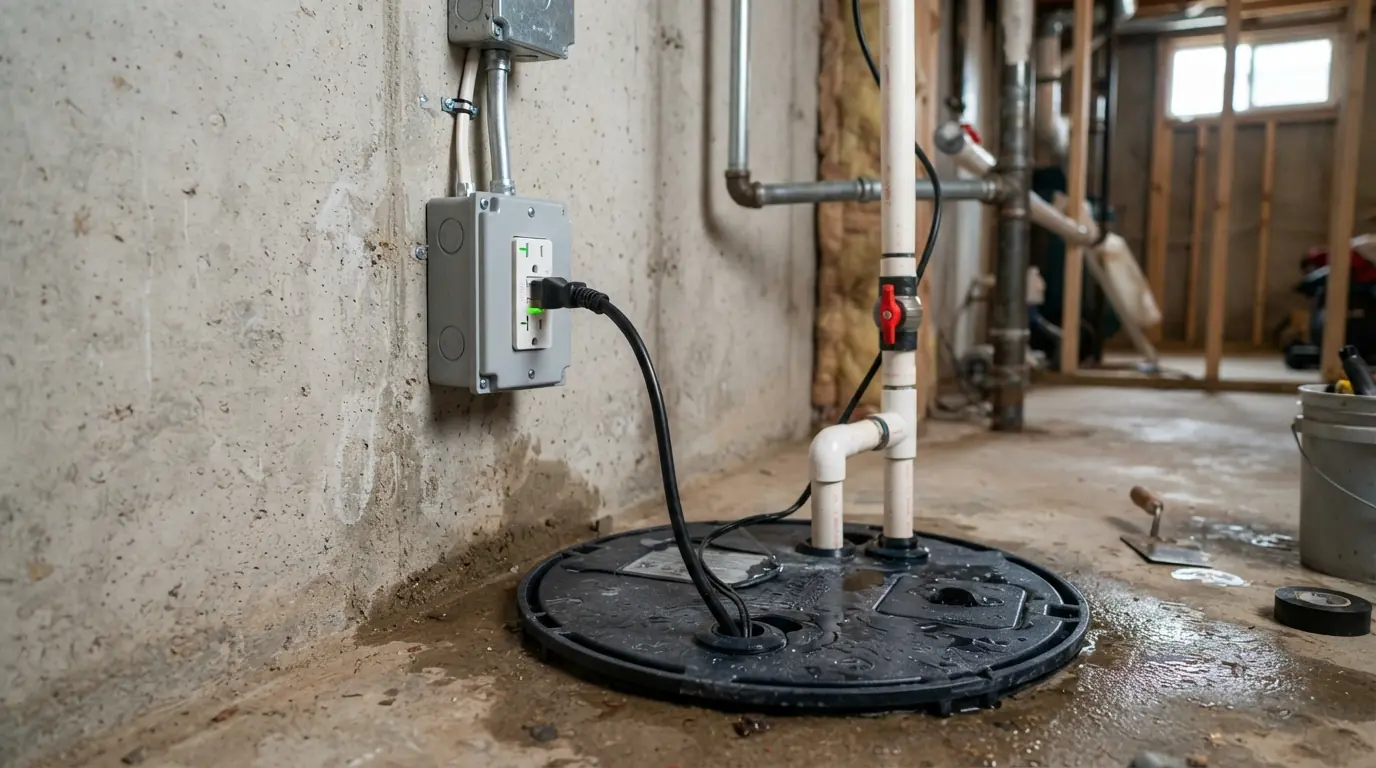
A sump pump plugged into a shared basement outlet, or into an extension cord, is a flood waiting for the wrong moment. The pump needs its own circuit so a freezer or a dehumidifier cannot trip it, and an outlet near the pit mounted where water cannot reach it.
Current code expects GFCI protection in basements. A GFCI trip on a pump circuit can go unnoticed until the basement floods, so we pair it with a high-water alarm and, ideally, a battery backup pump that takes over automatically. If the house has a generator, the pump belongs on the backup plan; see generator interlocks.
Updated September 2026
What sets the cost of sump pump wiring
The electrical work is usually a modest share of a sump pump project.
- New circuit or existingA dedicated run from the panel costs more than moving an outlet.
- Battery backupThe backup pump, battery and charger add equipment.
- Alarm typeSimple local alarms cost less than connected ones.
- Generator connectionAdding the pump to a generator plan adds work.
- Basement accessFinished basements make routing slower.
Three parts of sump pump protection
Dedicated Sump Pump Circuit
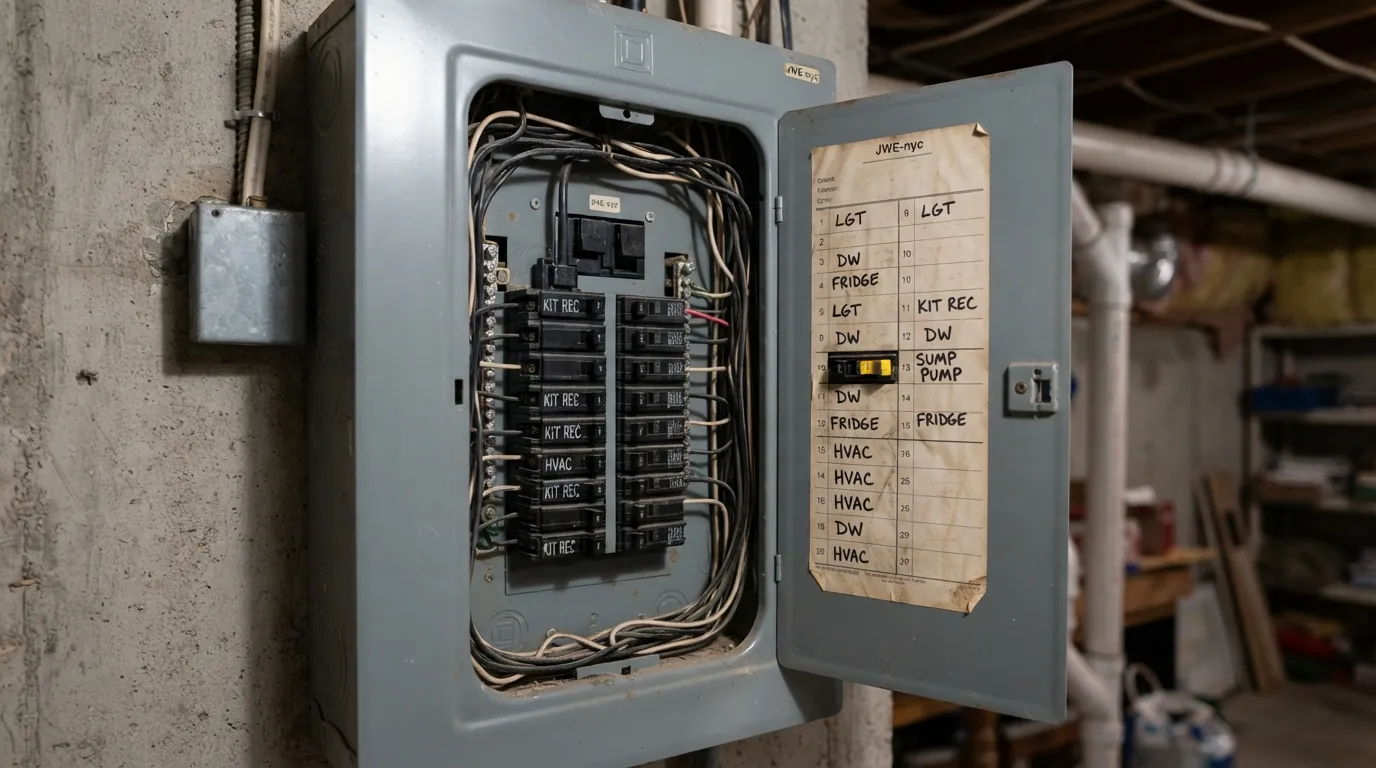
The pump gets a circuit that feeds nothing else, with an outlet mounted above any likely water line near the pit. We size it to the pump's nameplate, protect it as the code requires, and label it clearly in the panel so nobody switches it off by mistake while working on something else. Where the pump used to run on an extension cord or a shared outlet, that arrangement is removed so the old weak point does not linger behind the new one.
Planning range (national sources, 2026): $500 to $4,000, averaging about $1,400. Coastal-market pricing and building access change the figure; this is a planning band, never a quote.
Battery Backup Sump Pump
A battery backup pump sits in the same pit and takes over when the main pump loses power or fails. The battery charges from a nearby outlet and runs the backup pump for hours during an outage. We mount the battery and charger where water cannot reach them, connect the backup pump to its float, and test the changeover by cutting power to the main pump with the pit filled. For long outages, a generator connection keeps the main pump running and recharges the battery too.
High-Water Alarm Wiring
A high-water alarm sounds when water rises above the level where the pump should have started, which catches a tripped circuit, a stuck float or a failed pump before the floor gets wet. Some alarms also send a phone notification. We mount the sensor at the right height in the pit, place the alarm where it will be heard, and test it by raising the water level. It is the smallest part of the system and the one owners are most grateful for.
What sump pump protection includes
- Dedicated circuit sized to the pump
- Outlet mounted above the likely water line
- Protection as the current code requires
- Battery backup pump and charger
- High-water alarm at the right height
- Panel breaker clearly labeled
- Changeover tested with a filled pit
Basements and storm outages
Superstorm Sandy left more than 780,000 New York City residents without electricity and heat, and a great deal of the damage was basements that flooded once pumps and equipment lost power. That is the scenario a sump pump plan has to survive: heavy water at the same moment the grid goes down. A battery backup and an alarm are what turn a pump into a plan that works through the whole storm.
How sump pump wiring runs
Check the setup
Pump, outlet, circuit and pit.
Run the circuit
Dedicated line from the panel.
Add backup
Battery pump and charger installed.
Add the alarm
High-water sensor and alarm wired.
Test
Pit filled to confirm every stage works.
Signs the sump pump setup is at risk
- Pump on an extension cord
A weak point that fails in wet conditions.
- Pump shares an outlet
Another appliance can trip the circuit.
- No battery backup
An outage stops the pump when you need it.
- No high-water alarm
A failure goes unnoticed until the floor is wet.
- Outlet close to the pit rim
Water can reach it.
- Breaker trips during storms
A fault or moisture on the circuit.
Sump pump wiring questions
It should, so nothing else can trip it.
It should not; cords fail in wet basements.
Current code expects it in basements, so pair it with an alarm.
Hours, depending on the battery and how often the pump cycles.
Yes, through an interlock or transfer switch.
It warns you when the water rises past where the pump should start.
We handle the electrical; a plumber or waterproofer often sets the pump.
Related work in the same system
Home Battery Backup
DetailsSolar Electrical & Interconnection
DetailsWell Pump Electrical
DetailsSmart Home Wiring
DetailsGuides: Outages and houses on wells
Protect the basement through the next storm
Call any hour. Tell us how the pump is plugged in today.