Washer and Dryer Wiring for New York Apartments and Homes
In-unit laundry starts with two questions: will the building allow it, and can the apartment's power carry it? An electric dryer usually needs its own 240-volt, 30-amp circuit and the washer its own 20-amp line. We check the panel and the feeder, then wire both cleanly.
- Calls answered 24/7
- Dryer and washer circuits
- Panel checked before work
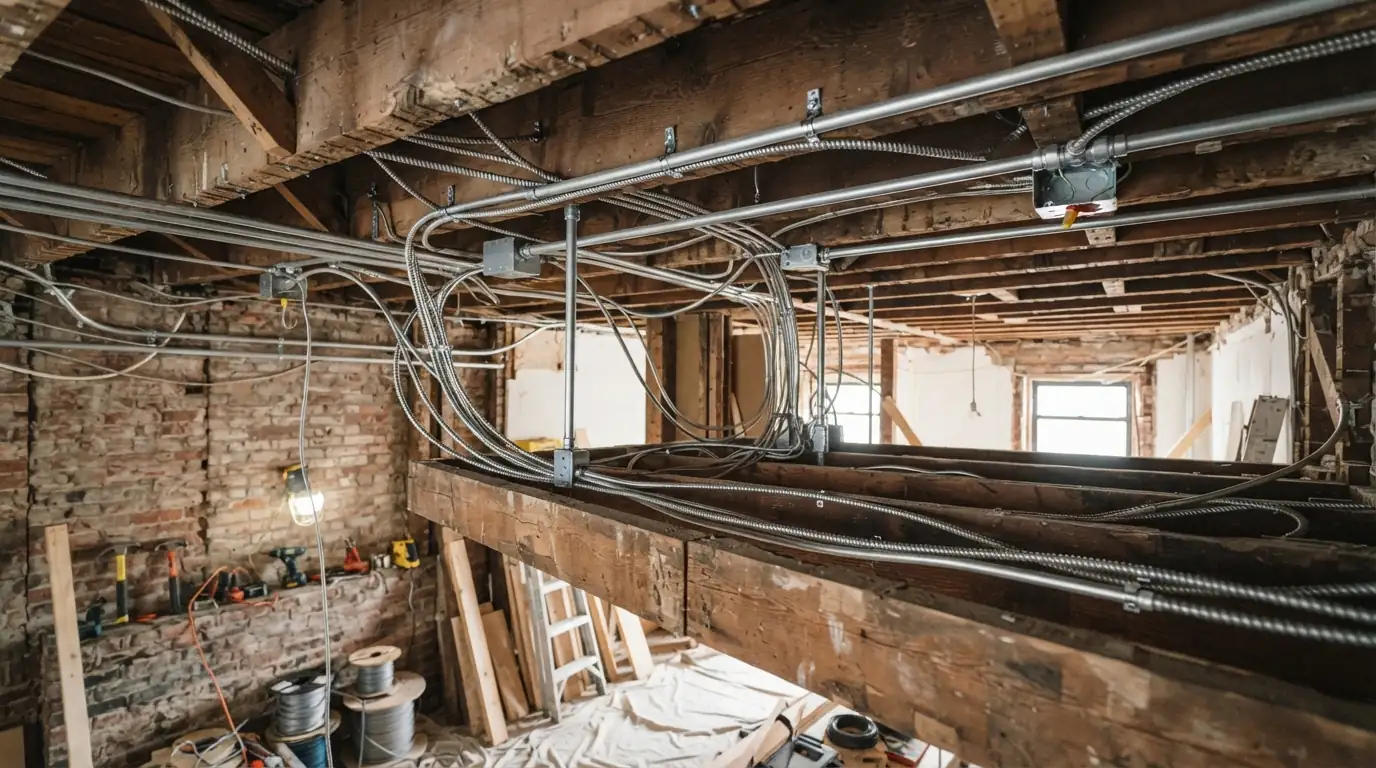
- Dryer nameplate and panel checked
- Dryer and washer circuits run
- Both machines tested
Washer and dryer wiring in New York usually means a dedicated 240-volt, 30-amp circuit for an electric dryer and a separate 20-amp circuit for the washer, both run back to a panel with capacity for them. Ventless heat pump dryers can need less. National cost guides put a 240-volt dryer outlet near the panel at about $250 to $400.
Rather ask a person?(929) 755-0293What laundry wiring involves
A full-size electric dryer is one of the bigger loads in a home. It needs its own 240-volt circuit, usually 30 amps with a four-wire receptacle, while the washer wants its own 20-amp outlet so its motor does not share a line with the kitchen or bathroom. In a house with room in the panel and a basement laundry area, this is routine work.
Apartments are where it gets specific. Many New York buildings limit or prohibit in-unit laundry, and those that allow it often require an alteration agreement, plumbing and venting approval, and proof that the apartment's power can carry the load. We do the load calculation on the apartment so the board, the managing agent and you all see the same numbers before work starts. Where capacity is short, a panel upgrade or a lower-draw dryer can solve it.
Updated September 2026
What sets the cost of laundry wiring
The distance from the panel and the building's rules drive most of it.
- Distance from the panelShort runs to a nearby closet cost least.
- Panel spaceTwo new breakers need room in the panel.
- Dryer typeA 120-volt ventless dryer can avoid a 240-volt run.
- Building approvalsAlteration paperwork adds time before work.
- Wall finishPlaster and tile slow the route.
Laundry hookups yourself versus calling us
| Task | Doing it yourself | With us |
|---|---|---|
| Plugging in a new dryer | Fine if the receptacle matches | Old three-wire receptacles replaced |
| Adding a 240-volt circuit | Needs a permit and the right tools | Run, filed and inspected |
| Sharing an existing outlet | Easy, and often trips breakers | Dedicated circuits sized to each machine |
| Checking panel capacity | Hard to judge from the breakers | Load calculation on the apartment |
| Building paperwork | Easy to miss a requirement | Scope and insurance prepared for the board |
Plugging in a machine is fine; new circuits are work for an electrician.
Three parts of an in-unit laundry setup
Electric Dryer Circuit
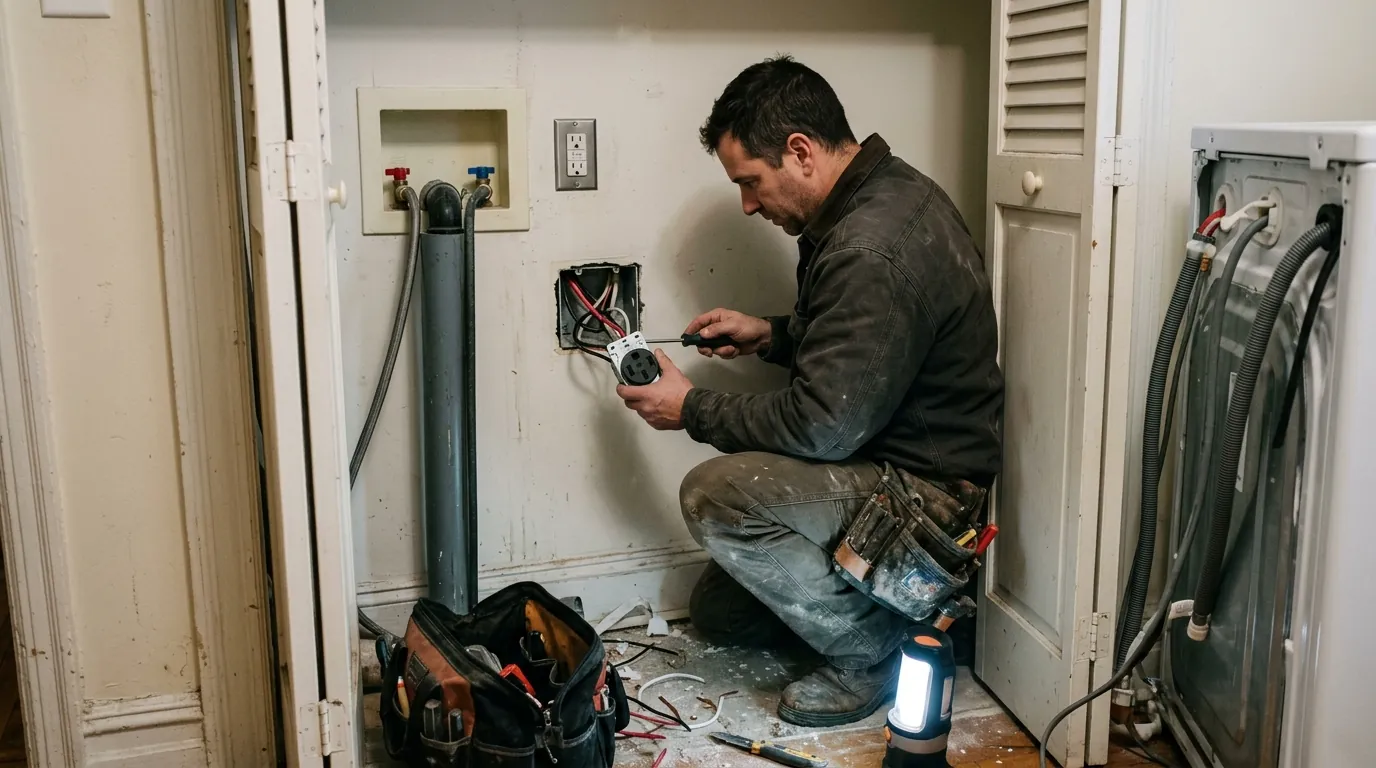
Most full-size electric dryers need a dedicated 240-volt, 30-amp circuit and a four-wire receptacle, sized to the nameplate. We run it from the panel in armored cable or conduit, mount the receptacle where the dryer cord reaches without strain, and replace any old three-wire receptacle we find, since current code expects four-wire connections on new work. Stacked units and compact dryers sometimes have different requirements, so we confirm the model before ordering anything, and label the breaker so it is easy to find later.
Planning range (national sources, 2026): $250 to $800 for a basic 240-volt circuit with a short run and no panel work; a dryer outlet near the panel about $250 to $400. Coastal-market pricing and building access change the figure; this is a planning band, never a quote.
Washer Circuit and Laundry Outlets
The washer gets its own 20-amp circuit so its motor does not trip the breaker that feeds the kitchen or bathroom. Laundry outlets need GFCI protection under current code, and where the machines sit in a closet or alcove we place the outlets behind them at the height the makers recommend. If the laundry area also needs lighting or a small exhaust fan, we add those to the same visit so the walls are only opened once and the closet is finished in a single visit.
Ventless and Heat Pump Dryers
Ventless condensing and heat pump dryers are common in apartments because they need no outside vent. Electrically they vary: some run on 240 volts like a standard dryer, others on a regular 120-volt circuit at the cost of longer drying times. That difference can decide whether in-unit laundry is possible in a unit with a small panel, so we read the nameplate with you and match the circuit to the machine you actually plan to buy, before it is delivered and the closet is built around it.
What laundry wiring includes
- Dryer nameplate and panel checked
- Load calculation for the apartment
- Dedicated 240-volt dryer circuit
- Dedicated 20-amp washer circuit
- GFCI protection where required
- Four-wire dryer receptacle
- Both machines tested running
Building rules come before wiring
New York's 2023 all-electric buildings law targets new construction, so new buildings are designed around electric laundry from the start. Existing buildings are not required to change, which leaves in-unit laundry in older New York City apartments to the building's own alteration rules and to the capacity of each apartment's feeder. Both have to be settled before a circuit is run.
How laundry wiring runs
Confirm approval
Building rules and paperwork settled.
Check capacity
Load calculation on the panel or feeder.
Run circuits
Dryer and washer lines from the panel.
Set outlets
Receptacles placed behind the machines.
Test
Both machines run at the same time.
Washer and dryer wiring questions
Yes, usually a dedicated 240-volt, 30-amp circuit.
It should have its own 20-amp circuit.
The alteration agreement and the machine models, so we can size circuits and prepare paperwork.
Some ventless dryers run on 120 volts, with longer drying times.
New work calls for four-wire receptacles, which separate ground and neutral.
Current code expects it for laundry areas.
A plumber handles water and venting; we handle the power.
Related work in the same system
TV Mounting Power & Wiring
DetailsApartment & House Rewiring
DetailsSecurity Camera Wiring
DetailsKnob & Tube Wiring Replacement
DetailsGuides: Gas to induction in an apartment
Planning in-unit laundry?
Call any hour with the machine models and where they will go.