Getting an EV charger in a New York apartment building
Most New Yorkers who buy an EV do not have a driveway. Charging then depends on the building garage, the curb, or a public charger nearby. Here is how each route works and where an electrician fits in.
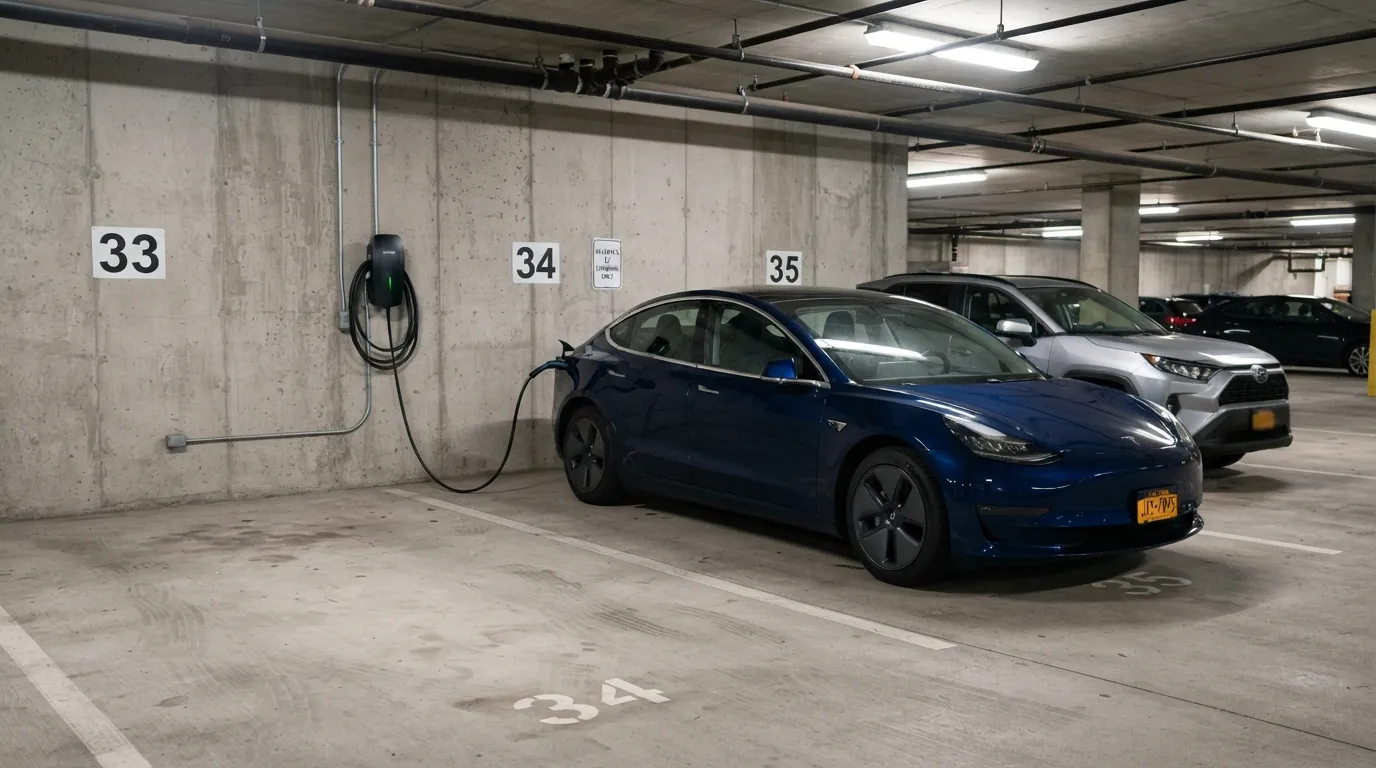
Getting an EV charger in a New York apartment building usually requires the board or owner to approve charging in the building garage, a load study to see how many chargers the service can carry, and often a Con Edison PowerReady incentive application for the infrastructure. Without building parking, curbside and public chargers are the alternative.
Rather ask a person?(929) 755-0293Why a building charger is a building decision
In a co-op, condo or rental building, the garage wiring, the service and the parking spaces belong to the building. A resident cannot simply add a charger to their space; the board or owner decides whether charging happens, how many spaces get it, and how residents pay for the power.
That makes the first step a conversation with the managing agent, not an electrician's visit. What helps that conversation is data: how many residents want chargers now and in a few years.
Rental buildings follow the same logic with the owner in place of the board. Some owners see charging as an amenity that helps fill apartments; others worry about cost and liability. Either way, a clear proposal with a load study behind it answers most of the questions before they are asked.
What the load study decides
A Level 2 charger runs at 240 volts, about the same as a clothes dryer, and adds up to roughly 20 miles of range per hour. A garage of them adds up quickly. The load study measures how much capacity the building service has to spare, and that sets the number of chargers before anyone picks equipment.
Load management lets several chargers share limited capacity, which often doubles the spaces a building can serve without a service upgrade. The study also flags the costliest parts early, such as a long feeder run from the electrical room or switchgear with no spare breaker positions, so the board sees the real scope before voting.
Con Edison PowerReady
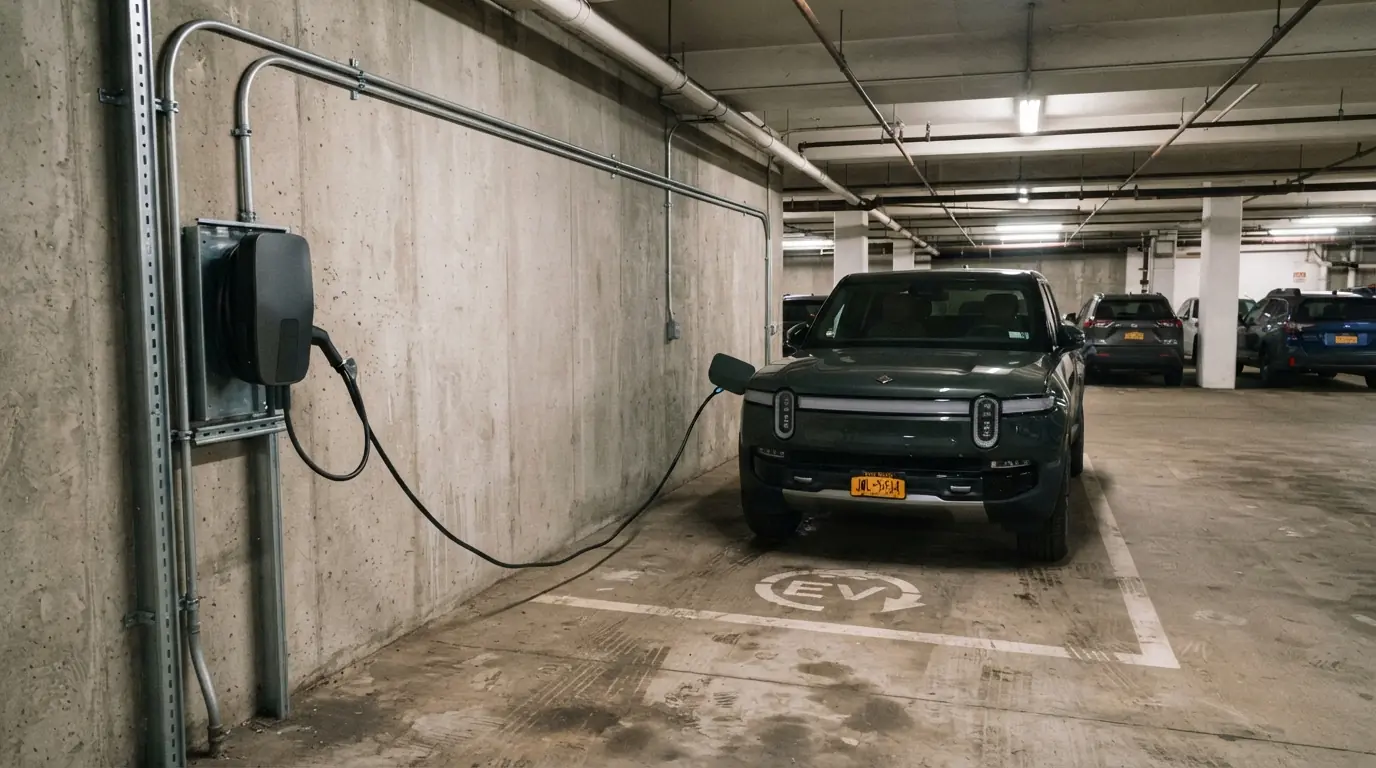
Con Edison's PowerReady program has paid for a large share, in some cases all, of the make-ready infrastructure on qualifying projects, and its first completed project was a Manhattan apartment building. Program terms and funding change, so check current eligibility before a design is priced. The building applies; the electrician prepares the drawings and load data the application needs.
Your board wants numbers first?
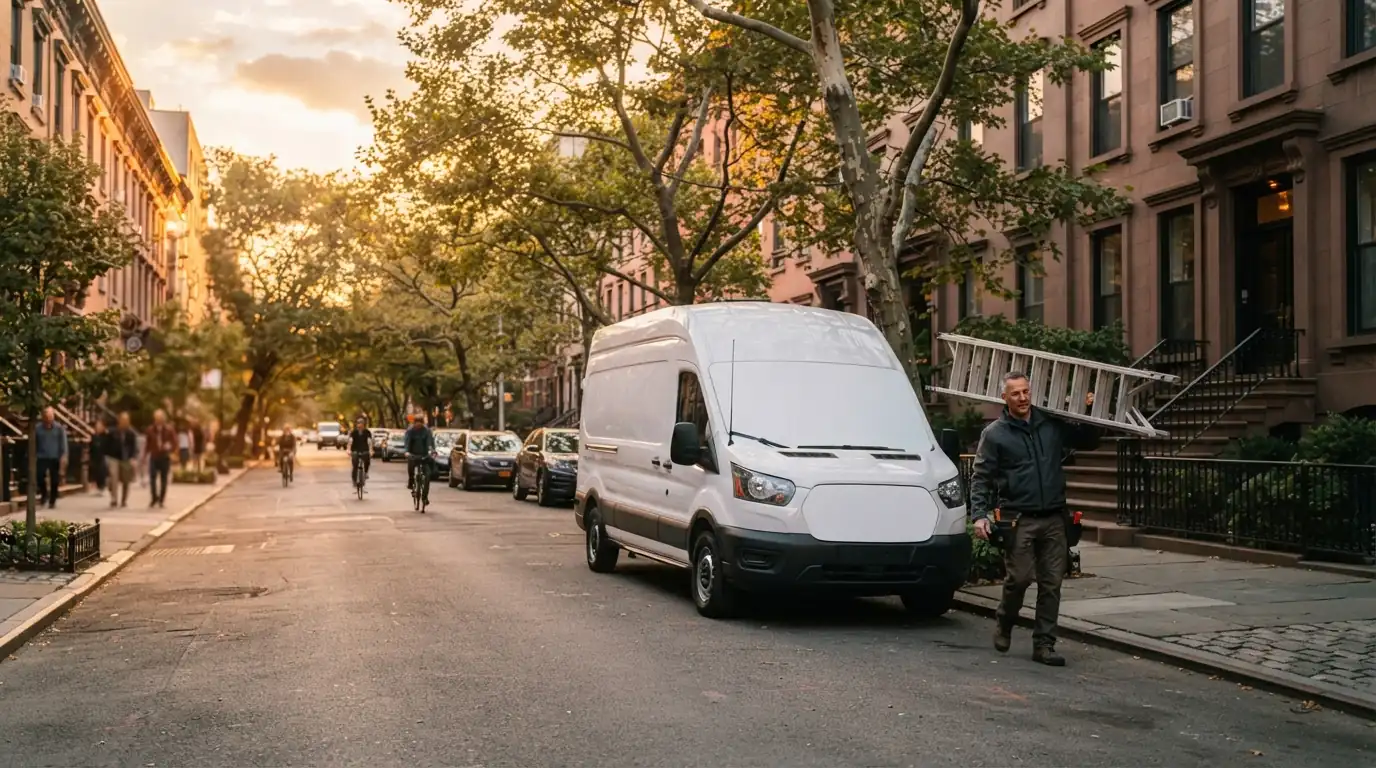
We run the load study and prepare the incentive data. Call any hour.
If your building will not add chargers
The city has set targets of 1,000 curbside chargers by 2025 and 10,000 by 2030, and public Level 2 and fast chargers continue to grow. For drivers who charge once or twice a week, a nearby public charger can work. A charger at home remains the most convenient option, which is why pressing the building with real demand numbers is worth the effort.
If you have private parking
Owners with a private garage or driveway, more common in houses outside Manhattan, can install a Level 2 charger on a dedicated circuit, often without a panel upgrade if the charger manages its own load. That is a single-home job rather than a building project.
How to raise it with your board
Boards respond to specific requests with numbers behind them. A short, organized request moves further than a single resident asking for a charger in their own space.
- Count how many residents drive or plan to buy an EV in the next few years
- Ask the managing agent whether the garage service has ever been assessed
- Propose a load study before anyone discusses equipment
- Ask whether the building would apply for utility incentives
- Suggest networked chargers so each user pays for their own energy
What residents usually care about
Fairness and cost come up at every building meeting. Networked chargers can bill each driver for the electricity they use, so residents without cars are not subsidizing those with them. Assigned versus shared charging spaces is the other common debate: shared spaces with time limits serve more people from fewer chargers, while assigned spaces are simpler to manage. Designing conduit and panel space for future chargers lets a building start small and expand later without repeating the expensive parts.
Level 1 as a stopgap
Some garages already have ordinary 120 volt outlets near parking spaces. Charging from one adds only a few miles of range per hour, which suits drivers who cover short distances, but it still needs the building's permission and an outlet on a circuit that can carry a continuous load. It is a stopgap while a proper Level 2 plan moves through approval.
What the work looks like once it is approved
After the board approves charging and the load study sets the charger count, the electrical work follows a predictable path. Feeders run from the building's switchgear or a new distribution panel to the garage, conduit reaches each charging space, and chargers are mounted and protected where cars and bumpers cannot hit them. Networked chargers are set up so the building can control access and bill users, and the whole installation is filed, inspected and commissioned before residents plug in.
Buildings that plan for more chargers than they install on day one save the most later. Oversizing the conduit and leaving panel space means the next set of chargers is a quick addition instead of a second construction project.
Sources
- Con Edison: helping NYC drivers shift to electric cars
- ChartExchange: Level 2 charging and NYC DOT curbside network
Figures are planning ranges from published sources, not quotes. Every job is priced after we see it.
Apartment EV charging questions
No, garage charging is a building decision that needs board approval.
It varies by building. Networked chargers can bill each resident for the energy they use, and utility incentives may cover part of the infrastructure.
Program terms and funding change over time, so check current eligibility with Con Edison before a design is priced.
Up to about 20 miles of range per hour.
Curbside and public chargers are the alternative for now, and a request backed by resident demand numbers often gets a second hearing.
Where this guide leads
Multifamily and garage charging
See the servicePrivate home chargers
See the serviceCo-op and condo approvals
See the servicePanel upgrades for EV loads
See the serviceMore guides: NYC Electrical Permits and the 2025 Code Explained and Rewiring a Prewar Apartment in New York: Cost and Timing
Bringing charging to your building?
Call any hour. We can run the load study the board will ask for.