Commercial and Multifamily EV Charging Stations in New York
Residents and staff are asking for chargers, and nobody knows whether the building can carry them. We start with the load, size the chargers to what the service allows, and handle the wiring from the switchgear to the last pedestal.
- Calls answered 24/7
- Load study before design
- Utility incentive paperwork
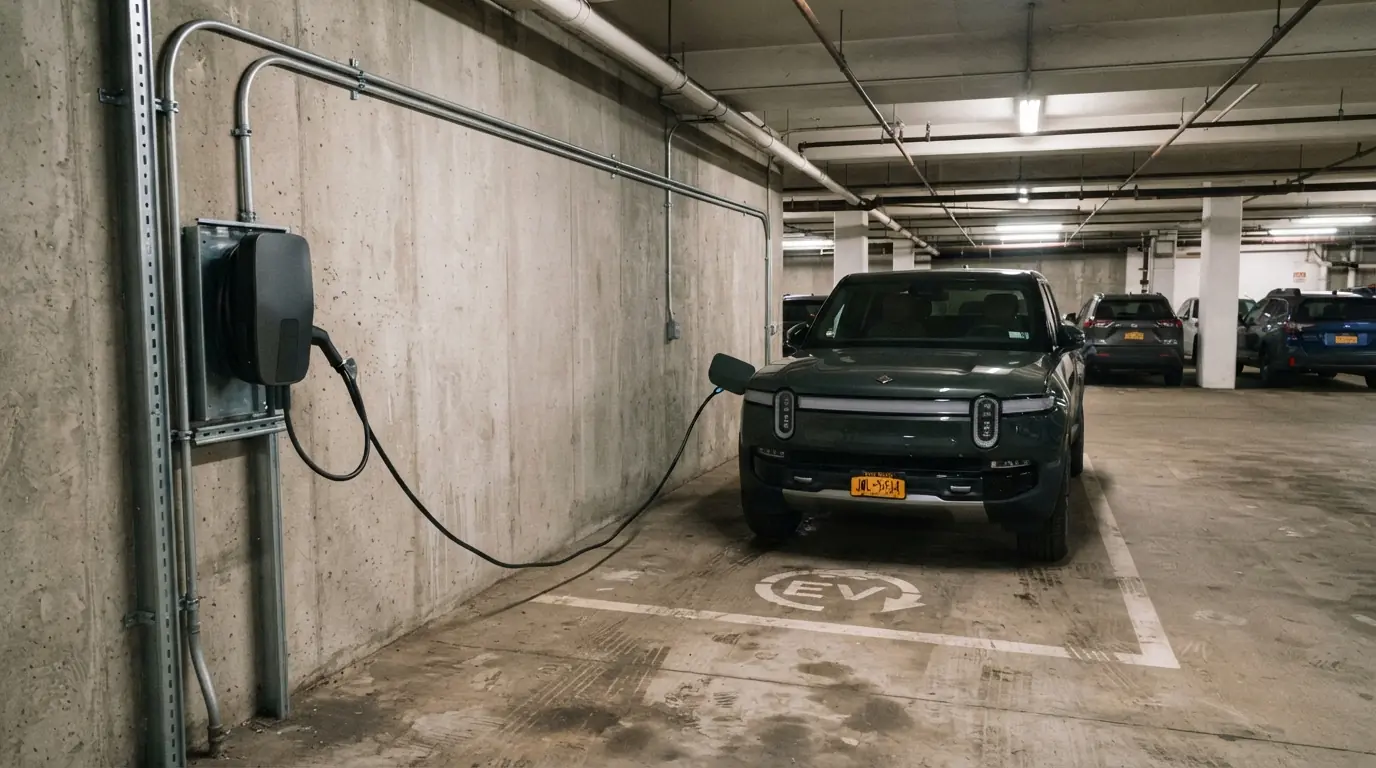
- Load study of the building service
- Charger count sized to real capacity
- Utility and permit filings
Commercial chargers we install and network include ChargePoint and Wallbox units, fed from Square D, Siemens or Eaton distribution equipment.
Commercial EV charging in New York starts with a load study, because a garage full of Level 2 chargers at 240 volts each can exceed what an older service has spare. Con Edison's PowerReady program has covered much or all of the make-ready cost on qualifying projects, so the utility application is part of the plan from day one.
Rather ask a person?(929) 755-0293What a commercial charging project involves
A home charger is one circuit. A garage of twenty is a service question: how much capacity the building has, whether the switchgear has room, and whether load management lets more chargers share less power. That is the order we work in, because the answer decides the charger count.
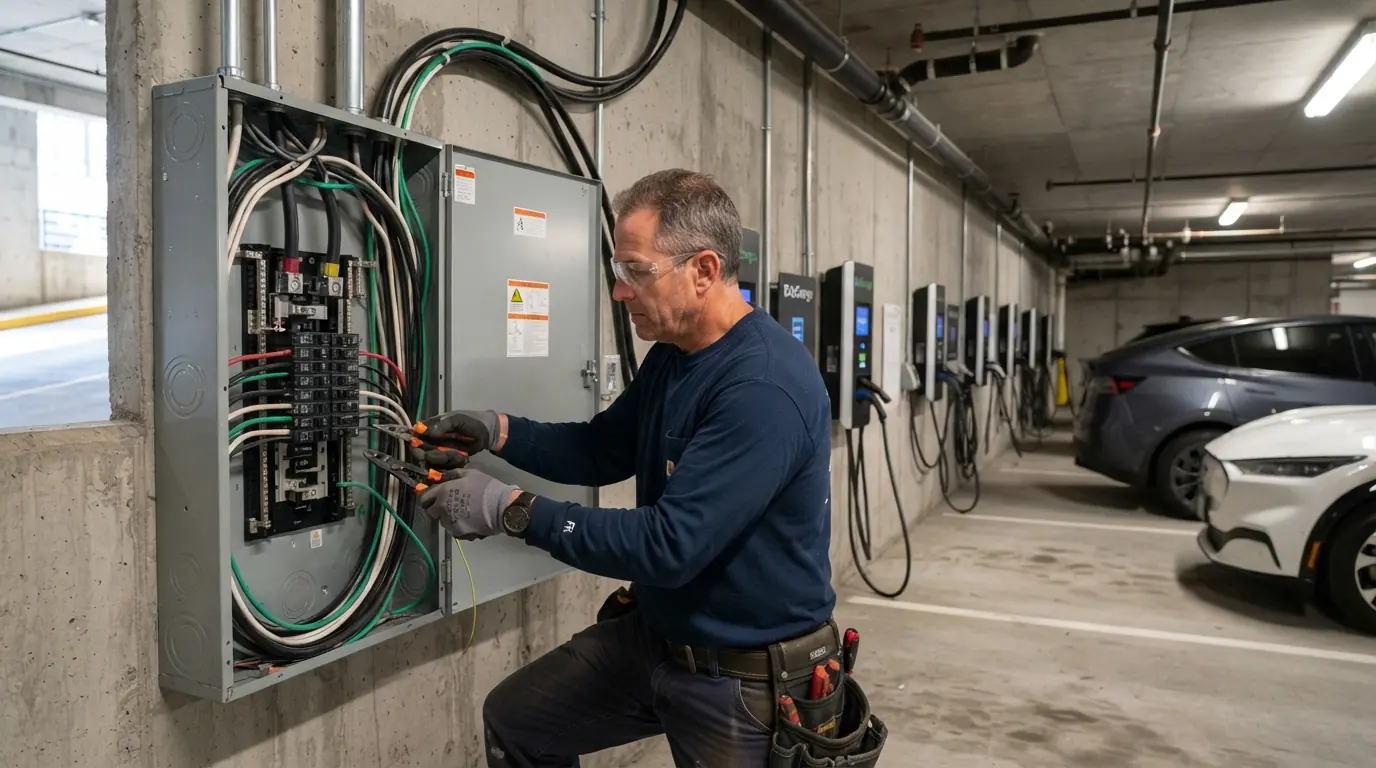
From there the job is mostly electrical construction: feeders from the switchgear, a distribution panel near the parking, conduit to each space, mounting and protection for the equipment, and network setup so the owner can control access and billing. Residents who only need one private space are better served by a home charger install.
Updated September 2026
What moves the cost of a charging installation
Two garages with the same number of spaces can differ widely in price.
- Spare capacityA service with room avoids switchgear or utility upgrades.
- Distance to parkingLong feeder runs from the electrical room add copper and conduit.
- Charger typeLevel 2 is modest per space; DC fast charging changes the whole service.
- Load managementSharing capacity can double the spaces served on the same feeder.
- Incentive eligibilityMake-ready incentives can offset much of the infrastructure.
Level 2 or DC fast charging
| Factor | Level 2 | DC fast |
|---|---|---|
| Voltage | 240 volts | 480 volts |
| Range added per hour | Up to about 20 miles | About 180 miles or more |
| Best for | Residents, employees, overnight fleets | Quick-turn fleets, public sites |
| Electrical impact | Modest per space | Major; often a service upgrade |
For garages where cars sit for hours, Level 2 serves more spaces for the same capacity. DC fast charging earns its cost only when vehicles cannot wait.
Three kinds of commercial charging job
Multifamily and Co-op Garage Charging
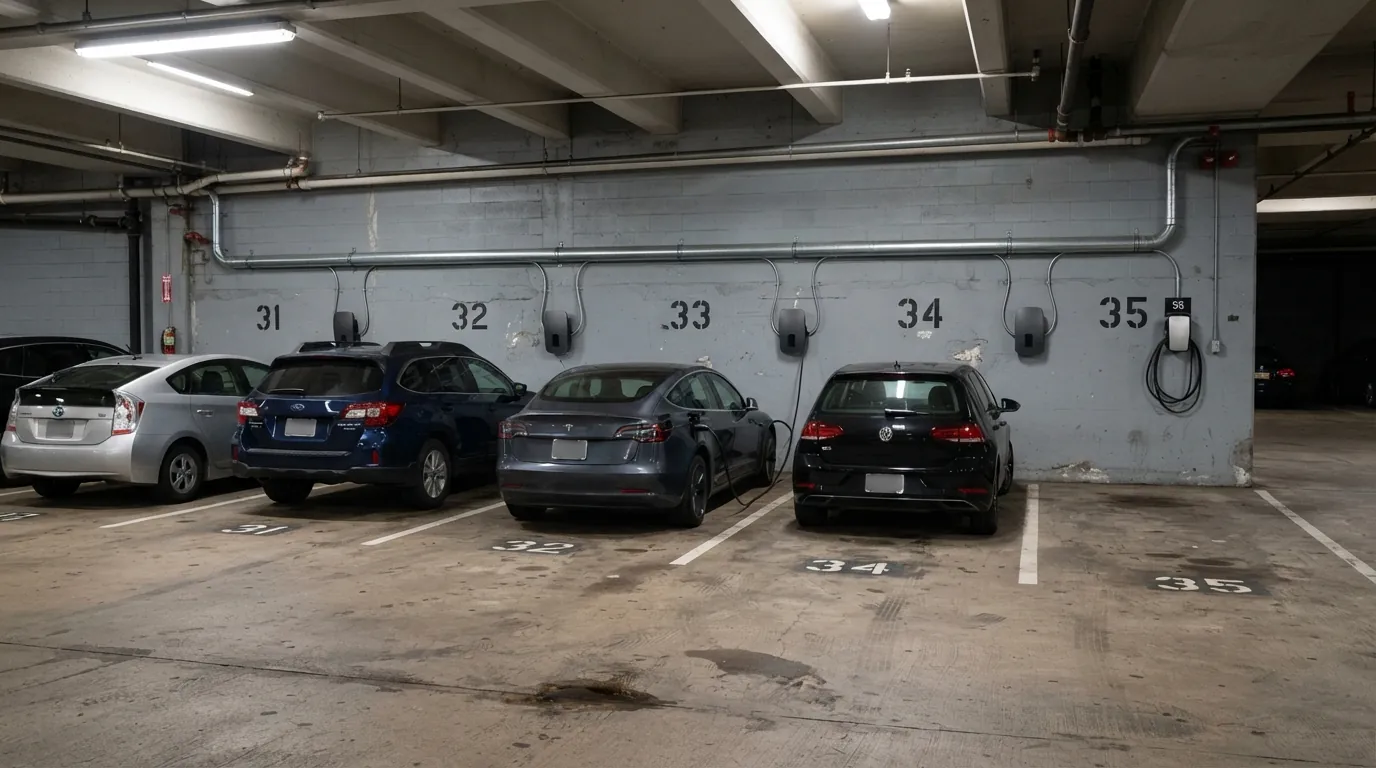
In a co-op or condo garage the hard part is fairness and capacity. We size the shared equipment so a set number of spaces can charge at once, use load management to divide what the service can spare, and give the board a clear picture of what future expansion will need. Networked chargers let the building bill residents for the energy they use rather than spreading it across everyone's maintenance, and the board gets usage reports it can show at the annual meeting.
Workplace and Fleet Charging
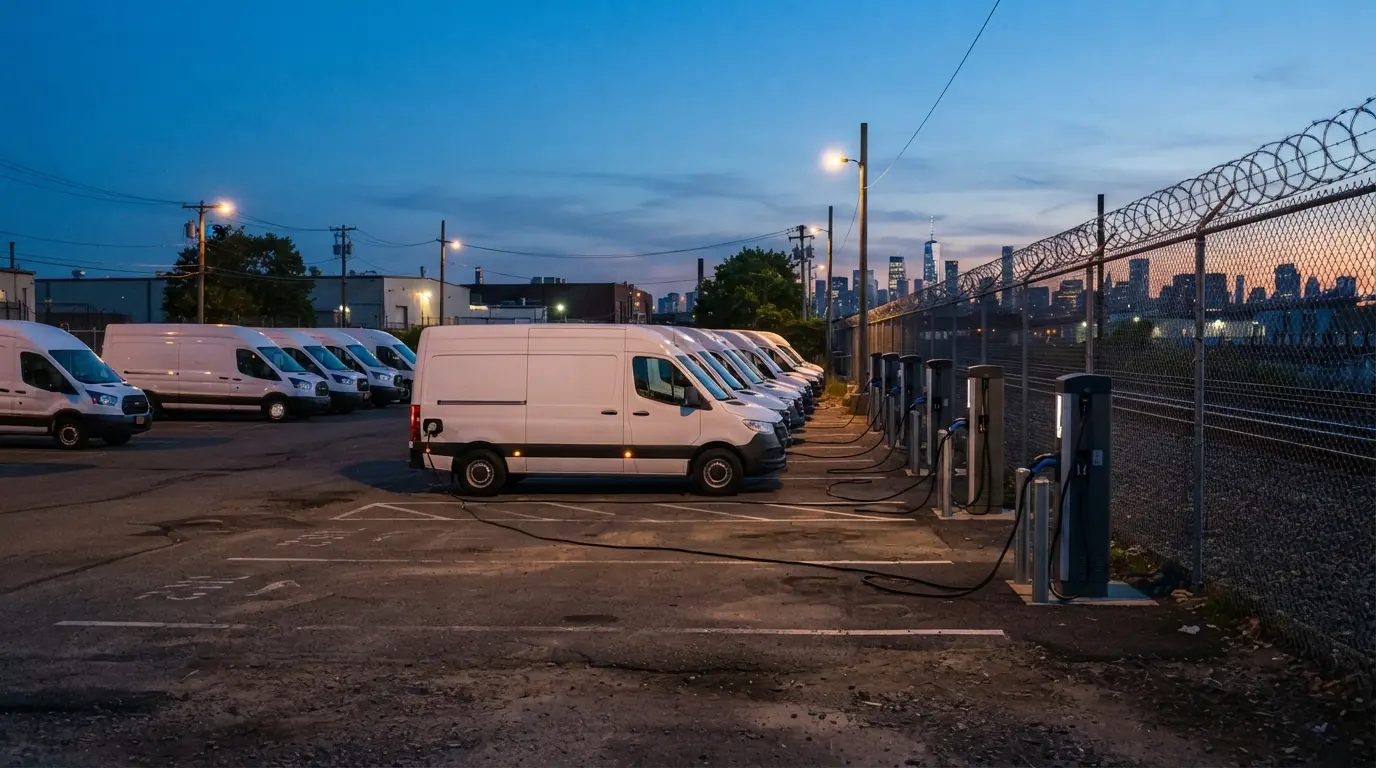
Offices and fleets charge on a schedule, which helps: vehicles parked for eight hours do not need fast charging. We plan the charger count around dwell time, put fleet units where vans actually park, and separate employee charging from fleet charging if the owner wants to track them apart. For vehicles that must turn around quickly, a DC fast unit on 480 volts may make sense, and it changes the service size dramatically, so we price both options before anything is ordered.
Con Edison PowerReady Applications
PowerReady is the utility's make-ready incentive, and on qualifying sites it has paid for a large share of the wiring and infrastructure, in some cases all of it. Program terms, funding and eligibility change, so we confirm the current rules before a design is priced, prepare the technical parts of the application with the owner, and build to what the approval allows. The owner remains the applicant; we provide the drawings, load data and equipment specifications it needs.
What a commercial charging project includes
- Load study of the existing service
- Charger count and layout sized to capacity
- Utility service request where capacity is short
- Feeders, distribution panel and conduit to each space
- Equipment mounting and physical protection
- Network setup for access control and billing
- Permit, inspection and startup testing
Why the load study matters in Manhattan
Sixty-two percent of city homes are in buildings of six or more units, so charging here is mostly a shared-building problem rather than a driveway one. Con Edison's first completed PowerReady project was in a Manhattan apartment building, and garages across the city and in Westchester have followed. What limits most of them is not money but the building's service, which is why we measure demand before anyone picks a charger.
How a garage charging project runs
Site walk and load data
Electrical room, parking layout and utility bills reviewed.
Design and count
Chargers sized to capacity, with room to expand.
Applications and permits
Utility incentive and electrical filings prepared.
Build out
Feeders, panel, conduit and chargers installed.
Commission
Inspection, network setup and a walkthrough for the manager.
Commercial charging questions
That comes from the load study; load management often raises the number.
Program terms change, so we check current eligibility before pricing a design.
Yes, networked chargers can bill each user for the energy used.
Rarely for residents or employees; Level 2 suits cars parked for hours.
The owner applies; we prepare the technical drawings and data.
Yes. Feeders, panels and charger circuits are filed and inspected.
We size conduit and panel space so more spaces can be added.
Related work in the same system
Standby generators for backup power
DetailsTransfer Switch & Interlock
DetailsRadiant Floor Heating
DetailsHome Battery Backup
DetailsGuides: EV charging in an apartment building and EV charger installation cost
Find out what your garage can carry
Call and we will set up the site walk and load study before anyone chooses a charger.