Standby Generator Installation in New York
If an outage means no well pump, no furnace and a spoiled freezer, a standby generator ends that. We size it to the circuits you rely on, wire the automatic transfer switch, and coordinate the gas connection and inspection.
- Calls answered 24/7
- Sized by load calculation
- Automatic transfer switch
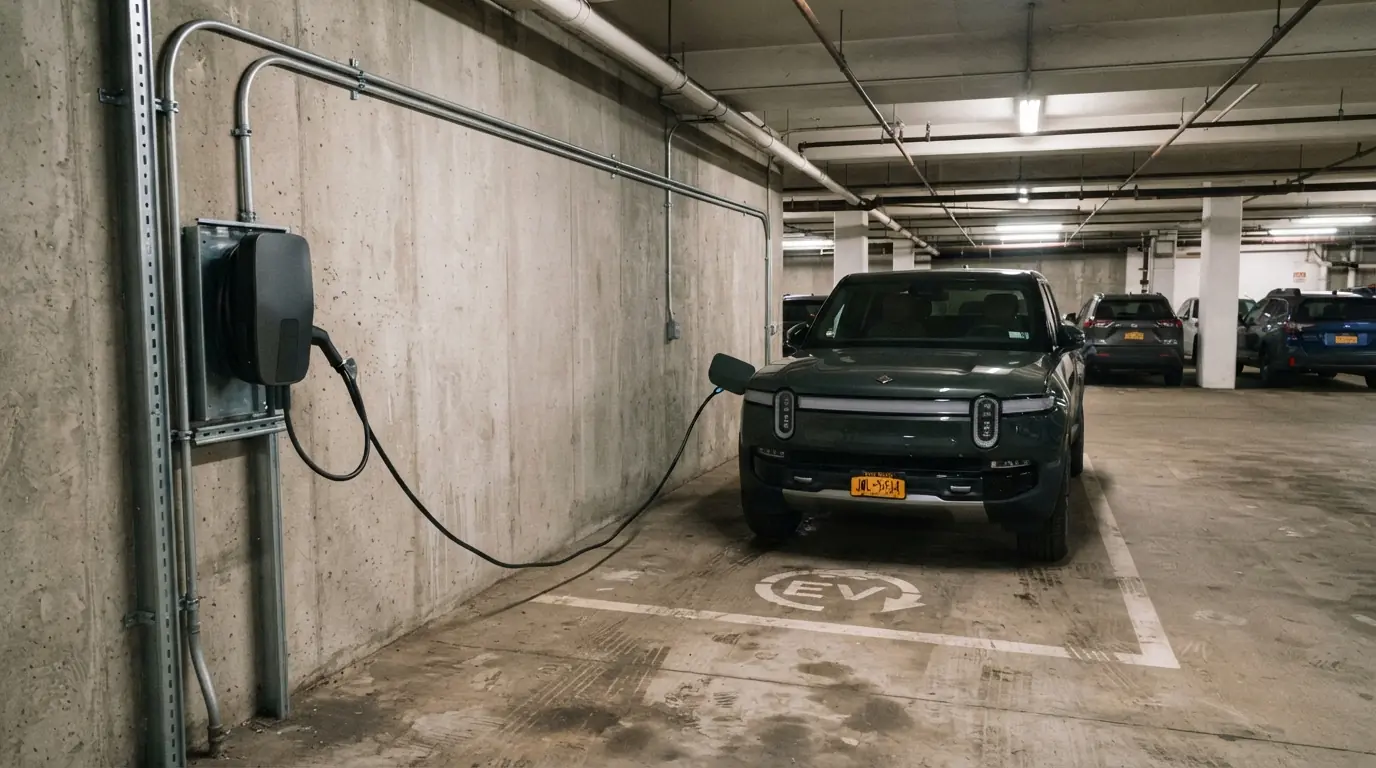
- Load calculation for whole home or essentials
- Placement at the maker's clearances
- Transfer switch, permit and startup test
Standby units we install and service include Generac and Kohler, tied into Square D, Siemens and Eaton panels.
A standby generator installation in Orange County or the city typically runs about $7,000 to $15,000 installed, according to 2026 national cost guides, and includes the unit, an automatic transfer switch, a pad, a gas connection and permits. It starts itself within seconds of an outage, so nobody has to be home.
Rather ask a person?(929) 755-0293What a standby generator job includes
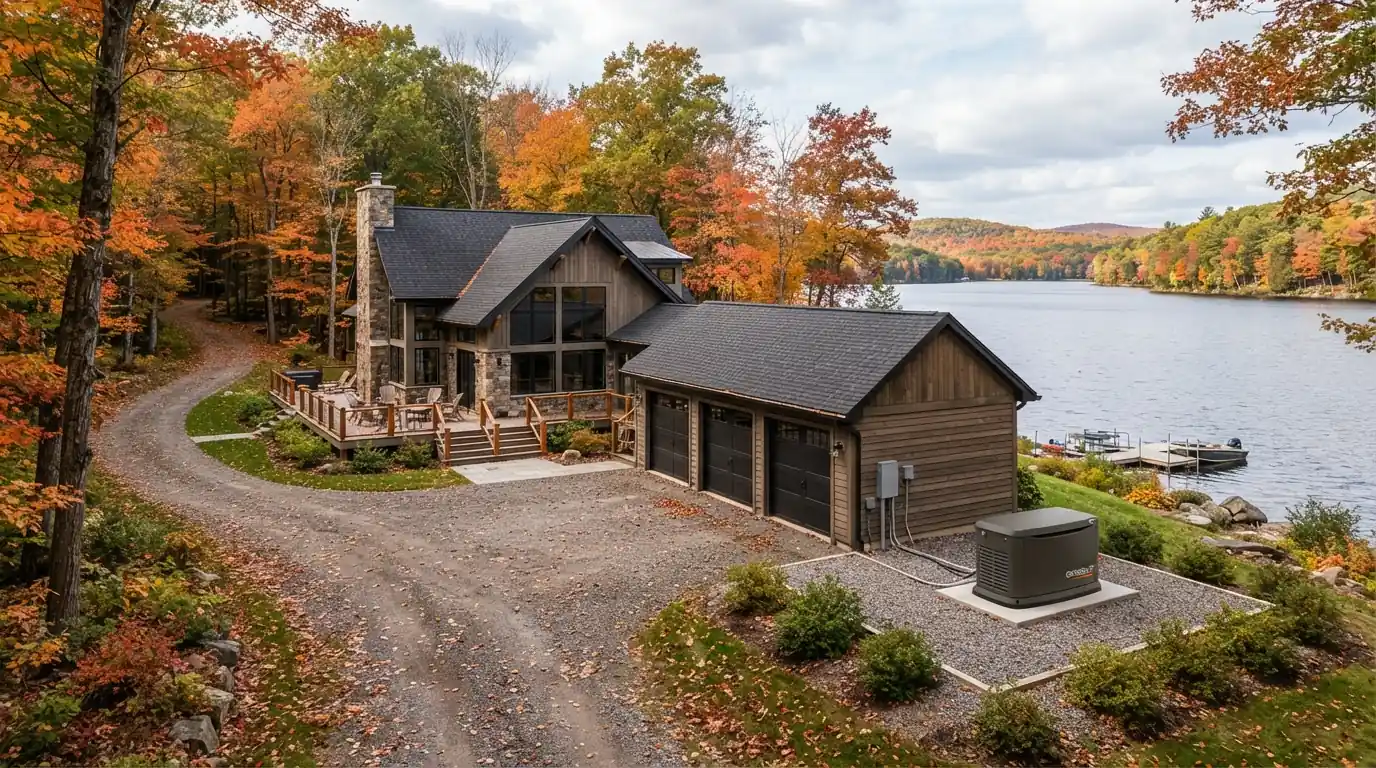
A standby unit sits outside on a pad, runs on natural gas or propane, and connects to the house through an automatic transfer switch. When utility power drops, the switch disconnects the utility, starts the generator and moves your circuits over; when power returns, it switches back and lets the engine cool down.
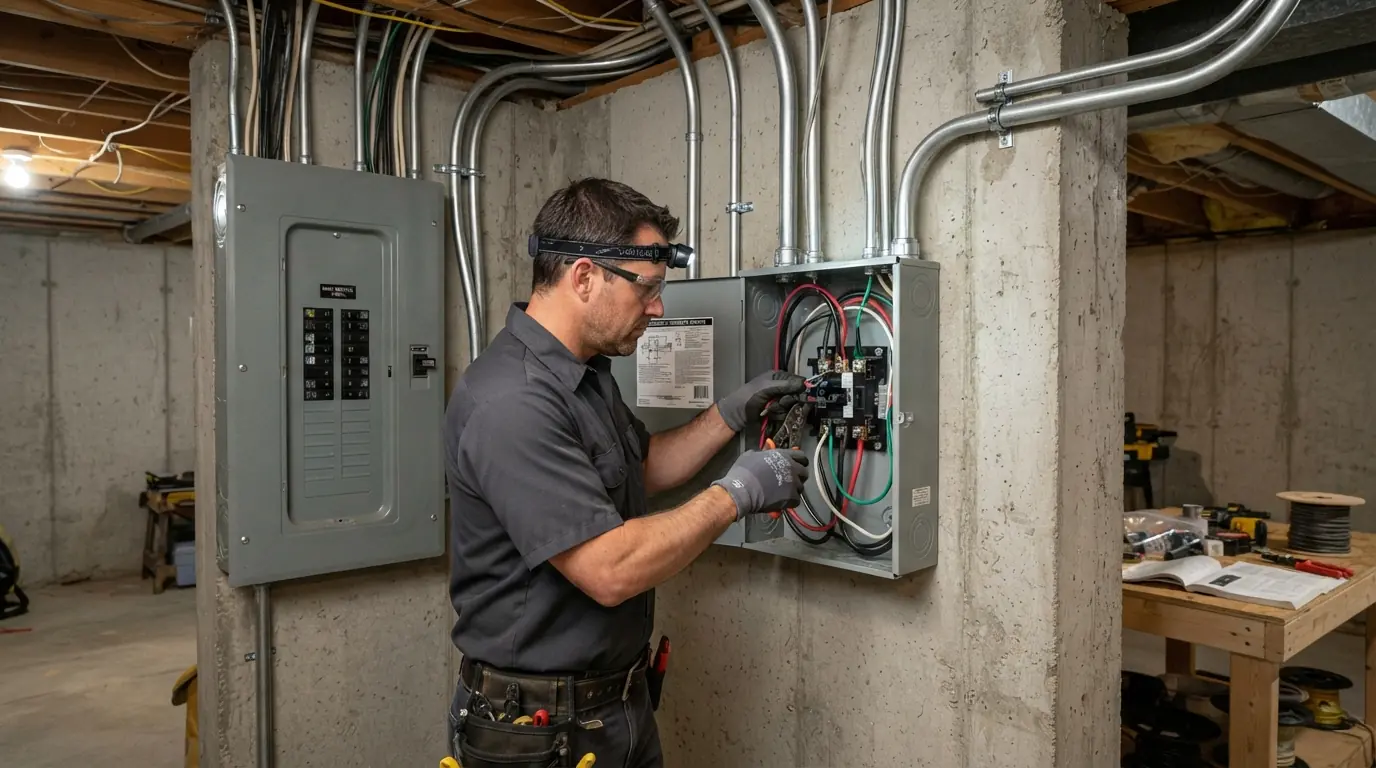
The electrical work is the transfer switch, the feed from the generator and any subpanel for essential circuits. The gas side is handled by a licensed gas fitter we coordinate with, because the unit's appetite can exceed what an existing meter supplies. If you already own a portable unit and only need a safe hookup, an interlock kit and inlet is the smaller project.
Updated September 2026
What moves the price of a standby generator
Published ranges are wide because these details vary so much.
- Generator sizeAn essentials unit costs far less than one sized for central air.
- Service conditionAn old or 60 amp service may need upgrading first.
- FuelNatural gas needs meter capacity; propane needs a tank and delivery.
- Distance and placementLonger runs to the panel and gas supply add material.
- Transfer switch typeService-rated, load-managing switches cost more.
Essential circuits or the whole house
| Factor | Essential circuits | Whole home |
|---|---|---|
| What runs | Heat, water, fridge, some lights | Everything, with load management |
| Generator size | Smaller | Larger |
| Electrical work | Subpanel for chosen circuits | Service-rated transfer at the main |
| Best for | Houses on wells, budget-minded owners | Homes with medical needs or full-time occupancy |
Most owners who choose essentials never miss the rest; whole-home suits long outages with someone at home.
Three ways a standby system is set up
Whole-Home Standby Generator
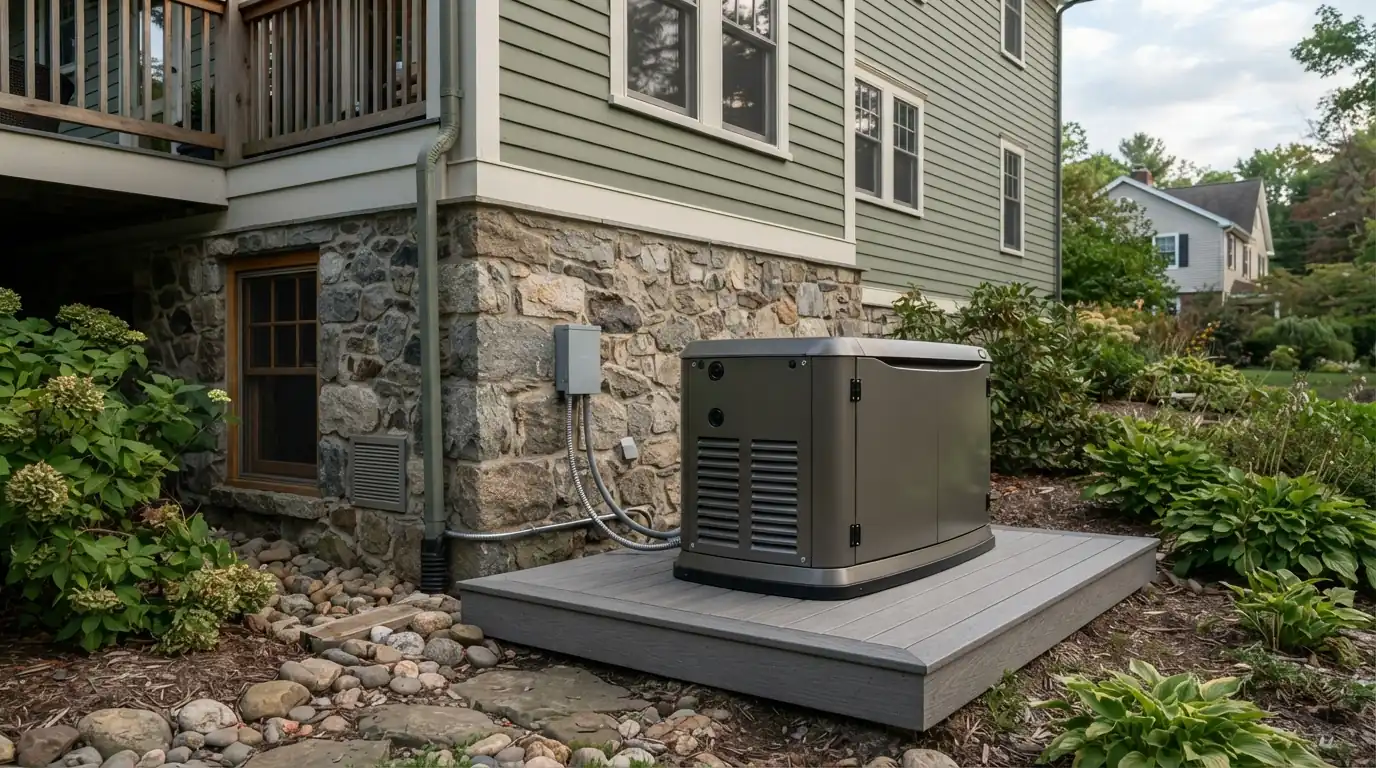
A whole-home unit is sized to run everything, including central air, the range and the dryer, often with load management so the largest loads take turns. It suits homes where someone is home all the time, where medical equipment runs, or where the owner simply does not want to think about outages. The transfer switch replaces or sits beside the main service disconnect, so the work touches the service entrance and is coordinated with the utility where a meter pull is needed.
Planning range (national sources, 2026): $7,000 to $15,000 installed; transfer switch and electrical $1,500 to $3,500. Coastal-market pricing and building access change the figure; this is a planning band, never a quote.
Essential-Circuits Generator
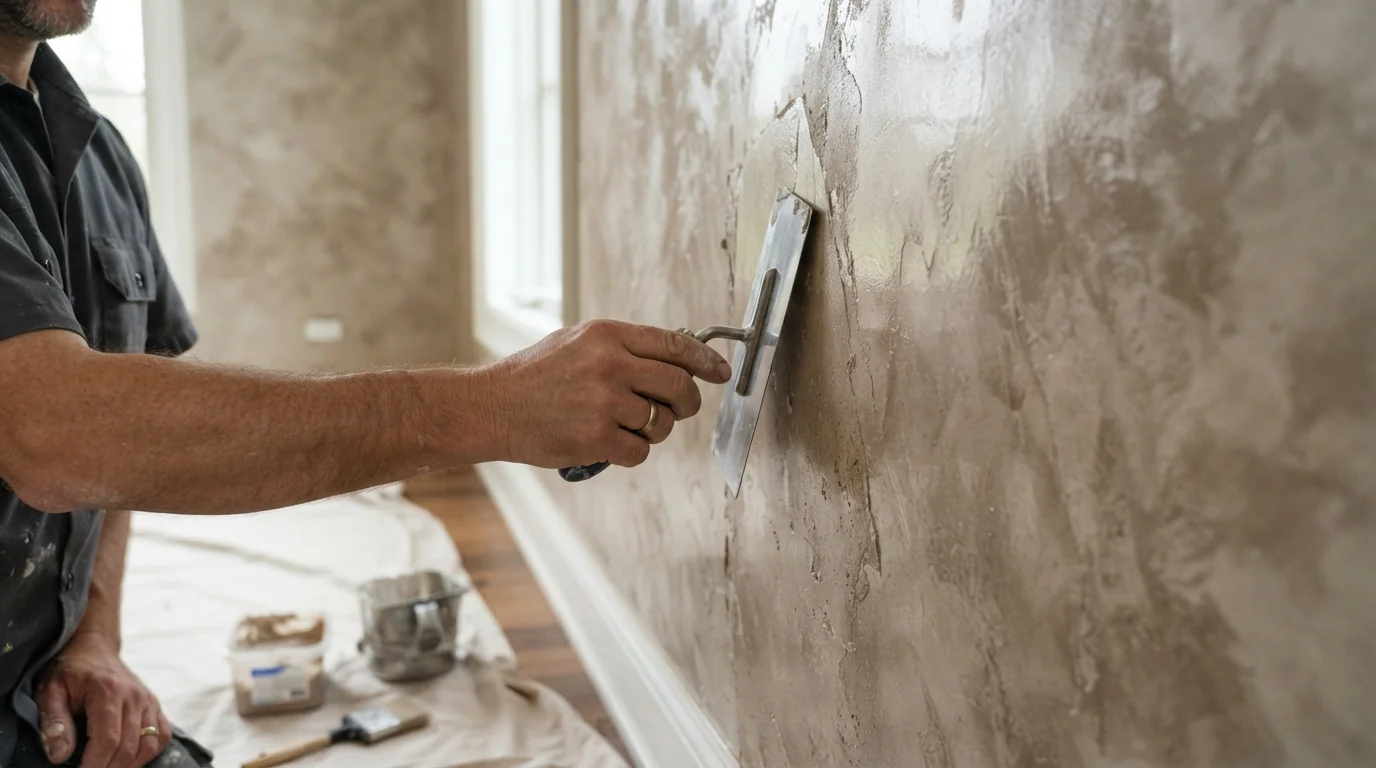
An essential-circuits system backs up only what you choose: furnace or boiler, well pump, refrigerator, sump pump, a few lights and outlets. Those circuits move to a small subpanel fed through the transfer switch, which lets a smaller generator do the job. It is the common choice in Warwick-area houses on wells, where water and heat matter more than central air. Adding a circuit to the essentials list later is a small job, as long as the subpanel was sized with spare spaces.
Planning range (national sources, 2026): about $7,500 on average; sub-panel for the unit $500 to $2,000. Coastal-market pricing and building access change the figure; this is a planning band, never a quote.
Automatic Transfer Switch and Load Shedding
The transfer switch is what makes a standby unit hands-free. It watches utility voltage around the clock, starts the generator when that voltage drops or disappears, transfers once the engine is stable and transfers back when power returns. Load-shedding modules add a second layer: they hold off an air conditioner, an electric range or a water heater until the generator has spare capacity, which is how a mid-sized unit can carry a whole house without stalling or tripping its own breaker.
What the installation includes
- Load calculation and generator sizing
- Placement at the manufacturer's clearances from openings
- Pad set level for the unit
- Automatic transfer switch and any essentials subpanel
- Gas connection by a licensed fitter we coordinate
- Permit, inspection and startup test
- Walkthrough of the exercise schedule and maintenance
Houses that need it most
Orange County has plenty of houses built before 1960, and some still run on 60 amp service, which is the costliest starting point for any upgrade because the service usually has to be modernized before a transfer switch can go in. Around Warwick the requests tend to be practical: keep the well pump and the boiler running, and stop the lights flickering through every ice storm. We check the service first so the generator is not sized around a panel that is about to change.
How a standby generator project runs
Site visit and load calculation
What must run, where the unit can sit, fuel options.
Proposal and permit
Unit, switch and subpanel specified; filing submitted.
Pad and electrical
Pad set, transfer switch and feeds installed.
Gas and startup
Fuel connected by the fitter, startup test run.
Inspection and handover
Inspection passed, exercise schedule explained.
Lose power every storm season?
A site visit sizes the unit and the switch. Call to book it.
Standby generator questions
National 2026 guides put most installs at $7,000 to $15,000; size and fuel set where you land.
Natural gas where the meter can supply it; propane where there is no gas service.
Only as close as the manufacturer allows from windows, doors and vents.
A whole-home unit with load management can; an essentials unit usually will not.
Yes: a weekly self-test plus periodic oil and battery service.
Often, if space and clearances allow; we check the site first.
Yes. The electrical work and the gas connection are both inspected.
Related work in the same system
Heat Pump & Mini-Split Electrical
DetailsGarage & Outbuilding Wiring
DetailsElectric Baseboard Heat
DetailsCommercial EV Charging
DetailsGuides: Standby vs portable generator and Winter storm electrical prep
Size a standby generator for your house
Call any hour. We start with what must keep running and size the unit from there.