Storefront Sign and Display Lighting in New York
A dark sign after sunset tells passers-by the store is closed. We wire sign circuits, put them on timers or photocells, and light windows and awnings so the storefront works for the business after dark.
- Calls answered 24/7
- Timers and photocells
- Weather-rated outdoor work
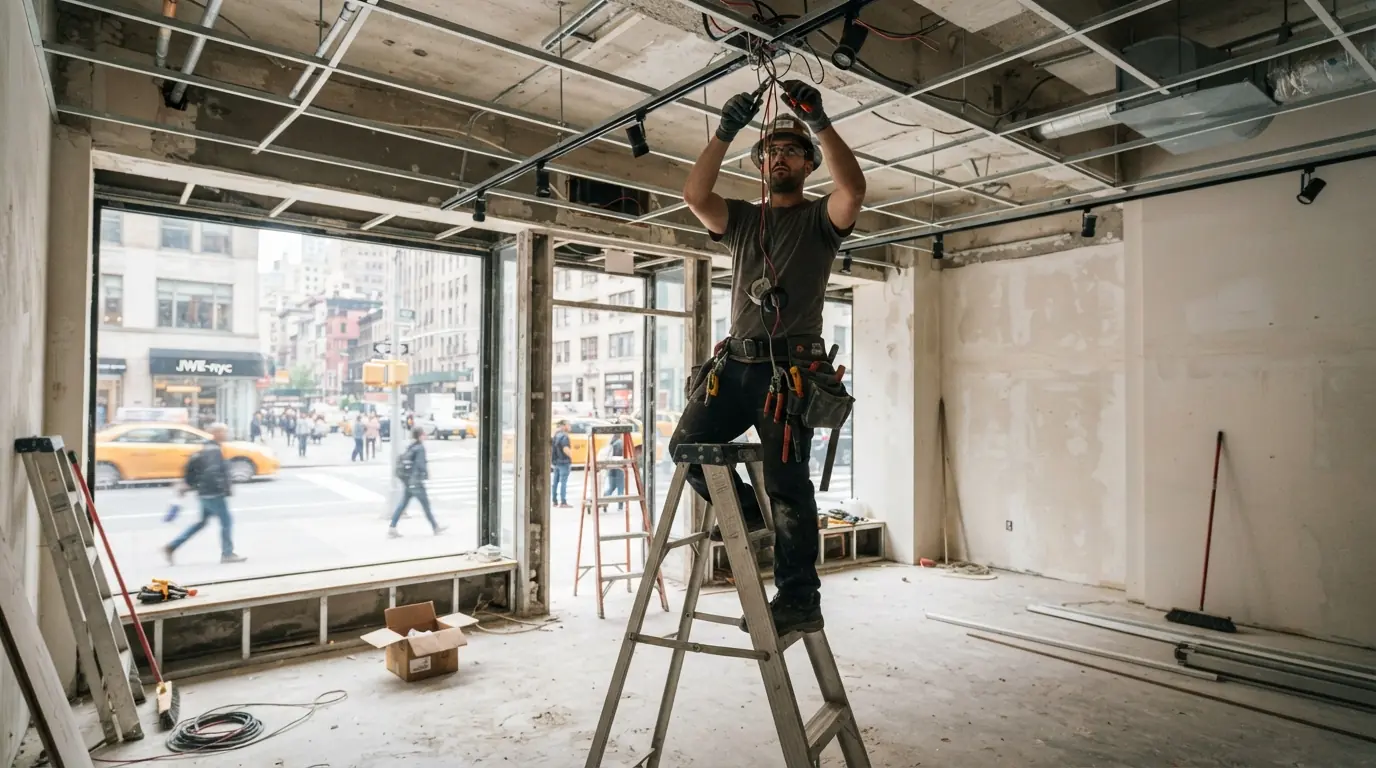
- Sign and display loads checked
- Circuits, timers and controls installed
- Tested after dark
Storefront sign and display lighting in New York means a dedicated sign circuit at the building entrance, controls such as timers or photocells that switch signs and windows automatically, and weather-rated wiring for signs, awnings and facade lights. The electrical code expects commercial buildings accessible to pedestrians to have at least one outside sign outlet.
Rather ask a person?(929) 755-0293What storefront lighting involves
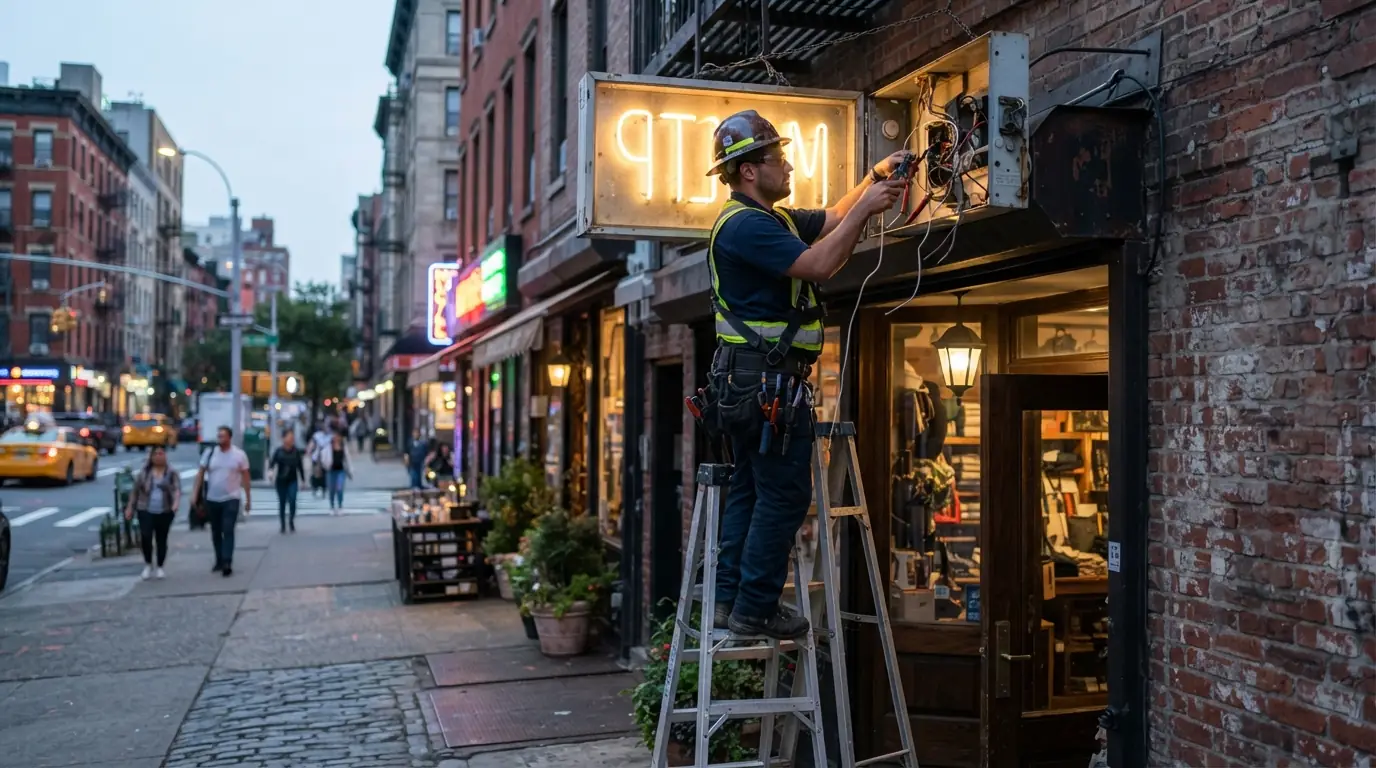
The sign maker builds the sign; getting power to it safely is electrical work. We provide the sign circuit and disconnect, connect the sign's power supply, and put it on a timer or photocell so it lights at dusk and switches off when you want it to. Window displays and awning lights are planned the same way, on their own controls, so the store does not burn light all night unless you choose to.
Old signs often fail at their power supply or ballast, not the sign itself, and we test before recommending replacement. Converting old fluorescent window lighting to LED is covered on LED lighting retrofits.
Updated September 2026
What sets the cost of storefront lighting
Access to the facade decides much of it.
- New circuit or existingA new sign circuit and disconnect cost more than reconnecting.
- ControlsTimers, photocells and separate zones add parts.
- Facade accessLadders or lifts over a sidewalk add time.
- Outdoor fixturesWeather-rated fixtures and mounting cost more.
- Repair or replaceTesting an old sign may avoid replacing it.
Timer, photocell or both
| Factor | Timer | Photocell | Timer plus photocell |
|---|---|---|---|
| Turns on | At a set time | At dusk | At dusk |
| Turns off | At a set time | At dawn | At a set time |
| Adjusts to seasons | No, needs resetting | Yes | Yes |
| Best for | Fixed schedules | All-night lighting | Most storefronts |
Most stores want lights on at dusk and off a few hours after closing, which is what the combination does without seasonal resets.
Three kinds of storefront lighting
Illuminated Sign Circuits and Timers
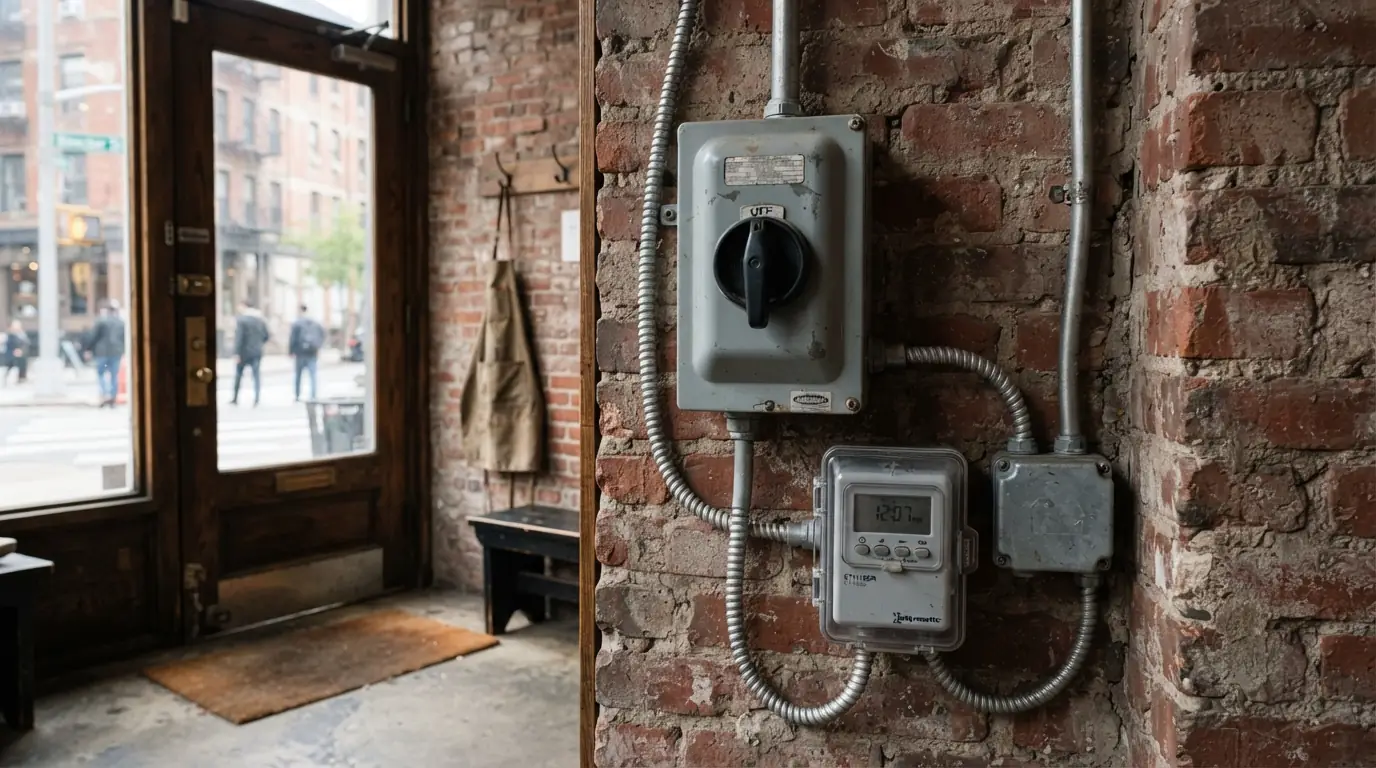
An illuminated sign needs a circuit that feeds it alone, a disconnect within reach for service, and a control that switches it on and off without anyone remembering. We install the circuit and disconnect, connect the sign's power supply to the maker's instructions, and add a timer, a photocell or both. When an existing sign flickers or goes dark, we test the power supply, the circuit and the connections before anyone orders a new sign, since a new power supply often brings the old one back.
Window and Display Lighting
Window displays sell to people walking past, and they need light aimed at the product rather than the glass. Track lighting and adjustable spots on their own circuit and timer let the window stay lit after closing while the sales floor goes dark. We place fixtures to avoid reflections and glare on the glass, choose a color temperature that suits the merchandise, and then set the timer schedule with you so it matches when foot traffic actually passes on your block.
Awning and Facade Lighting
Awning lights, gooseneck fixtures over signs and facade washes all sit outdoors in rain, snow and road salt, so every connection is weather-rated and every fixture is mounted to keep water out. We route the wiring the way the building and landlord allow, often through the storefront header, and put these lights on the same controls as the sign so the whole front comes on together at dusk and follows one schedule, which is easier for staff to manage and cheaper to run.
Storefronts in a dense city
On a New York retail block, a storefront competes with every other lit window on the street, and most of its customers arrive on foot. That makes the sign and the window display the storefront's working advertising after dark. The landlord and the building usually control what can be mounted on the facade and how wiring enters it, so exterior lighting is planned with them before anything is ordered.
How a storefront lighting job runs
Check the loads
Sign supply, display and exterior fixtures.
Plan with the landlord
Facade mounting and wiring routes approved.
Install
Circuits, disconnects, fixtures and controls.
Connect the sign
To the sign maker's instructions.
Test after dark
Timers, photocells and aiming checked.
Signs the storefront lighting needs work
- Sign dark or partly dark
Often a failed power supply.
- Sign flickers
A failing supply or a loose connection.
- Lights on all day
A failed timer or photocell.
- Tripping when the sign comes on
A fault or an overloaded circuit.
- Water in outdoor fixtures
Seals failed; a shock and failure risk.
- Window display too dim at night
Fixtures aimed at the glass, not the product.
Storefront lighting questions
Commercial buildings accessible to pedestrians need at least one outside sign outlet.
Usually the power supply; we test before replacing.
Yes, with a photocell, usually combined with a timer.
The sign maker builds it; we provide and connect the power.
Yes, on its own circuit and timer.
Yes, to keep the store open.
Usually; we plan it with them.
Related work in the same system
Light the storefront after dark
Call any hour. Tell us what is dark and when you want it lit.