NYC electrical permits and the 2025 code, explained
The city's electrical rules changed at the end of 2025. Here is what now needs a permit, what the new code expects inside homes, and why the same job is done differently in Manhattan and in Warwick.
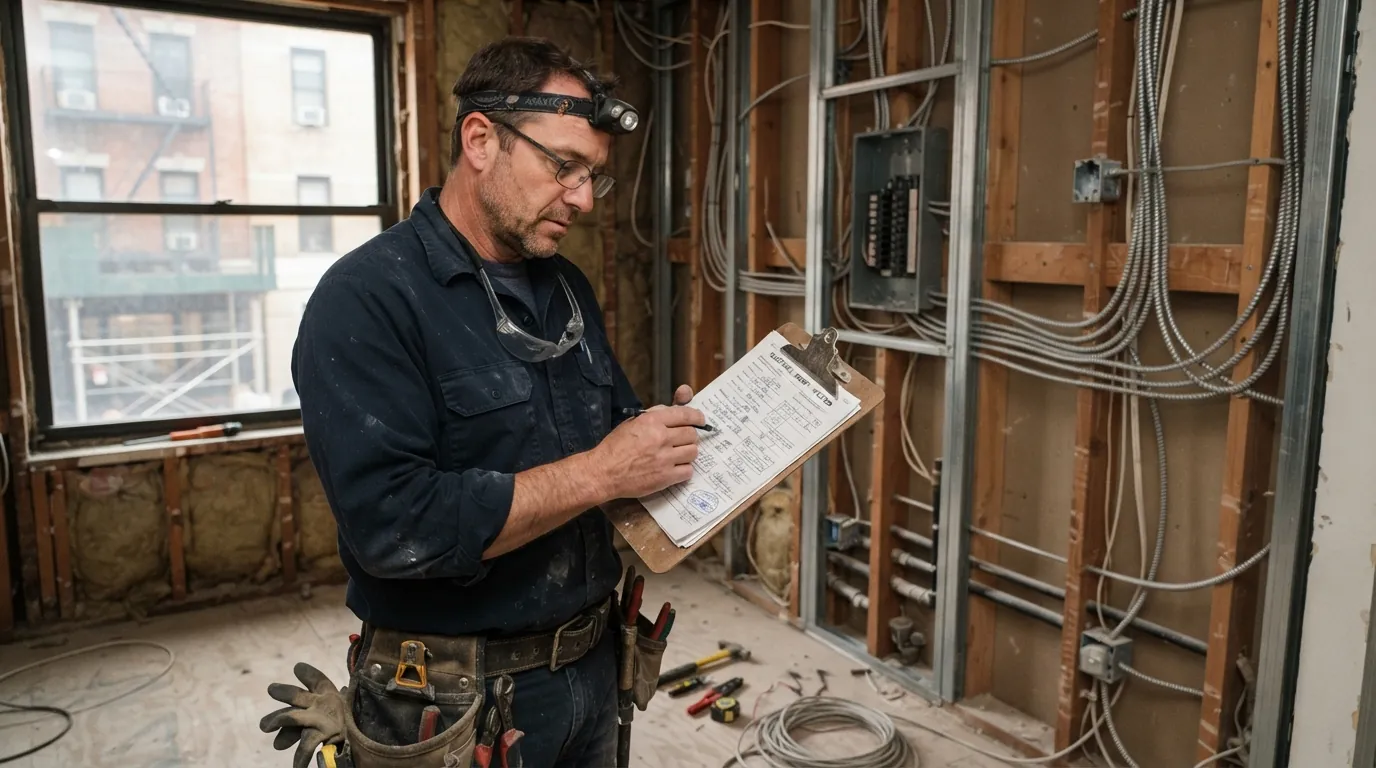
In New York City, new circuits, panel replacements and service upgrades need a Department of Buildings electrical permit and inspection, while like-for-like device swaps are generally exempt. The 2025 NYC Electrical Code, based on the 2020 NEC, took full effect on December 21, 2025, and requires AFCI protection in most living areas and GFCI near water.
Rather ask a person?(929) 755-0293What changed on December 21, 2025
The 2025 New York City Electrical Code replaced the 2011 edition and took full effect on December 21, 2025. It is based on the 2020 National Electrical Code, with city amendments, so it catches up on a decade of national changes in one step.
For the first time the city code also includes its own administrative chapter covering applicability and existing installations. That matters for older buildings, because it sets out how new work relates to the wiring already in the walls rather than leaving it to interpretation.
What needs a permit and what does not
The practical line is between replacing like for like and adding or changing the system. Swapping a broken outlet or switch for the same type is generally exempt. Anything that adds capacity or changes the installation is filed and inspected.
| Work | Permit in NYC |
|---|---|
| Replacing a broken outlet or switch with the same type | Generally exempt |
| Adding a new circuit | Filed and inspected |
| Replacing a panel | Filed and inspected |
| Service or meter upgrade | Filed, inspected, utility involved |
| Renovation rewiring | Filed and inspected |
| EV charger on a new circuit | Filed and inspected |
Protection the new code expects in homes
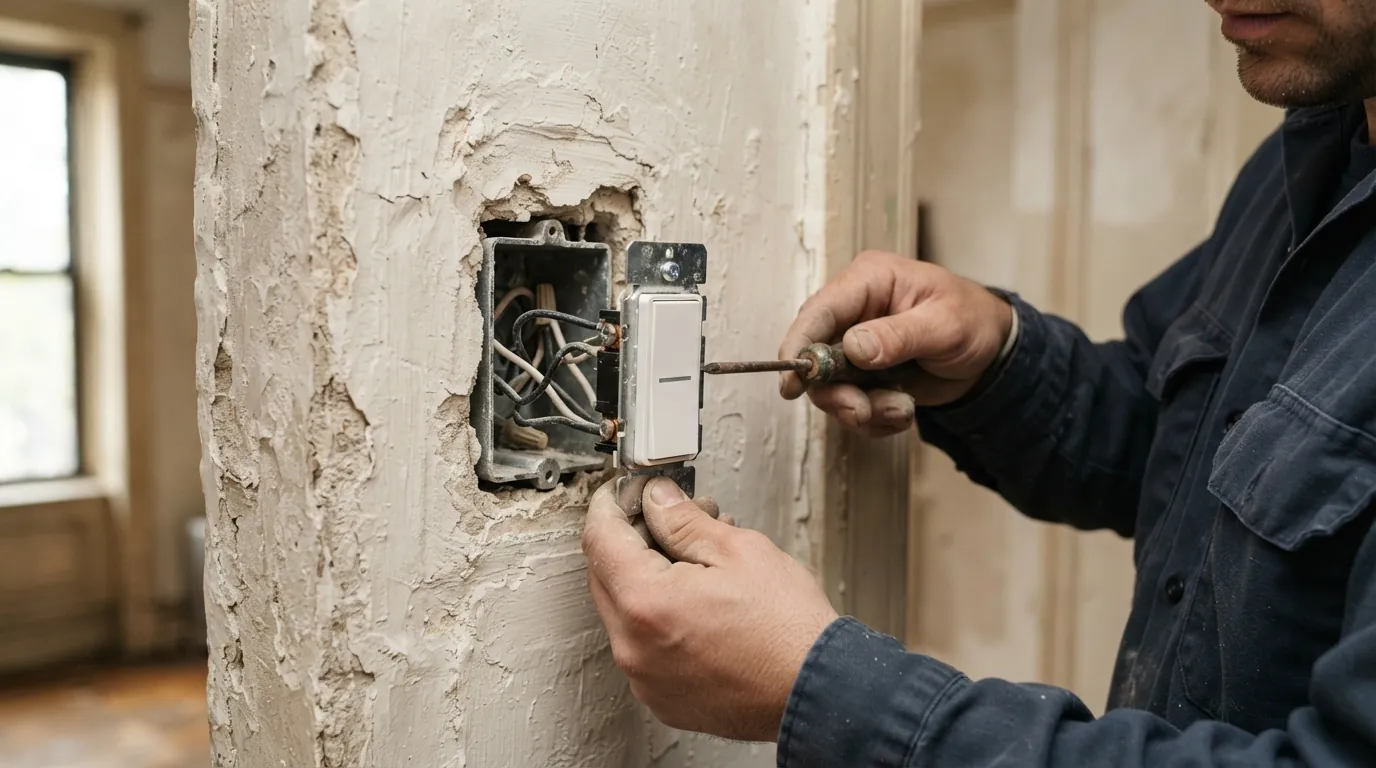
The 2025 code requires AFCI protection in almost all living areas, which guards against arcing from damaged cords and loose connections. GFCI protection is required within six feet of any sink, in bathrooms, garages, outdoors and crawl spaces.
When new work is done in an older apartment, those protections come with it. That is why a kitchen renovation often ends with GFCI outlets along the counter and AFCI breakers in the panel, even if the old circuits had neither.

Not sure whether your job needs a permit?
Call any hour. We will tell you which rules apply at your address.
Why city wiring looks different
New York City effectively rules out the plastic-sheathed cable used in much of the country for most construction. Wiring runs in conduit or armored cable instead. It is sturdier and better protected, and it is also slower to install, which is one reason city electrical work costs more per circuit than work upstate.
How filings and violations work now
Electrical plan review and inspection requests are filed through DOB NOW, as electrical payments move off the older BIS system. When electrical work breaks the code, the Department of Buildings can issue violations heard through OATH, and an open violation stays on the building's record until correction is documented. In a co-op or condo, the board usually wants to see the filing as part of approving an alteration.
Energy rules for lighting
Alongside the electrical code, the 2025 NYC Energy Conservation Code was set for enforcement from March 30, 2026. It mostly affects filed alterations and commercial spaces, where it shapes how much lighting power a space may use and what controls it needs. In homes the effect is usually simple: LED fixtures and sensible controls are the easy path.
How Warwick and upstate differ
Outside New York City, the state adopted the 2023 NEC through its 2025 Uniform Code, effective for permits issued on or after December 31, 2025; work permitted earlier may finish under the 2017 edition. Ordinary plastic-sheathed cable is allowed inside buildings upstate, and the local building department, not the city, handles permits and inspections. The same job, such as a new kitchen circuit, is therefore wired and filed differently in Chelsea and in Warwick.
What an inspection looks like
For most filed work there are two inspection points. The rough inspection happens while walls and ceilings are still open, so the inspector can see the cable, boxes, connections and protection before anything is covered. The final inspection happens after devices, fixtures and the panel directory are in place. Covering work before the rough inspection is one of the most common reasons a job has to be reopened, which is why a good electrician schedules the rest of the renovation around it rather than the other way round.
Permits inside a co-op or condo
In a co-op or condo, the city permit is only one of two approvals. The building also approves the work under its alteration agreement, sets the hours when it can happen, and controls access to risers and meter rooms. Boards increasingly ask to see the electrical filing before work starts and the inspection sign-off when it ends. Getting both approvals lined up early keeps the electrical work from becoming the reason a renovation stalls halfway through.
Sources
- NYC Department of Buildings: Electrical Code
- Don's Electric and Plumbing: New York residential electrical code
- WireRef: New York wiring rules
- NYC Department of Buildings: past service updates
- Built Engineers: 2025 NYC electrical code key changes
- NYEIA: New York State adoption of the 2023 NEC
Figures are planning ranges from published sources, not quotes. Every job is priced after we see it.
Permit and code questions
Replacing a broken outlet with the same type is generally exempt. Adding a new outlet on a new circuit is filed and inspected.
It took full effect on December 21, 2025, replacing the 2011 edition, and it is based on the 2020 National Electrical Code.
Yes, in almost all living areas, along with GFCI protection near sinks, in bathrooms, garages, outdoors and crawl spaces.
It is effectively ruled out for most construction in the city; conduit or armored cable is used instead. Upstate it is allowed.
The electrician doing the work files the electrical permit and arranges the inspections, and the homeowner or board receives the sign-off when the work passes.
Where this guide leads
Renovation electrical
See the serviceCorrecting DOB violations
See the serviceCo-op and condo approvals
See the servicePanel replacement
See the serviceMore guides: Rewiring a Prewar Apartment in New York: Cost and Timing and Breaker Keeps Tripping in New York: What to Do First
Get the filing right the first time
Call any hour. Permits and inspections are part of every covered job we take on.