Induction Range and Cooktop Wiring in New York
An induction range is mostly a wiring question. Most need a 240-volt circuit of 40 or 50 amps, and in an older apartment the panel, the feeder from the riser and the building's rules decide whether that is a simple run or a bigger job. We check all three before you buy.
- Calls answered 24/7
- Circuit sized to the range
- Panel and feeder checked first
- Range nameplate and panel checked
- 240-volt circuit installed
- Range tested at full load
Induction range wiring in New York means a dedicated 240-volt circuit, usually 40 or 50 amps as the range's nameplate requires, run from a panel that has the capacity for it. In apartments we also check the feeder from the building riser. National cost guides put a basic 240-volt circuit with a short run at $250 to $800, before any panel work.
Rather ask a person?(929) 755-0293What wiring an induction range involves
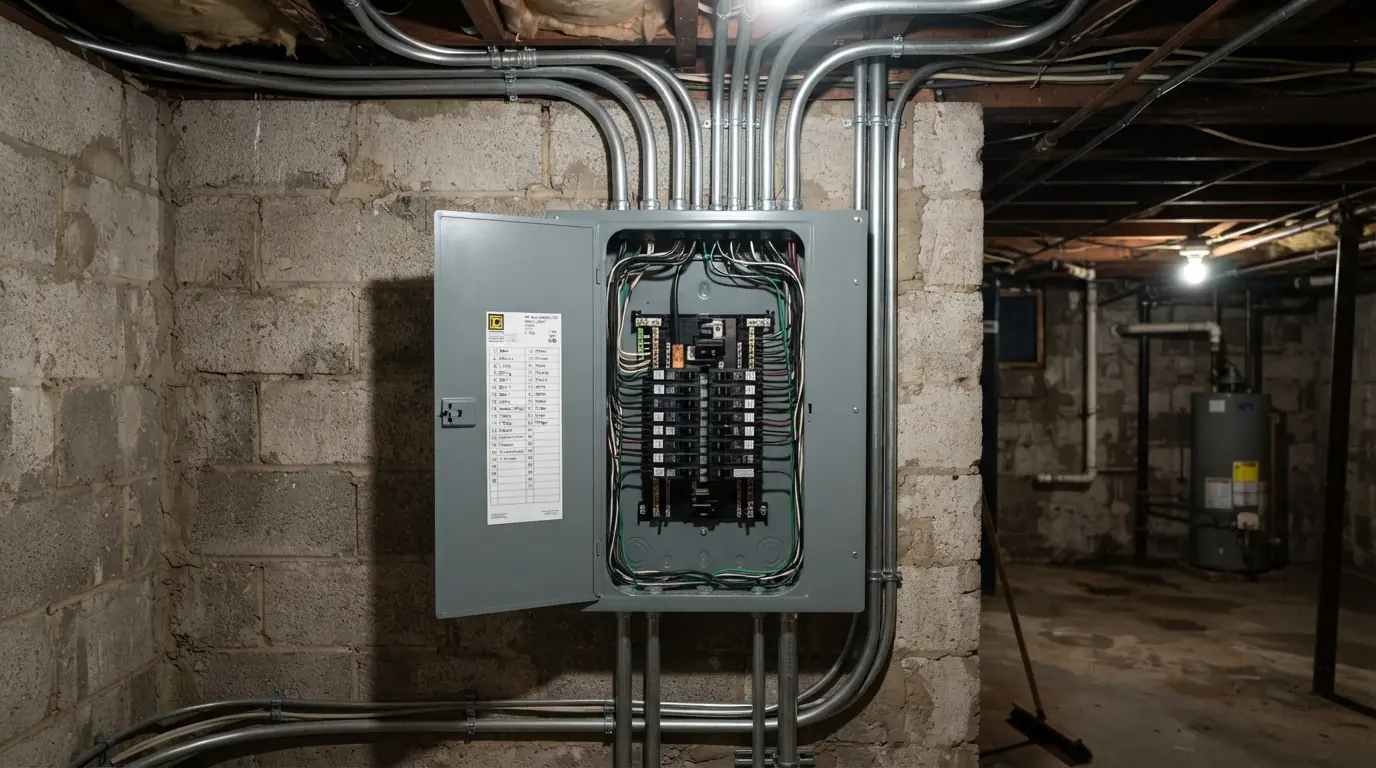
A gas range needs a plain 120-volt outlet for its igniter and clock. An induction range or cooktop needs a dedicated 240-volt circuit, sized to the nameplate, with a receptacle or a hard-wired connection where the range sits. The first question is not the outlet but the panel: is there room for a two-pole breaker, and does the service or apartment feeder have capacity once the range is added to everything else?
In prewar apartments the answer depends on the building. Many units run on a small panel fed from a shared riser, so we do a load calculation on the apartment, not just a look at open breaker slots. Where capacity is short, an panel upgrade or a load-sharing device is the fix; where it is fine, the job is often a single day.
Updated September 2026
What sets the cost of induction range wiring
The panel decides the price more than the range does.
- Panel space and capacityOpen slots and spare capacity keep it to one circuit.
- Distance to the kitchenLonger armored or conduit runs take more time.
- Building feederA tight apartment feeder can mean upgrade work.
- Cooktop plus ovenTwo appliances often mean two circuits.
- Building paperworkCo-op and condo filings add time before work.
Circuit now, or circuit plus panel
| Factor | New circuit only | Circuit with panel upgrade |
|---|---|---|
| When it fits | Panel has space and capacity | Panel is full or undersized |
| Typical time | Often a single day | Several days with a utility visit |
| Paperwork | Permit where required | Permit and utility coordination |
| Future loads | Limited headroom | Room for heat pumps or a charger |
We run the load calculation first, so you see which column applies before buying the range.
Three ways an induction switch plays out
Gas to Induction Conversion
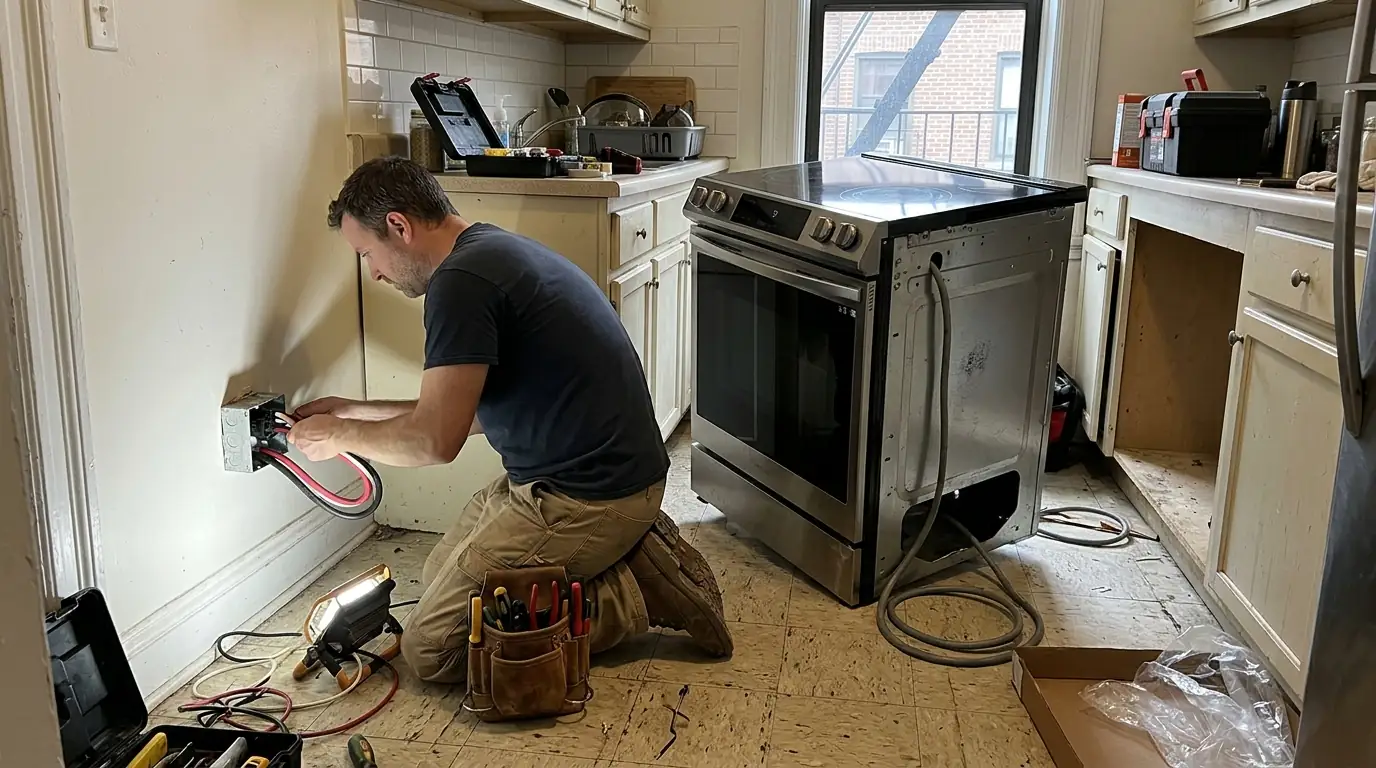
Replacing a gas range means adding a circuit that was never there. We confirm the range's nameplate, run a dedicated 240-volt circuit in armored cable or conduit from the panel to the range location, and install the receptacle at the height the maker specifies so the range slides back flush. The old gas line is capped by a plumber, not by us. Where the apartment panel is full or undersized, we show you the load calculation and the options before anything is ordered.
Planning range (national sources, 2026): $250 to $800 for a basic 240-volt circuit with a short run and no panel work; a dryer outlet near the panel about $250 to $400. Coastal-market pricing and building access change the figure; this is a planning band, never a quote.
Induction Cooktop and Wall Oven Circuits
A separate cooktop and wall oven usually means two circuits rather than one, each sized to its own nameplate, or one shared circuit only where both makers allow it. Cooktops are often hard-wired through a junction box in the cabinet below, and wall ovens through a box behind the unit. We coordinate with the kitchen installer so the boxes land where the cabinets leave access, and so nothing has to be cut once the counter is set. Both circuits are labeled in the panel and tested with every element running.
Load Management for Small Services
Some apartments and older houses simply do not have the capacity for another large circuit. Before replacing the panel, we look at load management: a device that pauses a dryer or water heater while the range runs, or a range model with a lower power setting designed for smaller circuits. Neither suits every case, and we tell you plainly when a panel or service upgrade is the honest answer instead of a workaround. Either way, you see the numbers from the load calculation before deciding, and nothing is installed that the building has not approved.
New buildings must go electric, existing ones choose
New York's 2023 all-electric buildings law targets new construction only. It does not affect existing buildings, and owners with existing gas stoves can keep them. That makes an induction switch in an older New York apartment a choice rather than a requirement, and the circuit, the panel and the building's own alteration rules are what decide how easy that choice is.
How induction range wiring runs
Check the nameplate
Range amperage and connection type confirmed.
Calculate the load
Apartment or house capacity measured.
Run the circuit
Dedicated 240-volt line from the panel.
Set the connection
Receptacle or hard-wire at the right height.
Test under load
Burners and oven run together.
Signs the kitchen is not ready for induction
- Only a 120-volt outlet behind the range
Gas ranges never needed more.
- No open slots in the panel
A two-pole breaker needs room.
- Breakers trip with the oven on
Capacity is already tight.
- Fuses instead of breakers
Old equipment needs replacing first.
- Lights dim when appliances start
The feeder may be undersized.
- Kitchen outlets on one shared circuit
The kitchen is already overloaded.
Induction range wiring questions
Sometimes, if it was an electric range circuit of the right size. A gas range outlet is 120 volts and cannot run induction.
Whatever its nameplate says; many full-size ranges call for 40 or 50 amps on a 240-volt circuit.
Not always. A load calculation shows whether the existing service has room.
Usually, but the alteration agreement may require paperwork before the circuit is run.
A plumber caps the gas line; we handle the electrical side.
Only where both makers allow it; usually each gets its own.
We wire and test the connection; the appliance installer sets the range.
Related work in the same system
Fuse Box to Breaker Conversion
DetailsSubpanel Installation
DetailsPanel upgrades
DetailsDedicated circuits
DetailsGuides: Gas to induction in an apartment
Ready to switch to induction?
Call any hour with the range model and we will tell you what the circuit needs.