Outdoor and Landscape Lighting in New York
Outdoor lighting fails at the connections the weather reaches first. We lay out the fixtures, size the transformer or circuit, and make every splice and outlet rated for rain, frost and sprinklers.
- Calls answered 24/7
- Low-voltage and line-voltage
- Wet-location rated throughout
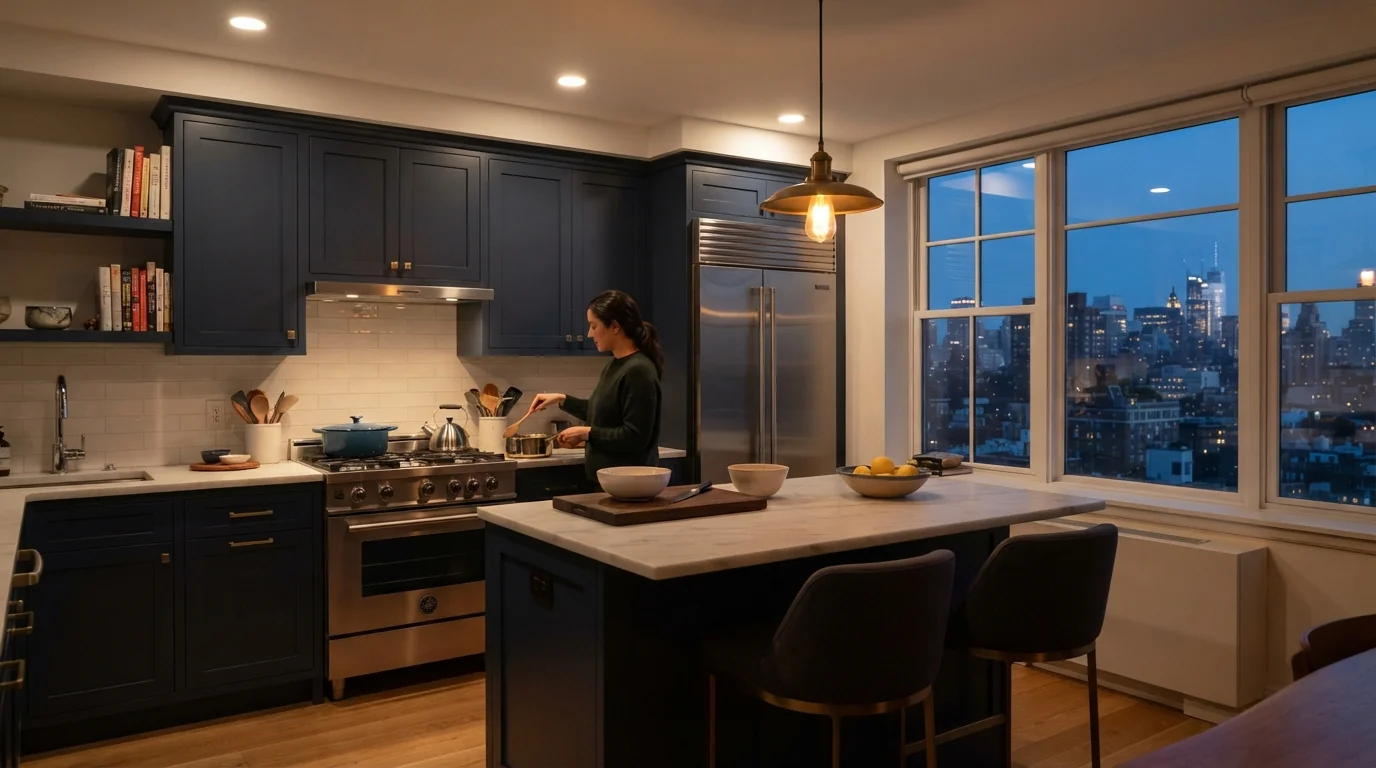
- Fixture layout walked at dusk
- Transformer or circuit sized to the load
- Weather-rated splices and covers
Outdoor and landscape lighting controls we install include Lutron and Leviton timers and sensors, fed from Square D, Siemens and Eaton panels.
Outdoor lighting in the New York area is either low-voltage landscape lighting, typically 12 volts from a plug-in or hardwired transformer, or line-voltage security and entry lighting at 120 volts on a GFCI-protected circuit. Low-voltage suits paths and plantings; line-voltage suits floods and wall fixtures that need more light or motion control.
Rather ask a person?(929) 755-0293What an outdoor lighting job involves
Good outdoor lighting starts at dusk, not on a plan. We walk the property with you as it gets dark and decide what should be seen: steps, paths, the front door, a tree worth uplighting, the side yard someone walks through at night. That list decides the fixture count and whether low-voltage or line-voltage suits each spot.
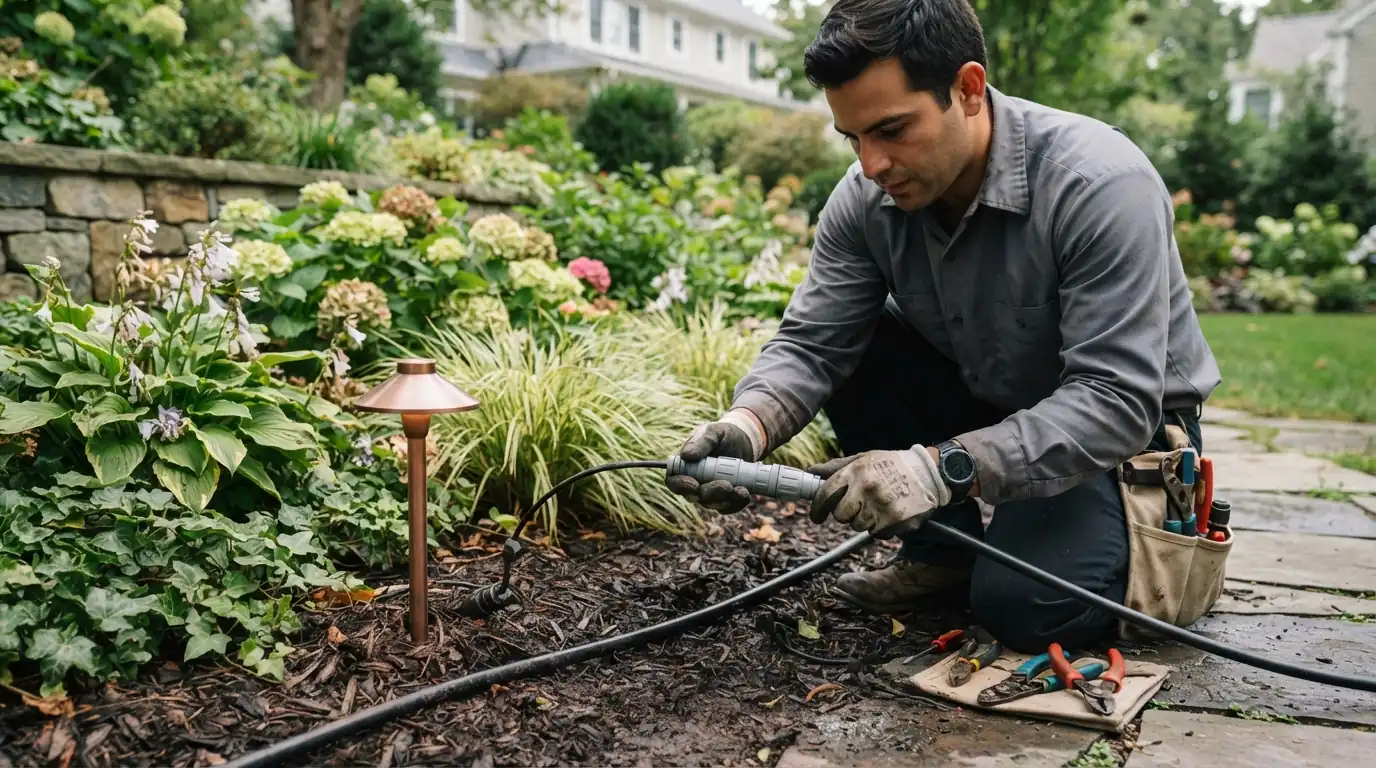
Then the wiring: a transformer sized with headroom for low-voltage runs, or a GFCI-protected circuit for line-voltage fixtures, with in-use covers on outdoor outlets and gel-filled or listed connectors at every buried splice. Timers, photocells and motion sensors are chosen per zone. Indoor fixtures follow the rules in light fixture installation.
Updated September 2026
What moves the price of outdoor lighting
Fixture count matters, but so does how the power gets outside.
- Fixture count and typeBrass and copper fixtures cost more but outlast aluminum.
- Transformer or new circuitLow-voltage needs a transformer; floods need a line-voltage circuit.
- Trenching and distanceLong runs across lawns or under paths add labor.
- ControlsPhotocells, timers, motion sensors and smart control per zone.
- Building approvalsTerrace work in co-ops and condos needs board sign-off.
Low-voltage or line-voltage
| Factor | Low-voltage (12V) | Line-voltage (120V) |
|---|---|---|
| Best for | Paths, steps, plantings, uplighting | Floods, wall lights, motion security |
| Burial and flexibility | Shallow cable, easy to move | Deeper burial or conduit, fixed layout |
| Brightness | Soft, layered | Strong, wide coverage |
| Power source | Transformer on a GFCI outlet or hardwired | Dedicated or shared GFCI circuit |
Most homes end up with both: low-voltage for the garden and a few line-voltage fixtures where security and entry matter.
Three kinds of outdoor lighting
Low-Voltage Landscape Systems
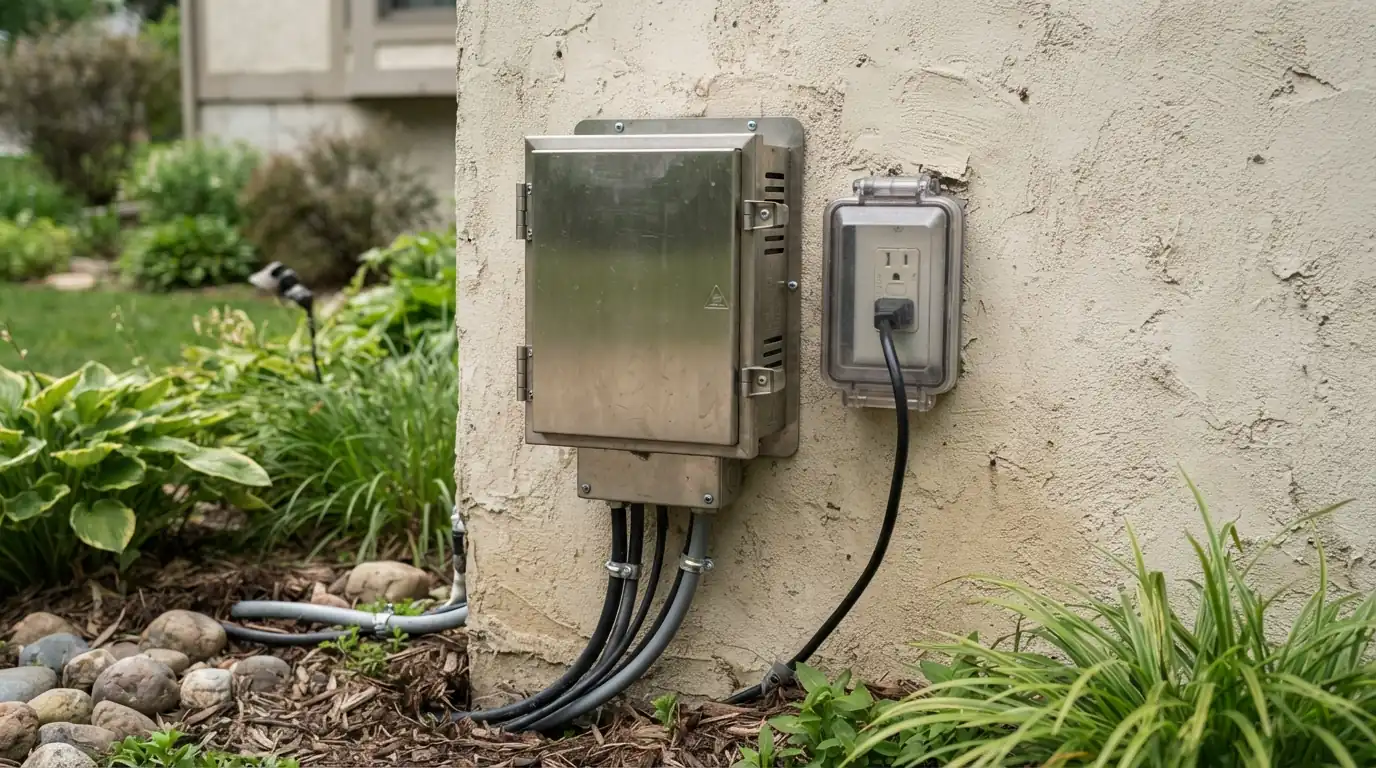
Low-voltage systems run 12 volt cable from a transformer to path lights, spot lights and step lights. The cable can be buried shallowly and moved later, which makes it forgiving for gardens that change. The failures are almost always at connections, so we use waterproof connectors rather than the pinch clips that ship in kits, and we size the transformer so the far fixtures are not visibly dimmer than the near ones, with spare capacity for a few more fixtures later.
Motion and Security Lighting
Floodlights over the driveway, the garage door and the back of the house run on line voltage, usually with a motion sensor, a photocell, or both. We place them to light the ground rather than the neighbor's windows, set the sensor zone so passing cars do not trip it, and wire them on a switch as well so they can be turned on manually. Mounting blocks keep water out of the siding behind each fixture. Wall boxes on siding get proper weatherproof mounting blocks.
Terrace, Deck and Roof Deck Lighting
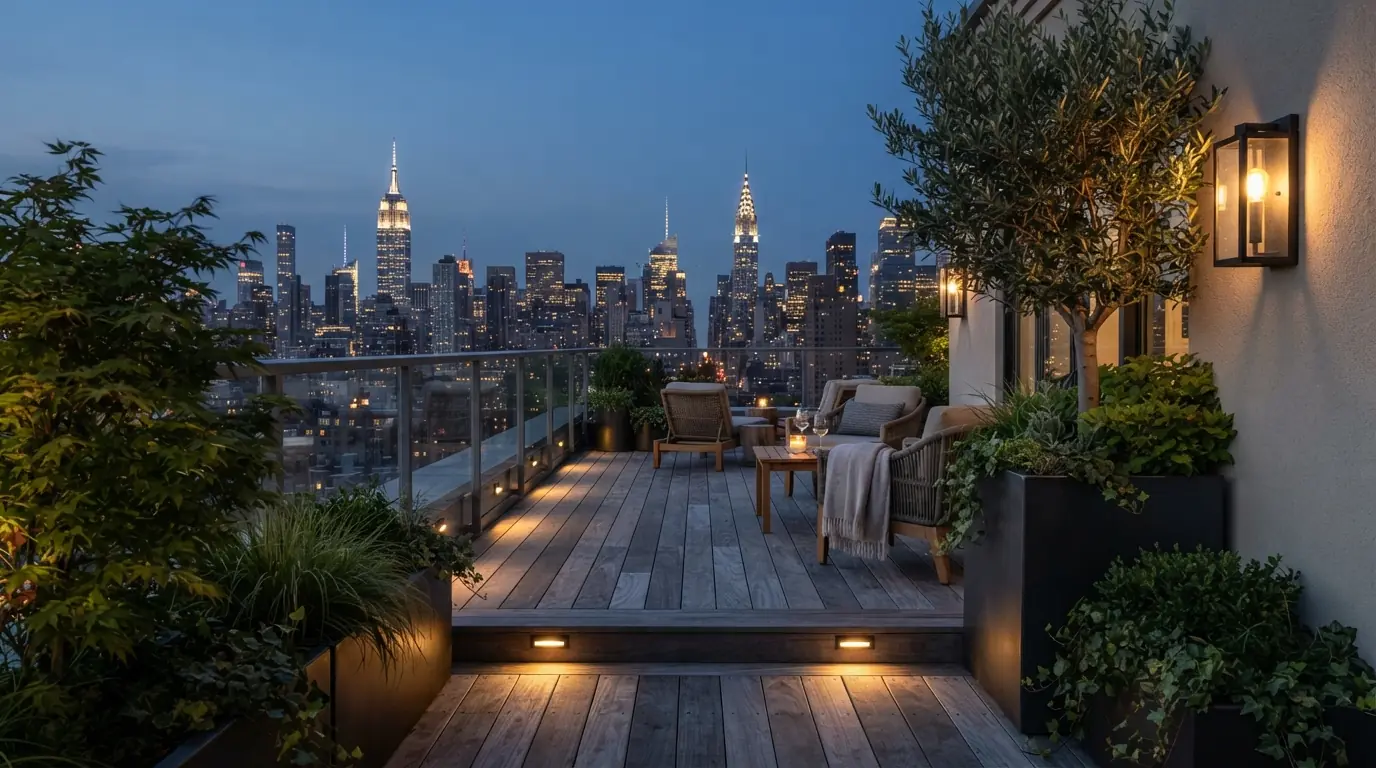
Terraces and roof decks need light for steps and edges more than for show. On a Manhattan terrace the work runs through the building: which walls can be penetrated, where power can come from, and what the board allows on the facade. On a deck we use low-profile step and rail lights. Outlets on any terrace or deck are GFCI protected and weather-resistant, with covers that stay closed with a plug inserted, so a string of lights left out all summer stays safe.
What an outdoor lighting install includes
- Dusk walk-through and fixture layout
- Transformer or circuit sized with headroom
- Waterproof connectors at every splice
- In-use covers on outdoor outlets
- Photocell, timer or motion control per zone
- Fixtures aimed at night and adjusted
- Panel and transformer zones labeled
Lighting a yard versus lighting a terrace
Around Warwick and Greenwood Lake, outside lights and outdoor outlets are regular requests, usually for long driveways, lake steps and yards that go fully dark at night. In Manhattan the same job looks different: a terrace or roof deck governed by building rules, where the board decides what can be mounted and the route for power has to respect shared walls and roofs. We plan the two kinds of job differently for exactly that reason.
How an outdoor lighting job runs
Walk it at dusk
Decide what needs to be seen and from where.
Plan the zones
Fixtures, transformer or circuit, and controls chosen.
Run the power
Cable laid or circuit installed, splices sealed.
Set the fixtures
Mounted, connected and tested.
Aim after dark
A night visit to adjust angles and sensor zones.
Outdoor lighting questions
Yes, 12 volt cable is forgiving, but the transformer still needs a proper outlet.
Voltage drop on a long or undersized cable run.
Yes, in-use covers that stay closed with a plug inserted.
Yes, by aiming the sensor and narrowing its zone.
Yes, within what the building approves.
New line-voltage circuits are filed; low-voltage plug-in systems usually are not.
Yes, with a timer, photocell or smart control.
Related work in the same system
Light the paths, the steps and the door
Call any hour to set up a dusk walk-through of the property.