Home EV Charger Installation in New York
A Level 2 charger is only as fast as the circuit behind it, and only as safe as the panel feeding it. We check the load, choose outlet or hardwired, and install the charger where the cable actually reaches the car.
- Calls answered 24/7
- Panel checked before install
- Outlet or hardwired
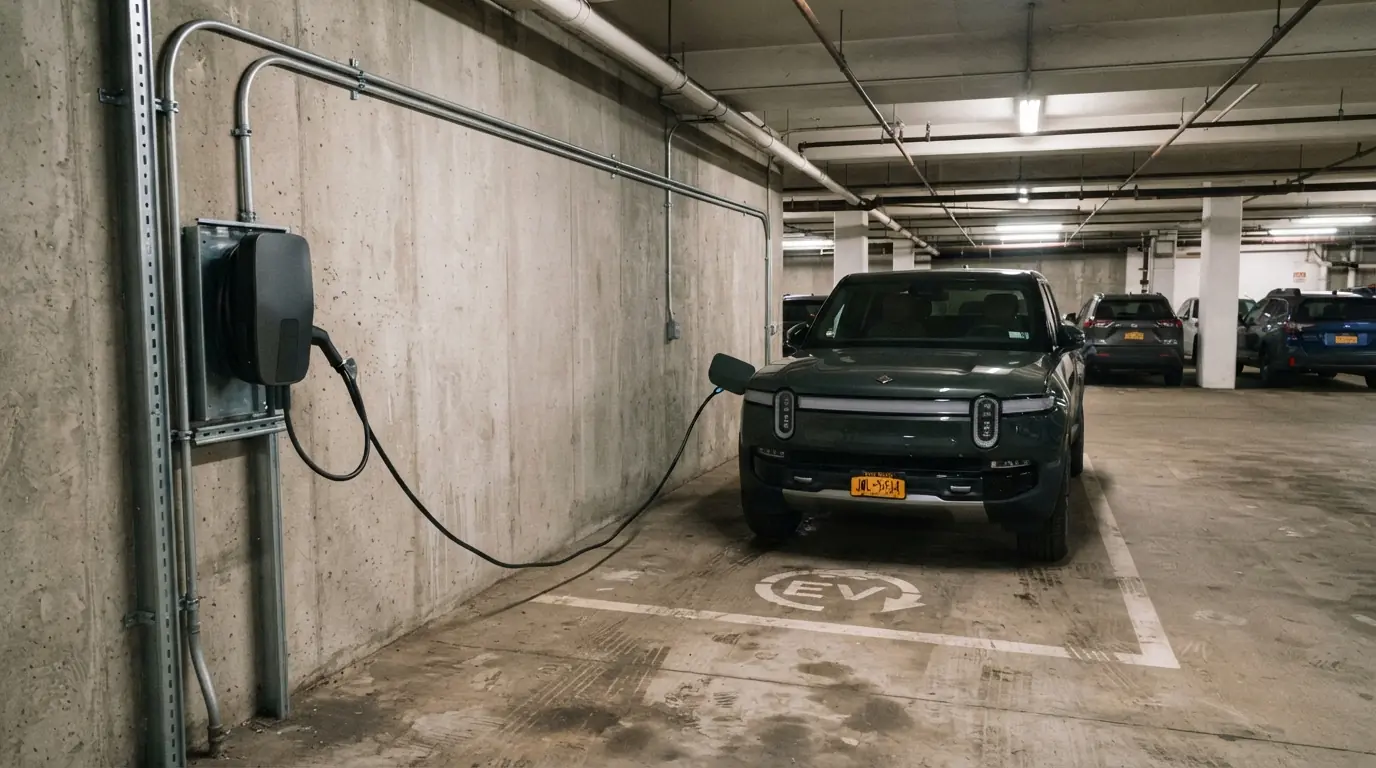
- Panel load and space checked
- Charger location and cable reach confirmed
- Circuit, permit and test charge
Home chargers we install include ChargePoint, Wallbox and Emporia units, on Square D, Siemens and Eaton panels.
Home EV charger installation in New York means a dedicated 240 volt circuit for a Level 2 charger, which adds up to about 20 miles of range per hour. Angi's 2026 data puts professional installs at $564 to $1,400, averaging $967, with panel upgrades of $800 to $2,000 where the service is short.
Rather ask a person?(929) 755-0293What a home charger install involves
The charger is the easy part. The questions are the panel, the distance and the plug. We check whether the service can carry a charger running for hours, measure from the panel to the parking spot, and choose a 240 volt outlet or a hardwired unit.
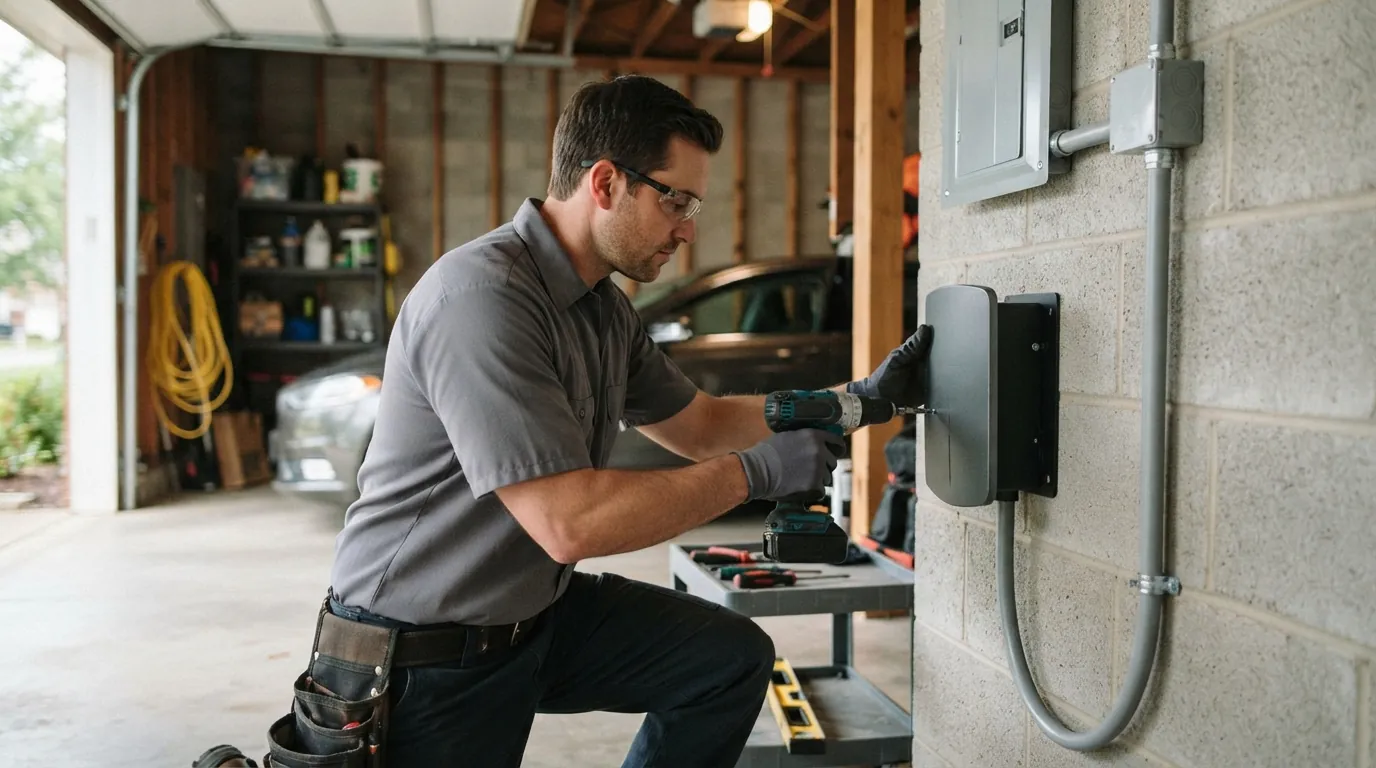
Most homes can take a 40 or 48 amp charger; some need a smaller setting or load management; a few need a panel upgrade first. We install the circuit, mount the charger where the cable reaches the charge port without stretching, and run a test charge. Shared building garages are a different project: see commercial and multifamily charging.
Updated September 2026
What moves the cost of a home charger
Distance and panel capacity decide most of the price.
- Panel capacityRoom on the service keeps it simple; a shortfall means management or an upgrade.
- Distance to parkingLong runs from the panel need heavier wire and more conduit.
- Outlet or hardwiredHardwired units cost more to buy but charge faster.
- Indoor or outdoorOutdoor units need weather-rated mounting and covers.
- PermitCharger circuits are filed and inspected.
Level 1, Level 2 or load-managed Level 2
| Factor | Level 1 (120V) | Level 2 (240V) | Level 2 with load management |
|---|---|---|---|
| Range per hour | A few miles | Up to about 20 miles | Varies with house load |
| Circuit | Existing outlet | Dedicated 240 volt circuit | Dedicated circuit plus sensors |
| Best for | Low mileage, plug-in hybrids | Most daily drivers | Homes near the panel limit |
| Panel upgrade needed | No | Sometimes | Rarely |
Most full-EV owners end up with Level 2; load management suits a nearly full panel and overnight charging.
Installing it yourself versus calling us
| Task | Doing it yourself | With us |
|---|---|---|
| Adding a 240 volt outlet | Panel work and GFCI rules are easy to get wrong | Circuit, protection and permit handled |
| Sizing the circuit | Charger setting and breaker often mismatched | Setting matched to the circuit |
| Checking the panel load | Usually skipped | Load calculated before install |
| Mounting location | Cable ends up stretched across the floor | Mounted where the cable reaches |
Choosing and buying the charger is a good homeowner job. The circuit, the panel and the permit belong to an electrician.
Three home charging setups
Level 2 Charger in a Private Garage
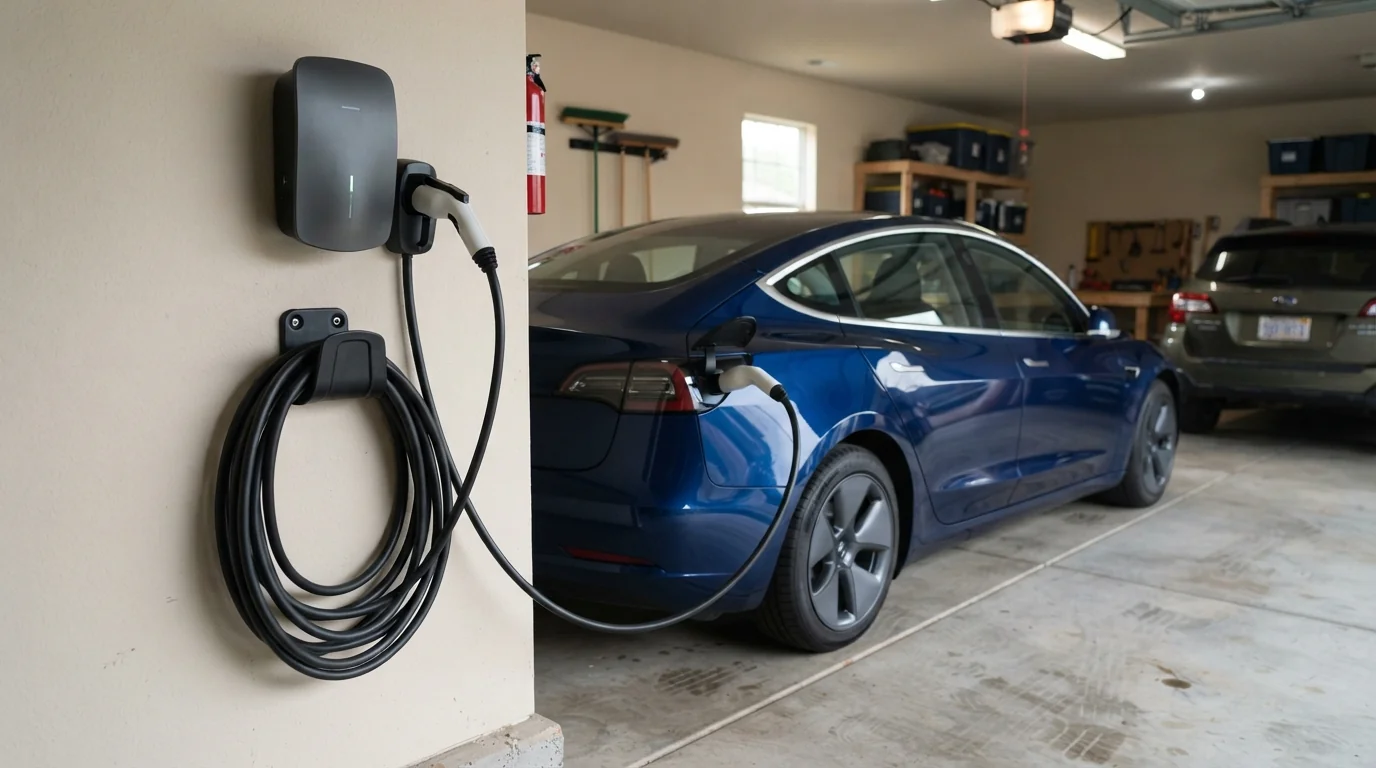
A garage charger is the simplest case: a dedicated circuit from the panel, a wall-mounted unit near the charge port, and a cable that reaches without crossing the walkway. We mount the unit at a comfortable height, route the circuit in conduit where it runs exposed, and protect it where a car door or bumper could hit it. The charger's amperage is set to match the circuit, and we confirm it charges at the expected rate before leaving.
Planning range (national sources, 2026): $564 to $1,400, average $967; panel upgrade where needed $800 to $2,000; permits $150 to $200. Coastal-market pricing and building access change the figure; this is a planning band, never a quote.
NEMA 14-50 Outlet Versus Hardwired Charger
A 14-50 outlet lets you plug in the charger that came with the car, and take it with you if you move. A hardwired charger can run at a higher current, up to 48 amps on a 60 amp circuit, and avoids wear on an outlet used every night. Under current codes a garage 240 volt outlet needs GFCI protection, and some chargers trip GFCI breakers, which is one reason we often recommend hardwiring. We check the charger manual for its protection requirements before choosing.
Load-Managing Smart Charger on a 100 Amp Service
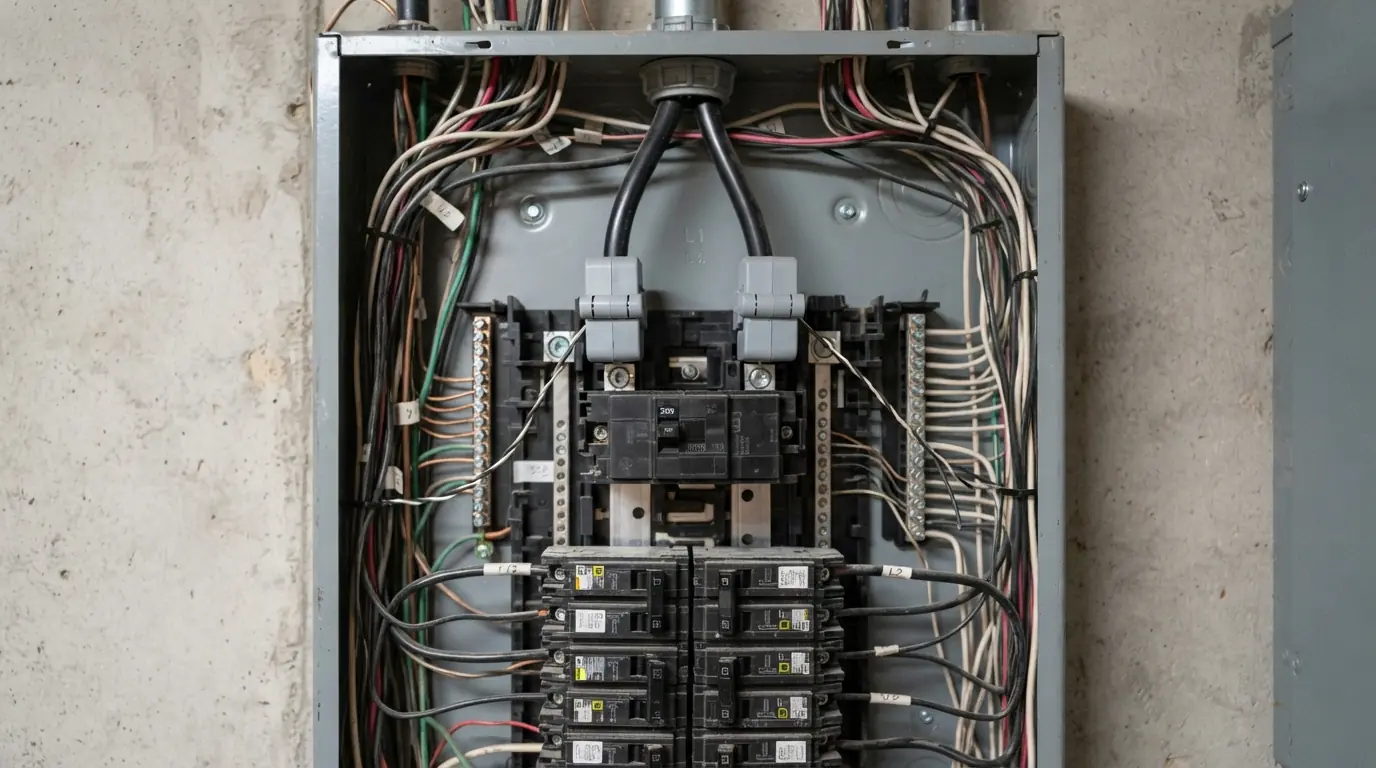
On a 100 amp service, a charger running at full power alongside central air, a dryer and a range can exceed the limit. A load-managing charger watches the home's total draw and slows charging when other loads rise, then speeds up when they fall. For most drivers who charge overnight, the car is still full by morning, and it can avoid a panel upgrade entirely. We size the setting from the load calculation and show you the charging rate you can expect on a typical evening.
Planning range (national sources, 2026): $800 to $1,500 for the charger plus $300 to $600 for the circuit. Coastal-market pricing and building access change the figure; this is a planning band, never a quote.
Charging in and around the city
A Level 2 charger runs at 240 volts, about the same as a clothes dryer, and adds up to roughly 20 miles of range per hour, which covers most daily driving overnight. In New York City most drivers park on the street or in shared garages, where Con Edison's PowerReady incentives and the city's curbside chargers do the heavy lifting. A private garage or driveway charger is more common in houses outside Manhattan, where the parking is attached to the home.
How a charger install runs
Share the details
Car, charger model, parking spot and panel photo.
Load check
Service capacity confirmed or managed.
File
Permit filed for the new circuit.
Install
Circuit, outlet or hardwired unit, conduit where exposed.
Test charge
Rate confirmed, app set up, directory labeled.
Home EV charger questions
Up to about 20 miles of range per hour.
Not always; a load calculation or a load-managing charger may avoid it.
Hardwired allows higher current and avoids GFCI nuisance trips.
Yes, with a weather-rated unit and mounting.
Yes, the circuit is filed and inspected.
That is a building project with its own page.
Yes, once we confirm it suits the panel.
Related work in the same system
Power for detached garages
DetailsStandby Generator Installation
DetailsHome Battery Backup
DetailsSolar Electrical & Interconnection
DetailsGuides: Panel upgrade costs in New York and EV charging in an apartment building and EV charger installation cost
Get the home charger installed right
Call any hour. Send the charger model and a photo of the panel and we will size the circuit.