Home Battery Backup Systems in New York
A home battery keeps the lights and the refrigerator on silently, with no fuel to store. We decide with you what it should back up, wire it into the panel, and handle the filings, which in New York City are stricter than almost anywhere.
- Calls answered 24/7
- Backup loads planned first
- City filing rules handled
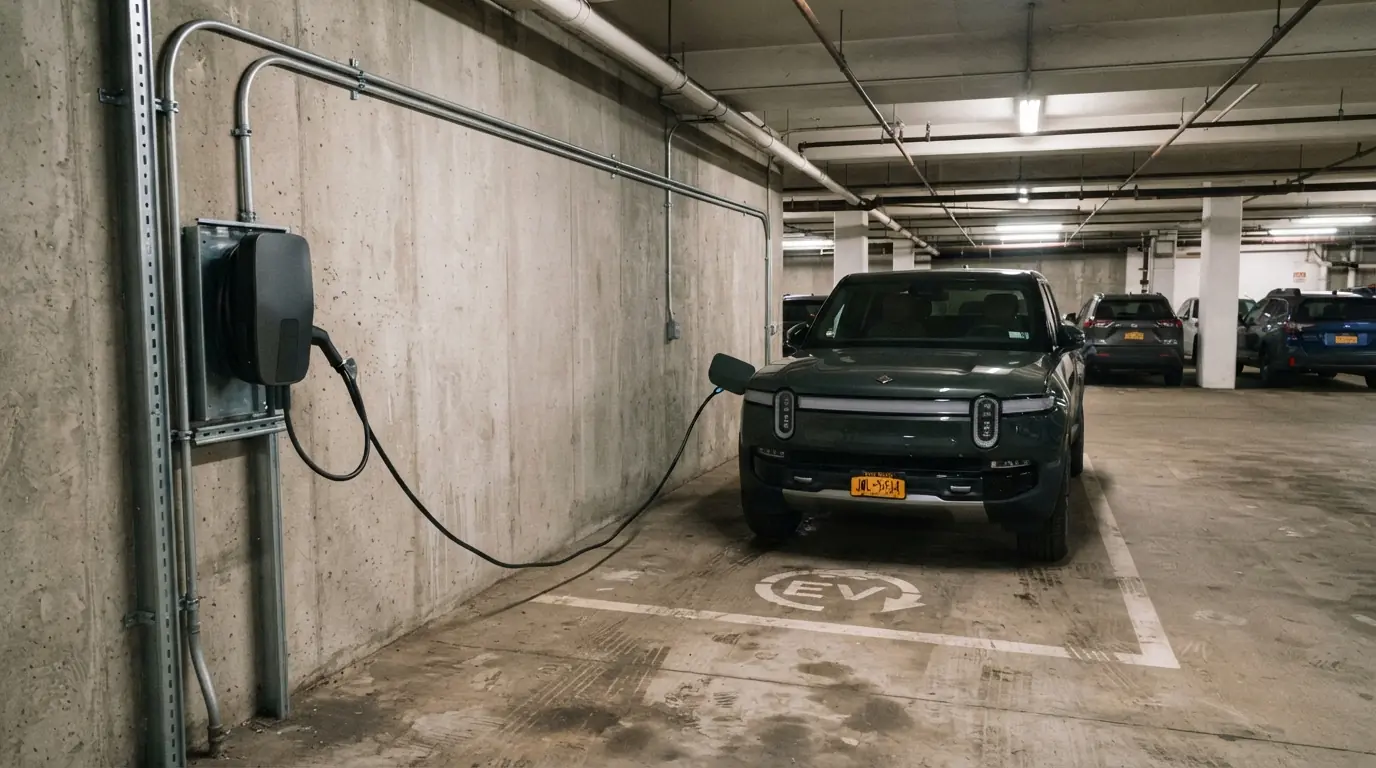
- Loads to back up chosen with you
- Battery, gateway and panel wiring
- Filings, inspection and testing
Battery systems we wire connect to Square D, Siemens and Eaton panels, alongside Generac and Kohler generator setups where owners want both.
A home battery backup system in New York stores power to run chosen circuits or the whole home during an outage, switching over automatically. A single 10 to 14 kWh battery typically costs $8,000 to $18,000 installed according to 2026 industry data, and in New York City every battery at a one- or two-family home now needs a Department of Buildings filing.
Rather ask a person?(929) 755-0293What a battery backup job involves
The first question is what the battery should run. A single battery can carry the refrigerator, lights, internet, a furnace blower and some outlets for many hours; running central air or an electric range needs more capacity. That choice sets the size of the system and whether the backed-up circuits move to their own subpanel.
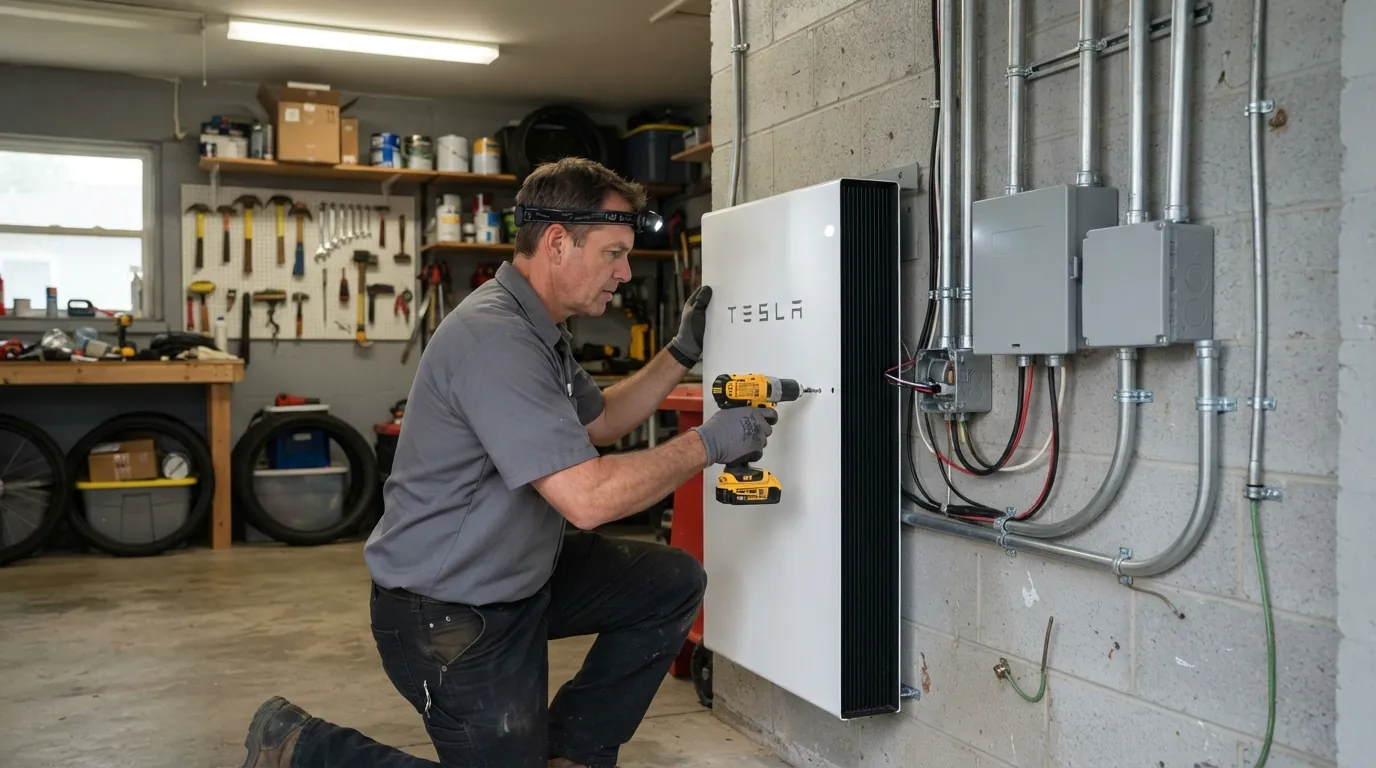
Then the electrical work: mounting the battery where the rules allow, installing the gateway or transfer device that isolates the house from the grid during an outage, and connecting it to the panel. With solar, the battery also recharges from the roof during a long outage. For fuel-powered backup, see standby generators.
Updated September 2026
What moves the cost of a home battery
Capacity and location decide most of it.
- Battery capacityWhole-home backup usually needs more than one battery.
- Essential loads or whole homeA subpanel for essentials is simpler than service-entrance work.
- Mounting locationCity rules restrict where batteries can go.
- Panel conditionAn old or full panel may need an upgrade first.
- Filings and reviewCity filings add office time and review steps.
Battery or generator for backup
| Factor | Home battery | Standby generator |
|---|---|---|
| Fuel | None; recharges from grid or solar | Natural gas or propane |
| Run time | Limited by capacity unless solar recharges it | As long as fuel lasts |
| Noise and exhaust | Silent, none | Engine noise and exhaust |
| Best for | Short and medium outages, solar homes | Long outages, heavy loads |
Houses that lose power for days at a time, especially upstate, often still prefer a generator. Homes with solar or shorter outages often prefer a battery.
Three ways a battery is set up
Whole-Home Battery Backup
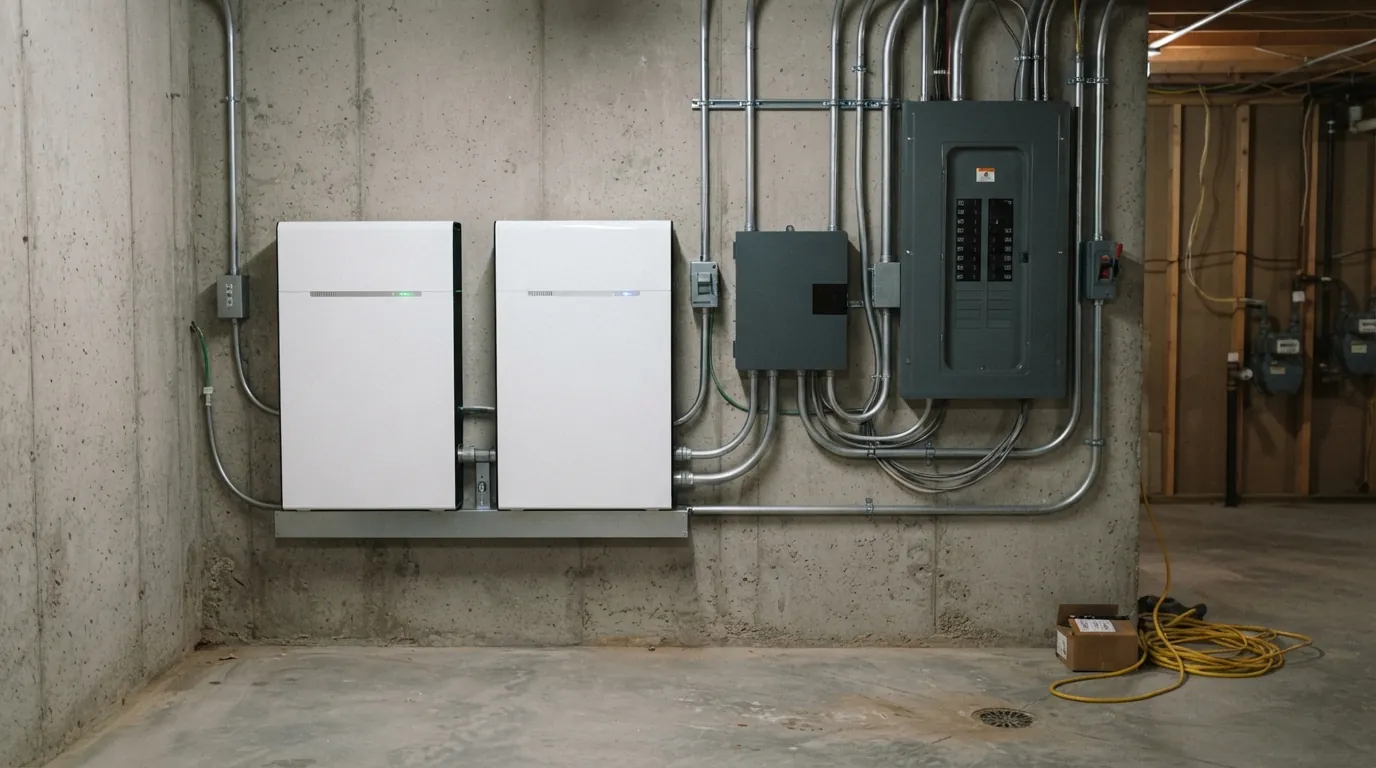
Whole-home backup puts the gateway at the service entrance so the entire house runs on the battery during an outage. It usually takes two or more batteries, and load management that holds off the largest appliances until the battery can support them. It suits homes where someone must be comfortable through long outages, and it pairs well with solar, which recharges the batteries by day. It is the largest filing and the largest wiring job of the three options, and it touches the service entrance.
Planning range (national sources, 2026): $8,000 to $18,000 installed for a single 10 to 14 kWh battery. Coastal-market pricing and building access change the figure; this is a planning band, never a quote.
Essential-Loads Battery Backup
Essential-loads backup moves the circuits you choose, such as the refrigerator, heating controls, sump pump, lights and internet, to a subpanel the battery feeds. A single battery can then run them far longer than it could run the whole house. It is the most common choice and the most cost-effective, and the subpanel can be sized with spare spaces so another circuit can be added to the essentials later without rewiring the whole system or changing the battery.
Battery Paired With Solar
A battery on its own recharges from the grid and waits for an outage. Paired with solar, it can recharge from the roof during a multi-day outage and store daytime production for the evening. The two systems share the panel's capacity, so the solar connection and the battery connection are planned together. Adding a battery to an existing solar system is possible if the inverter and panel allow it, which we check first, along with where a second storage unit could legally be mounted.
The city's new battery rules
New York City's Department of Buildings rules for energy storage took effect on October 26, 2025, and every battery at a one- or two-family home now needs a filing, with installations limited to 80 kWh per lot. The first home battery on a New York City rooftop went live in Brooklyn in March 2026. On the incentive side, NYSERDA's residential storage rebate is $250 per kWh in Con Edison territory.
Why battery projects take planning
The installation itself takes a day or two of electrical work once equipment and approvals are in hand. In New York City the filing and review steps come first, and they take longer than for most other electrical jobs. Upstate the process is simpler. We give you the sequence once the location and size are settled, so there are no surprises between approval and installation.
How a battery backup project runs
Choose the loads
What must run during an outage.
Size and site
Capacity, location and panel checked.
File
City or local filings prepared and submitted.
Install
Battery, gateway and subpanel wired.
Test
Simulated outage run before handover.
Home battery questions
2026 industry data puts a single 10 to 14 kWh battery at $8,000 to $18,000 installed.
With enough capacity and load management, yes; essentials need less.
No, but solar lets it recharge during long outages.
Yes, with a Department of Buildings filing under the new rules.
NYSERDA offers a per-kWh storage rebate through approved contractors.
Batteries suit shorter outages and solar homes; generators suit long outages.
Where the rules allow; city rules restrict some locations.
Related work in the same system
Plan a battery for the next outage
Call any hour. We start with what you need to keep running.