Electric Radiant Floor Heating Wiring in New York
A heating mat damaged under tile is a floor that has to come up again. We test the mat before, during and after tiling, wire it on its own protected circuit, and set the thermostat so the floor stays warm, not hot.
- Calls answered 24/7
- Tested before and after tile
- GFCI protected
- Mat wattage and circuit sized
- Resistance tested at every stage
- Floor-sensing thermostat set up
Electric radiant floor heating in a New York home uses a heating mat or cable set under tile, wired to a dedicated GFCI-protected circuit and controlled by a thermostat with a floor sensor. The mat is tested for resistance before, during and after tiling, because damage found after the tile sets means lifting the floor.
Rather ask a person?(929) 755-0293What floor heating wiring involves
The heating element is the tile setter's to lay and the electrician's to protect. We size the circuit to the mat's wattage, run power to a thermostat box near the room entrance, and bring the cold lead and the floor sensor wire down to the floor in a way that will not be crushed by tile or thinset.
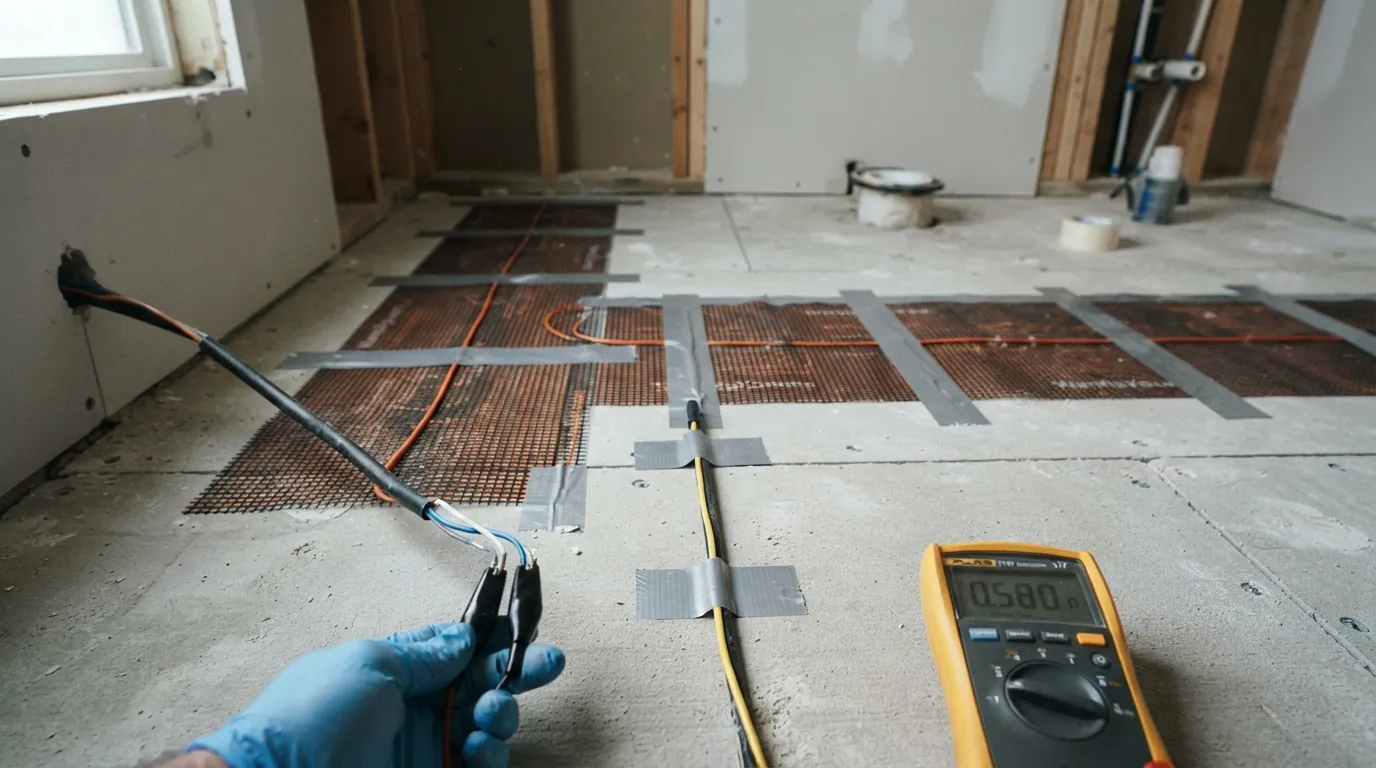
Testing is the part that saves floors. We measure the mat's resistance and insulation out of the box, after it is fixed down, and after the tile is set, and we record the readings. Floor heat usually rides along with a bathroom or kitchen renovation, so we schedule around the tile work.
Updated September 2026
What sets the cost of floor heating wiring
Circuit size and tile timing decide most of it.
- Heated area and wattageLarger floors may need 240 volts or a relay.
- Distance to the panelA long run to a new dedicated circuit adds wire.
- Thermostat typeProgrammable and smart thermostats cost more.
- Coordination with tileTesting visits are timed to the tile setter.
- Repair or newTracing a fault in an existing floor takes specialist testing.
Installing it yourself versus calling us
| Task | Doing it yourself | With us |
|---|---|---|
| Laying the mat | Common for tile setters and owners | We protect and test it |
| Testing during tiling | Usually skipped | Tested at every stage |
| Circuit and GFCI | Easy to undersize or leave unprotected | Sized to the mat and protected |
| Permit in the city | Needed for new circuits | Filed with the renovation |
Laying the mat can be the tile setter's job. The circuit, the thermostat and the testing should be an electrician's.
Three floor heating jobs
Bathroom Heated Floor
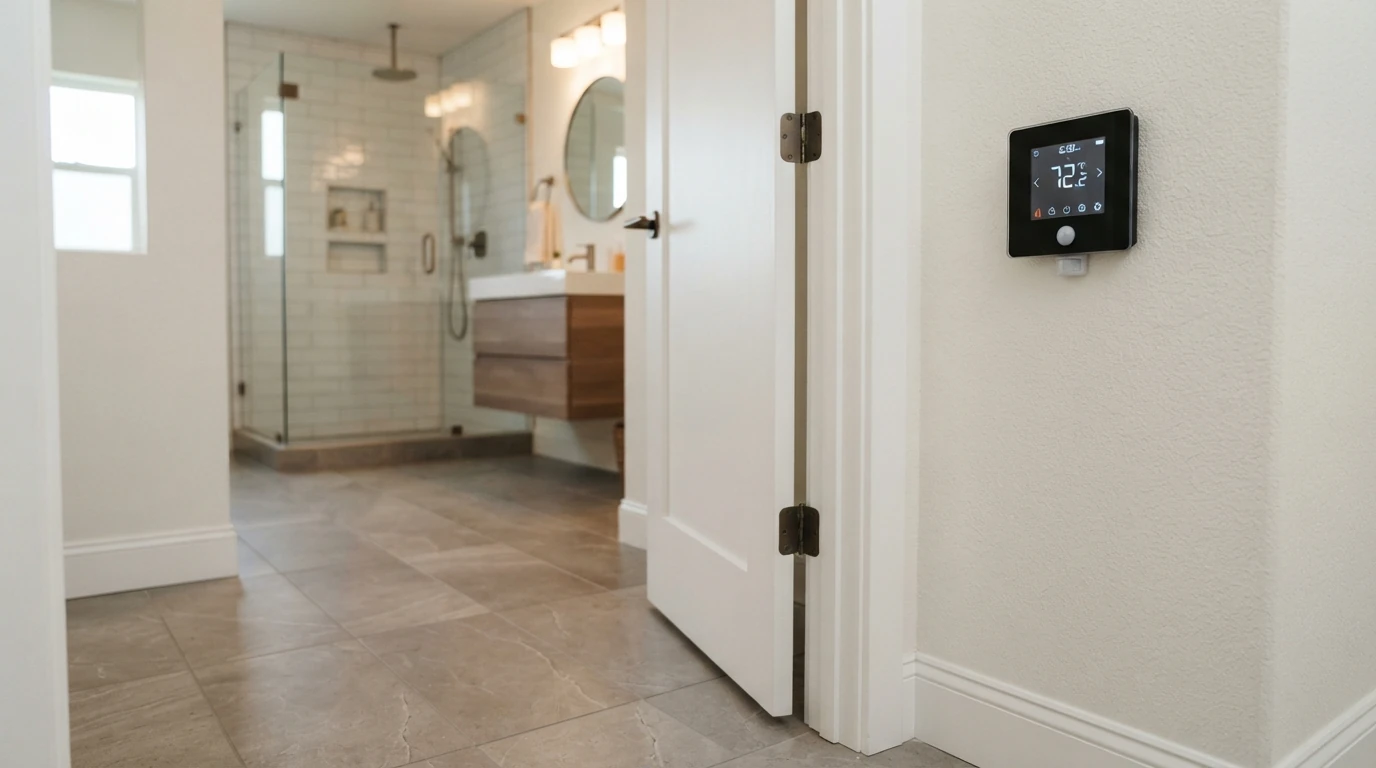
Bathrooms are where most heated floors go, and they are where the rules are tightest. The mat stays out from under the toilet flange and the vanity, the circuit is GFCI protected, and the thermostat mounts outside the wet zones. Most bathroom mats are small enough to run on a modest dedicated circuit, though we check the wattage before assuming it. A floor warmed an hour before the morning alarm is the whole point, so the thermostat schedule is set with you before we leave.
Kitchen and Living Area Floor Heat
Larger floors, such as kitchens, mudrooms or a living area over a cold slab, need more heating capacity and sometimes a 240 volt circuit or more than one mat on a relay. We work out the heated area with the layout, leaving out spaces under cabinets and islands, and size the circuit to the total. In these rooms floor heat is often a comfort layer rather than the only heat, and we set the thermostat to hold the floor at a steady comfortable temperature.
Floor Heat Thermostats and Sensors
The thermostat reads a sensor embedded in the floor, not the air, which is what keeps tile from overheating. Programmable and smart models let you warm the floor before you wake up and let it cool while you are out. A sensor can fail or be damaged during tiling, so we install it with a spare where the manufacturer allows, and test both before the tile goes down. Replacing a failed thermostat on an existing heated floor is a common repair we handle too.
What floor heat wiring includes
- Mat wattage checked and circuit sized
- Dedicated GFCI-protected circuit
- Thermostat box outside wet areas
- Cold lead and sensor routed safely to the floor
- Resistance and insulation test out of the box
- Tests after fixing down and after tile
- Thermostat programmed and readings recorded
Floor heat in city renovations
In New York apartments, heated floors almost always arrive as part of a larger bathroom or kitchen renovation, which means the floor heat circuit is one line in a filed electrical scope rather than a separate job. In a co-op or condo that also means working within the building's approved hours and the tile setter's schedule, so the three tests happen at the right moments without holding up the rest of the work.
How floor heat wiring runs
Plan the floor
Heated area, mat and thermostat location.
Rough in
Circuit, thermostat box and conduit to the floor.
Test the mat
Out of the box and after it is fixed down.
Test after tile
Readings confirmed before grout cures.
Connect and program
Thermostat wired, schedule set.
Floor heating questions
Usually, sized to the mat's wattage and GFCI protected.
Often, but it should be tested before and after tiling.
Testing finds it early; after grout, repairs mean lifting tile.
Usually not; it is a comfort layer.
Yes, with a programmable or smart thermostat.
New circuits are filed, usually with the renovation.
Often; most failures are the thermostat or sensor.
Related work in the same system
Get the floor heat wired and tested
Call any hour. Tell us the room size and your tile schedule and we will plan the visits.