Restaurant and Commercial Kitchen Electrical in New York
A restaurant kitchen is one of the hardest-working electrical systems in the city. Fryers, ovens, refrigeration and the hood all draw at once, and the suppression system has to shut the right equipment off the moment it fires. We wire it to the equipment schedule, then test it before opening night.
- Calls answered 24/7
- Kitchen equipment circuits
- Hood shutoffs wired and tested
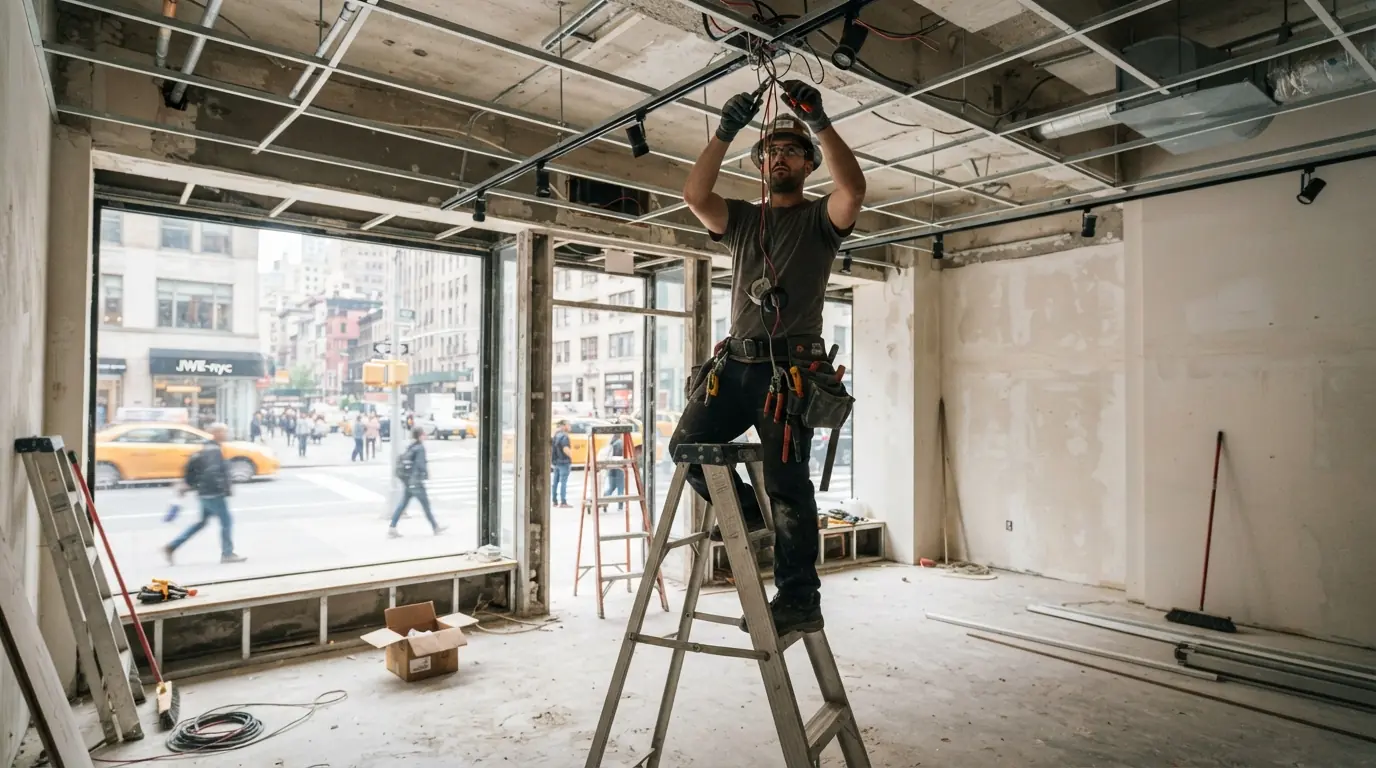
- Equipment schedule reviewed
- Circuits and shutoffs installed
- Tested before opening
Restaurant electrical work in New York covers dedicated circuits for each piece of kitchen equipment, the shutoff wiring that cuts power to cooking equipment when the hood suppression system fires, refrigeration circuits, and lighting and power for the dining room. We build it from the equipment schedule, file the work, and test every shutoff before opening.
Rather ask a person?(929) 755-0293What restaurant electrical work involves
A restaurant build-out starts with the equipment schedule: every fryer, oven, range, dish machine, walk-in and reach-in, with its voltage, phase and amperage. Each needs its own circuit sized to the nameplate, and the panel and service have to carry the whole line running at once on a Saturday night. Getting that list early prevents the expensive surprise of a service too small for the menu.
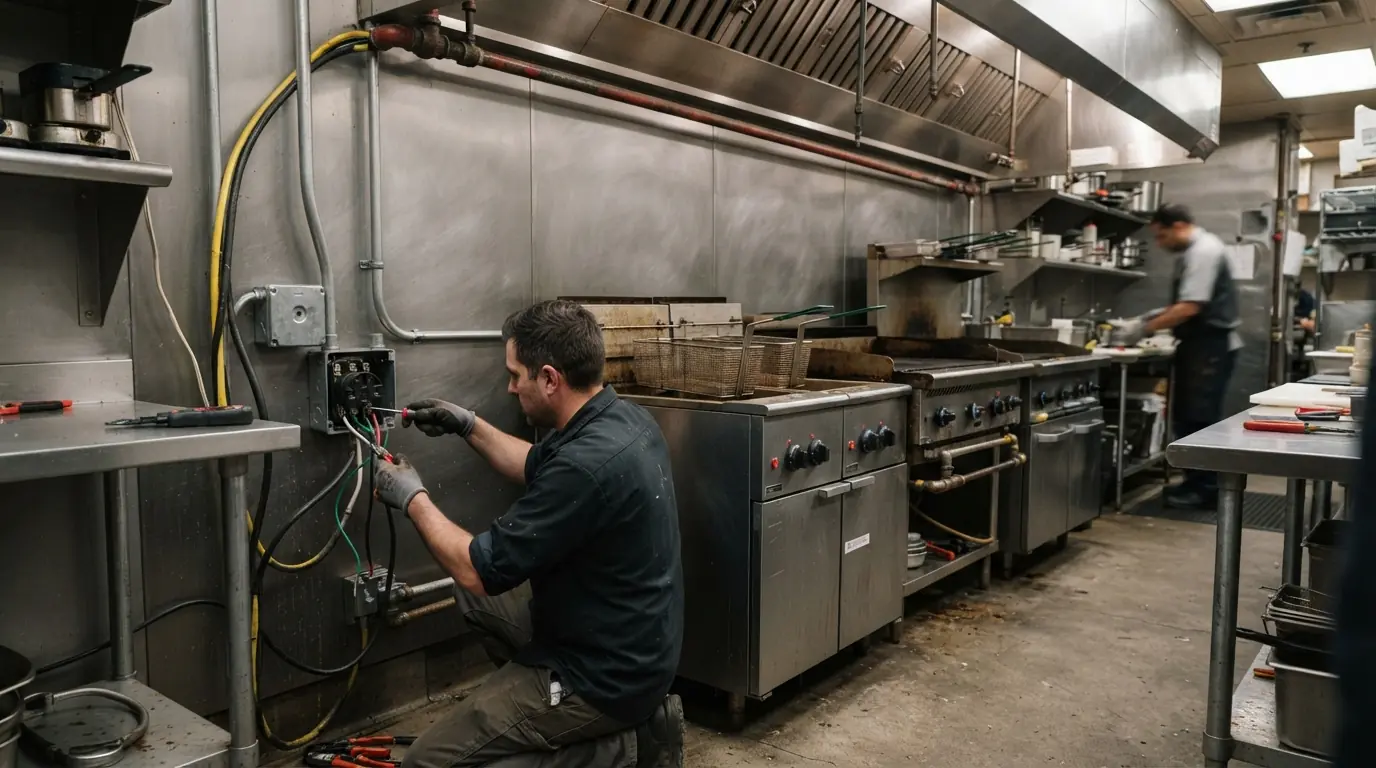
The hood adds a second layer. When the kitchen fire suppression system fires, the electric power to the cooking equipment under it has to shut off automatically, which is done with shunt-trip breakers or contactors tied to the suppression system. We wire and test those shutoffs with the suppression contractor, and coordinate with the tenant fit-out work for the rest of the space.
Updated September 2026
What sets the cost of restaurant electrical work
The equipment schedule drives almost everything.
- Equipment count and typeEvery appliance needs its own circuit.
- Service capacityA full menu can outgrow the existing service.
- Hood shutoff designShunt trips or contactors add equipment.
- Three-phase powerSome equipment needs it and the space may not have it.
- Opening deadlineCompressed schedules mean more crew at once.
Three parts of a restaurant's electrical system
Commercial Kitchen Equipment Circuits
Each piece of cooking and refrigeration equipment gets a dedicated circuit at the voltage and phase on its nameplate, with a connection type the equipment maker allows. We plan the kitchen panel around the full equipment schedule, leave spare capacity for the equipment owners always add later, and keep refrigeration on circuits that will not be shut off by the hood system. Walk-ins and reach-ins get labeled breakers so a cook can find them at midnight, and the panel schedule matches the equipment list we started from.
Hood Suppression Shutoff Wiring
When the suppression system discharges, the electric cooking equipment under the hood must lose power automatically and stay off until someone resets it. We feed that equipment through shunt-trip breakers or an electrically held contactor tied to the suppression system's switch, then test the whole chain with the suppression contractor present: trip the system, confirm every protected appliance goes dark, and confirm the reset works as intended. The result goes on the inspection paperwork, and the reset procedure is written down for the kitchen manager.
Restaurant Lighting and Dining Room Power
Dining rooms need lighting that sets a mood and still meets egress requirements, plus power for point-of-sale stations, bars, coolers and sign lighting. We wire dimmable dining room lighting on its own controls, emergency and exit lighting where the space needs it, and dedicated outlets for the bar and the register so a blender never takes down the card reader. Storefront signs and exterior lights go on timers the staff can understand, so the front of house closes down the same way every night.
What restaurant electrical work includes
- Equipment schedule reviewed against the service
- Dedicated circuit for each appliance
- Refrigeration kept off the hood shutoff
- Hood suppression shutoff wired
- Shutoff tested with the suppression contractor
- Dining room, emergency and sign lighting
- Labeled panel for the kitchen staff
The rule behind the hood shutoff
NFPA 96 section 10.4.1 requires that when a commercial cooking fire-extinguishing system activates, all fuel and electric power producing heat to the protected equipment shuts off automatically. In New York City kitchens that is checked at inspection, so the shutoff wiring is designed in from the start rather than added after the hood is hung and the equipment is already in place.
How restaurant electrical work runs
Equipment schedule
Every appliance listed with its nameplate.
Capacity check
Service and panel sized to the full load.
Rough-in
Circuits, shutoffs and lighting run.
Connect
Equipment connected as it arrives.
Test
Shutoffs and full load tested before opening.
Signs a restaurant's electrical system is in trouble
- Breakers trip during the dinner rush
The panel is at its limit when everything runs.
- Warm cords or outlets at the line
Equipment is on circuits too small for it.
- Extension cords behind equipment
A temporary fix that became permanent.
- Refrigeration on the hood shutoff
A suppression trip would spoil the walk-in.
- Lights flicker when equipment starts
Voltage drop on an undersized feed.
- Unlabeled breakers
Nobody can kill a circuit fast in an emergency.
Restaurant electrical questions
The equipment schedule with every appliance's voltage, phase and amperage.
Yes, cooking equipment under a suppression system must lose power when it fires.
No, refrigeration should stay on when the suppression system trips.
Only if your equipment needs it; we check the schedule against the service.
We plan the rough-in and connections around the build-out schedule.
Yes, emergency and exit lighting where the space requires it.
Yes, scheduled outside service hours when possible.
Related work in the same system
Building out or fixing a restaurant?
Call any hour with the equipment schedule or the problem.