Security Camera Wiring and Power in New York
Wireless cameras drop out when the Wi-Fi does; wired cameras keep recording. We run power-over-Ethernet cable to each camera, mount outdoor connections to keep water out, and give the recorder a tidy, protected home.
- Calls answered 24/7
- PoE cable to each camera
- Weather-sealed outdoor work
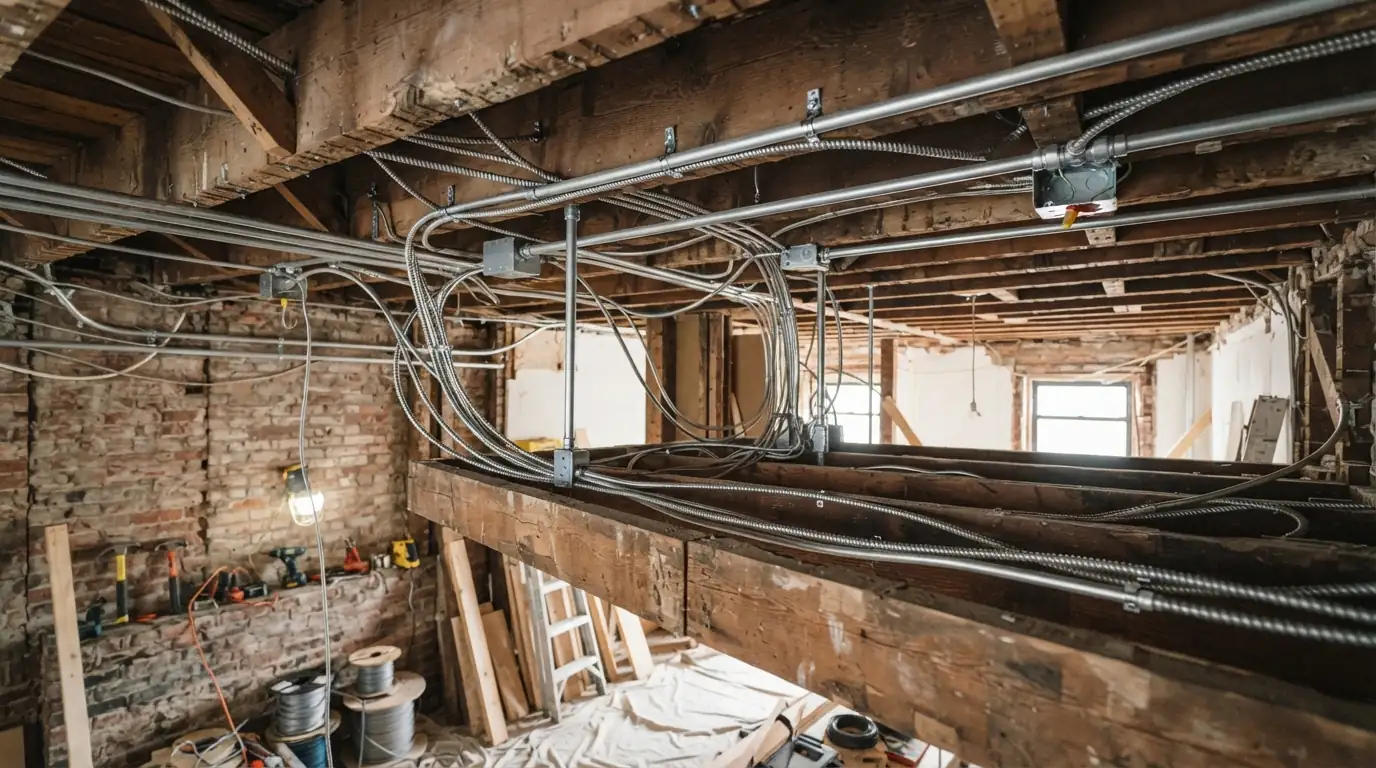
- Camera locations and cable routes planned
- PoE cable run and terminated
- Recorder and power set up and tested
Wiring security cameras in New York usually means running power-over-Ethernet cable from a recorder or PoE switch to each camera, which carries both power and video on one cable up to about 100 meters, with weather-sealed connections outdoors. Wired cameras avoid the dropouts and battery changes of wireless models and keep recording when Wi-Fi fails.
Rather ask a person?(929) 755-0293What camera wiring involves
Power over Ethernet is what makes wired cameras practical: one cable carries both power and video, so each camera needs only one run back to the recorder or a PoE switch. We plan where each camera needs to see, route the cable through walls, attics, basements or soffits, and seal every outdoor penetration so water does not follow the cable inside.
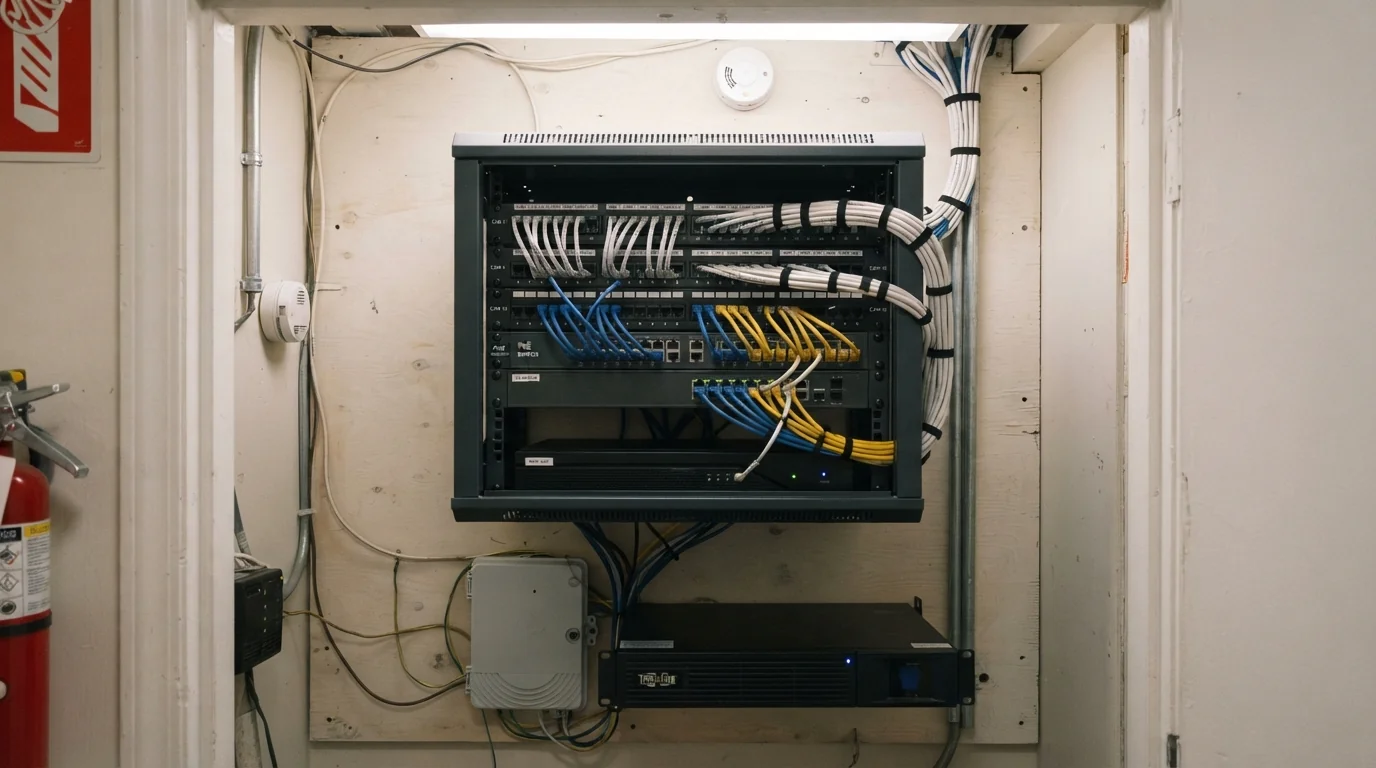
The recorder or switch gets a protected spot with power, ideally on a surge-protected circuit, and a network connection if you want remote viewing. In co-ops, condos and rental buildings, cameras on common areas or the facade need the building's approval. For doorbells and intercoms, see intercom and data wiring.
Updated September 2026
What sets the cost of camera wiring
Cable routes decide most of the price.
- Number of camerasEach camera is its own cable run.
- Route difficultyAttics and basements are easy; finished walls and brick are not.
- Outdoor mountingSealed boxes and ladders or lifts add time.
- Extra powerFloodlight or heated cameras need their own circuit.
- Recorder locationA protected closet may need a new outlet and network run.
Wired PoE or wireless cameras
| Factor | Wired PoE | Wireless battery | Wireless plug-in |
|---|---|---|---|
| Reliability | Highest | Depends on Wi-Fi and battery | Depends on Wi-Fi |
| Power | Through the network cable | Batteries to recharge | Nearby outlet |
| Installation | Cable runs | Quick | Quick, needs an outlet |
| Best for | Houses, buildings, storefronts | Renters, temporary spots | Indoor spots near outlets |
Wireless cameras are fine where a cable cannot go. For anything you need to rely on, wired PoE is the better system.
Installing it yourself versus calling us
| Task | Doing it yourself | With us |
|---|---|---|
| Running cable through walls | Slow, and easy to damage wiring or pipes | Clean routes, nothing damaged |
| Outdoor connections | Common source of water damage | Sealed boxes and drip loops |
| Extra power for floodlight cameras | Adapters and extension cords | A proper outdoor circuit |
| Recorder power | Shared with everything else | Protected, surge-safe outlet |
Setting up the app and camera angles is easy for most owners. Cable runs through finished walls and outdoor power are where a pro saves time and repairs.
Three parts of a camera installation
PoE Camera Cable Runs
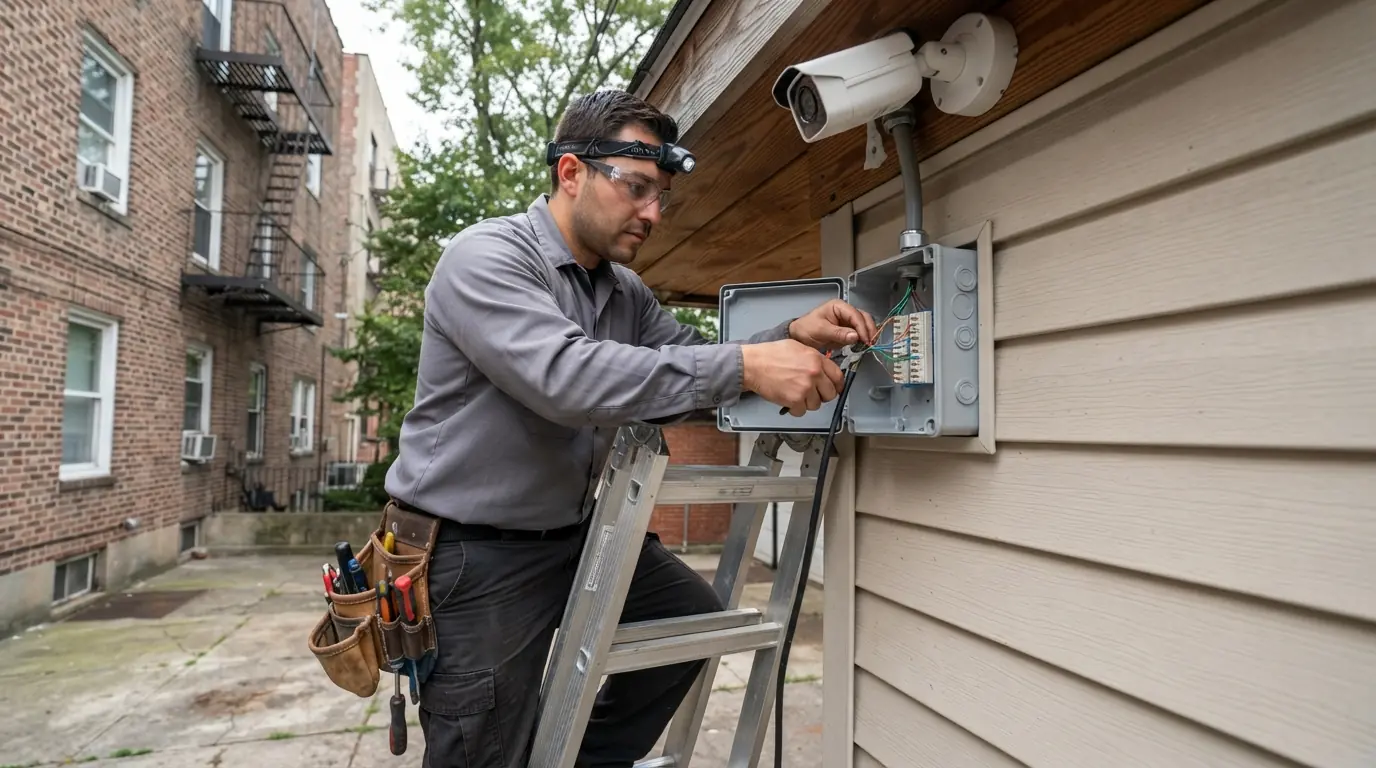
Each camera gets its own network cable back to a PoE switch or a recorder with built-in PoE ports. Runs up to about 100 meters work without extra equipment, which covers most houses and storefronts. We use outdoor-rated cable where it runs outside, terminate each end properly, and test every run before the camera is mounted, so a bad connection is found on the ladder rather than after the installer has gone home and the footage is missing.
Planning range (national sources, 2026): $75 to $150 per hour; service call fees $79 to $179. Coastal-market pricing and building access change the figure; this is a planning band, never a quote.
Outdoor Camera Power
Outdoor cameras fail most often where water gets in, at the cable entry and the mounting base. We use junction boxes made for the camera, seal the wall penetration, and drip-loop the cable so water runs off rather than into the fitting. Where a camera needs more power than PoE provides, such as one with a floodlight or heater, we add a proper outdoor circuit rather than a plug-in adapter hanging off the wall, which would be the first thing to fail in the rain.
Recorder and Network Closet Setup
The recorder is the heart of the system and the target of anyone who wants the footage gone, so it belongs somewhere protected, not on a shelf by the front door. We set it up in a closet or utility space with a dedicated or surge-protected outlet, ventilation, and a network connection for remote viewing. Cables are labeled at both ends so any camera can be traced, and the power supply can be put on a backup battery if you want recording through short outages.
Cameras in shared buildings
In New York apartment buildings, co-ops and condos, the entrance, lobby and facade usually belong to the building, not the resident, so cameras there need the board or owner's approval. Inside an apartment or on a house, the decision is the owner's. For storefronts, the landlord often controls the facade, which shapes where exterior cameras and cables can go before anything is mounted or drilled.
How a camera wiring job runs
Walk the property
What each camera needs to see.
Plan routes
Cable paths and recorder location.
Run and terminate
Cable pulled, ends terminated and tested.
Mount and seal
Cameras mounted, outdoor entries sealed.
Test
Every camera recording and viewable.
Security camera wiring questions
Power over Ethernet: one cable carries power and video to the camera.
About 100 meters without extra equipment.
Yes, if they are wired or PoE models.
Only with the building's approval.
Only if the recorder and switch are on backup power.
We connect the recorder to your network and test it.
Usually water entering at the cable or mount.
Related work in the same system
Get cameras that keep recording
Call any hour. Tell us how many cameras and where they need to see.