Commercial Electrician in New York
For a business, the cost of an electrical problem is the hours the doors are closed. We diagnose and repair faults fast, add circuits for new equipment, and schedule planned work around your opening hours.
- Calls answered 24/7
- Work scheduled around opening hours
- Single and three-phase

- Fault or new equipment need assessed
- Work scheduled to limit downtime
- Documentation for the landlord or insurer
A commercial electrician in New York handles repairs, new circuits and equipment connections for offices, stores and small commercial spaces, on single-phase or three-phase power, scheduled around business hours. Emergency faults are diagnosed first to restore power, then repaired properly; planned work happens before opening or after closing.
Rather ask a person?(929) 755-0293What commercial electrical service involves
Commercial calls split into two kinds. Emergencies, like a dead register circuit, a tripped main or lights out on a sales floor, need power restored quickly and safely, then a proper repair. Planned work, like new equipment, added circuits or a layout change, needs a schedule that keeps the business running.
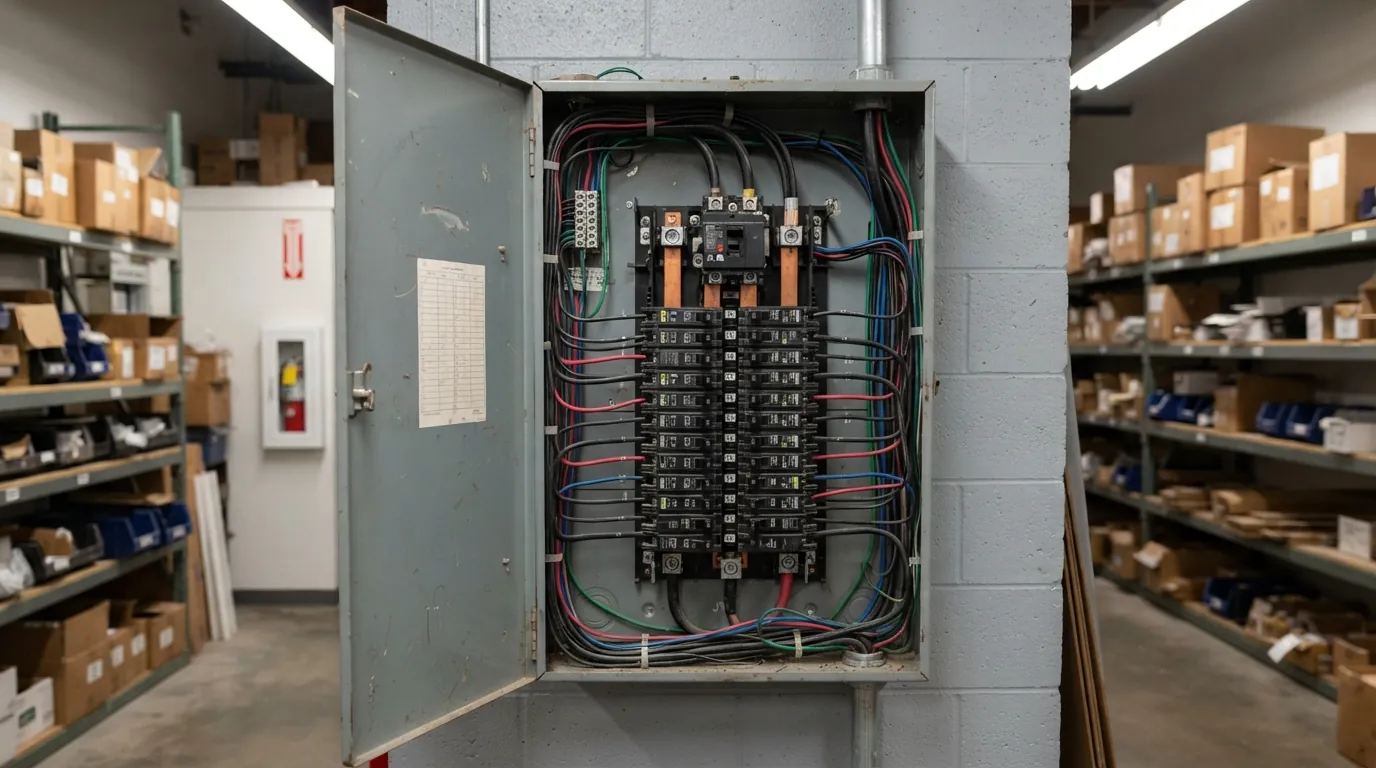
Commercial spaces often run on three-phase power, have panels shared with other tenants, and answer to a landlord's rules. We work within all three, document what we did for the landlord or insurer, and flag anything that should be planned before it fails. For a full build-out of a new space, see tenant fit-outs.
Updated September 2026
What drives the cost of commercial electrical work
Timing and access shape the bill as much as the work.
- Emergency or plannedAfter-hours emergencies can carry a different rate.
- Access and hoursLandlord rules and business hours set when work happens.
- Voltage and phaseThree-phase work needs heavier equipment and testing.
- Panel capacityAdding equipment may need a new panel or feeder.
- DocumentationLandlord and insurer paperwork adds office time.
Three kinds of commercial work
Office Electrical Service
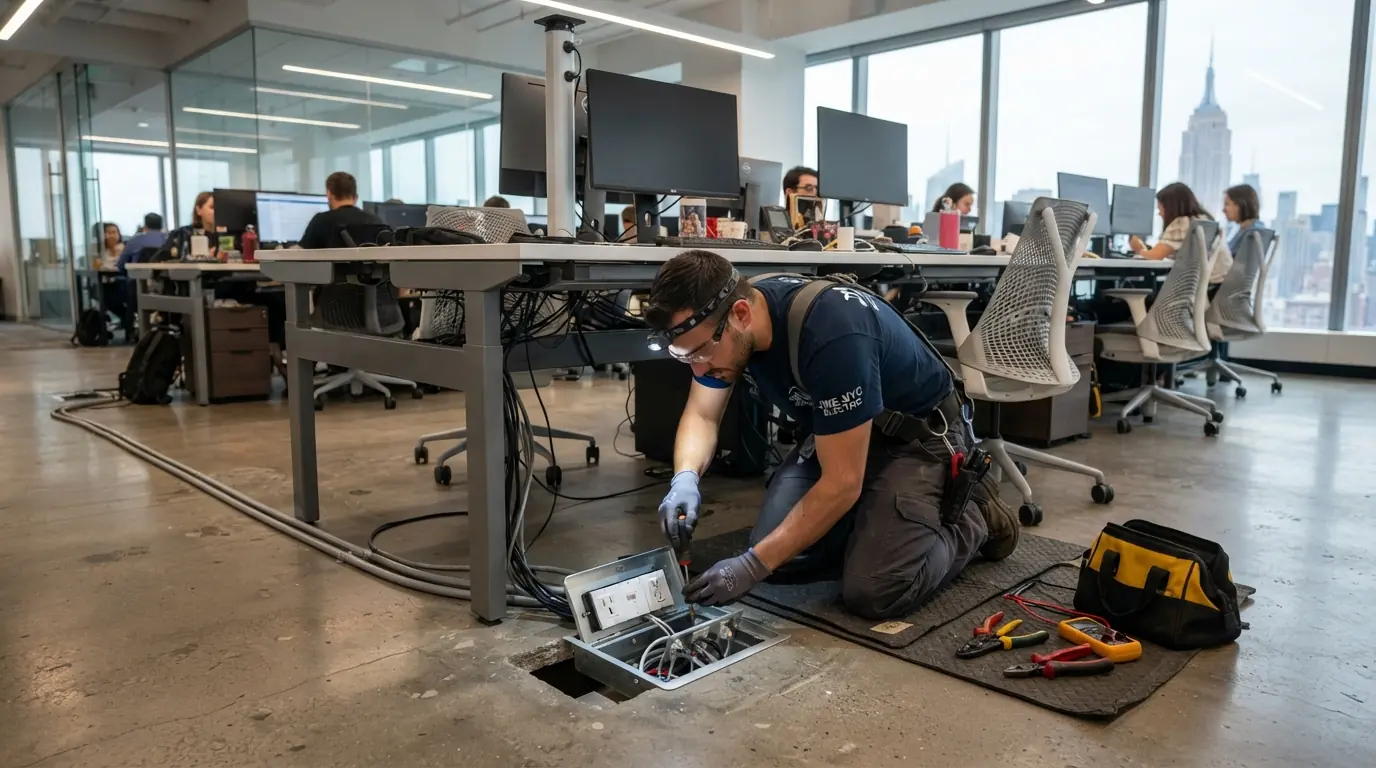
Offices need circuits that match how people work: enough outlets at each workstation, dedicated circuits for kitchens and copy rooms, and lighting that suits screens. We add and relocate outlets for new layouts, fix tripping circuits, and trace faults in older office panels where labels no longer match the floor plan. Work is done after hours or floor by floor, and the panel directory is updated so the next tenant change is easier for whoever handles it, whether that is us or the landlord's own contractor.
Retail and Storefront Power
In a store, power has to reach registers, displays, signs and lighting that change with every season's layout. We add circuits for new displays, repair sign and window lighting, and fix faults that take down part of the sales floor. When a problem starts during business hours, we restore what can be restored safely first so the store can keep selling, then return before opening to finish the permanent repair without customers in the aisles, and we label the circuits that feed each display.
Three-Phase Equipment Circuits
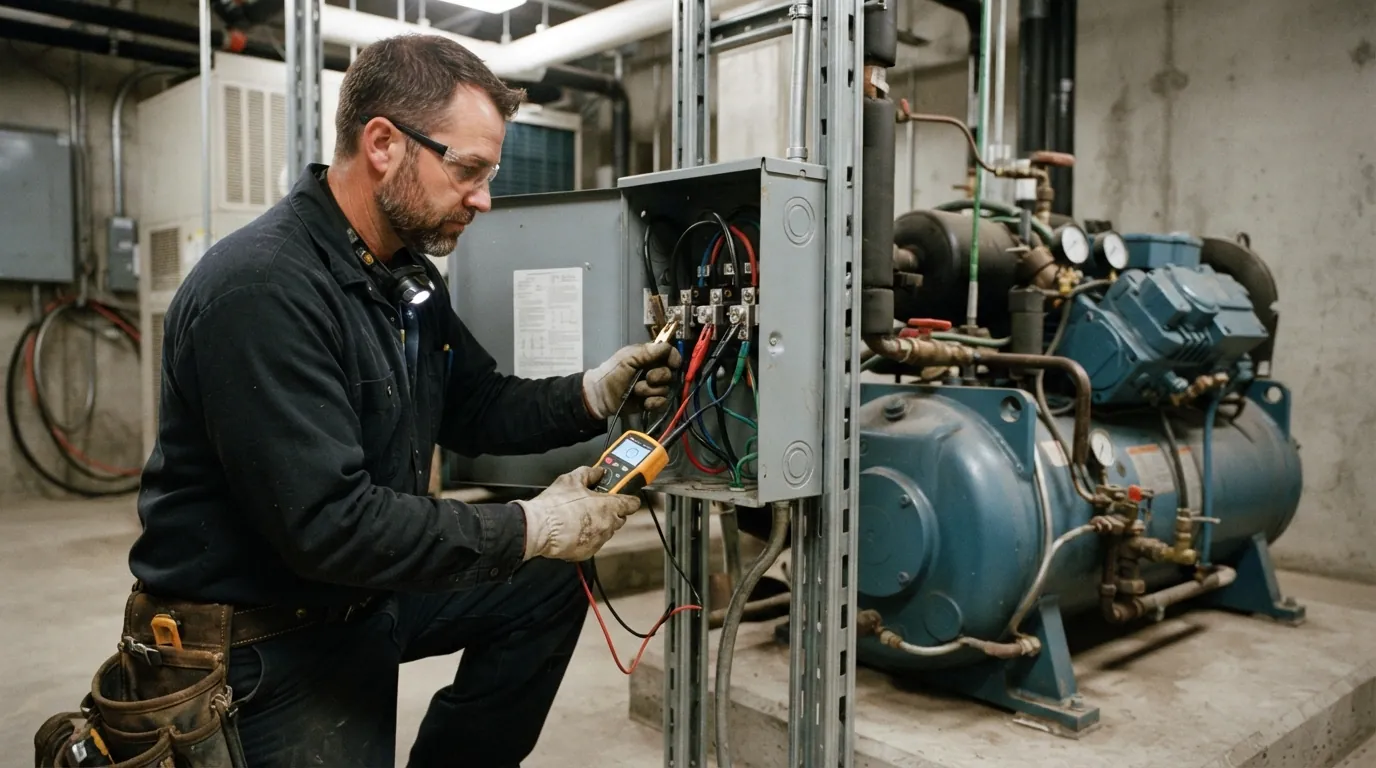
Larger equipment, like commercial refrigeration, compressors, some kitchen appliances and machinery, often runs on three-phase power. Connecting it means matching the voltage and phase rotation, sizing the circuit and disconnect to the nameplate, and confirming the motor turns the right direction before the equipment is loaded. We work from the equipment's installation manual, and we check that the panel serving it has the capacity before the equipment arrives, so installation day is spent connecting it rather than waiting on a panel.
What commercial service includes
- Answering 24/7 for faults that stop the business
- Diagnosis and safe power restoration first
- Permanent repair scheduled around opening hours
- New circuits sized to equipment nameplates
- Three-phase connections tested for rotation
- Updated panel directory
- Written summary for the landlord or insurer
Commercial work at city rates
Coastal markets like New York City run 20 to 40 percent above national electrician rates, and most contractors carry a minimum charge on service calls. For a business, that makes planning worth money: grouping small repairs into one scheduled visit, fixing recurring faults properly rather than resetting breakers, and adding capacity before new equipment arrives. Emergency calls are always answered, but planned work costs less and is easier to fit around the hours a store or office is open to customers.
Keeping downtime short
Emergency visits focus on restoring power safely, which is usually faster than the full repair. The permanent fix is then scheduled for before opening, after closing or on a quiet day. For planned work, we agree the working window with you in advance and stage parts ahead of time, so the work fits the window rather than stretching into business hours.
How a commercial call runs
Call and triage
What is down and what it is costing you.
Restore safely
Power back where it can be restored safely.
Diagnose
Cause found, permanent repair scoped.
Scheduled repair
Done outside business hours where possible.
Report
Summary for the owner, landlord or insurer.
Commercial electrical questions
Yes, calls are answered 24/7.
Yes, planned work is scheduled around your hours.
Yes, including rotation checks.
Yes, sized to the nameplate.
Yes, for access and building rules.
Yes, a written summary.
Yes, on our tenant fit-out page.
Related work in the same system
Keep the business running
Call any hour. Tell us what is down and when you open.