Knob and Tube Wiring Replacement in New York
Porcelain knobs in the basement or two-prong outlets everywhere usually mean the original wiring is still carrying load. We find every live run, replace it in cable the code accepts, and keep part of the home powered while we work.
- Calls answered 24/7
- Live runs traced before any quote
- Room-by-room sequencing
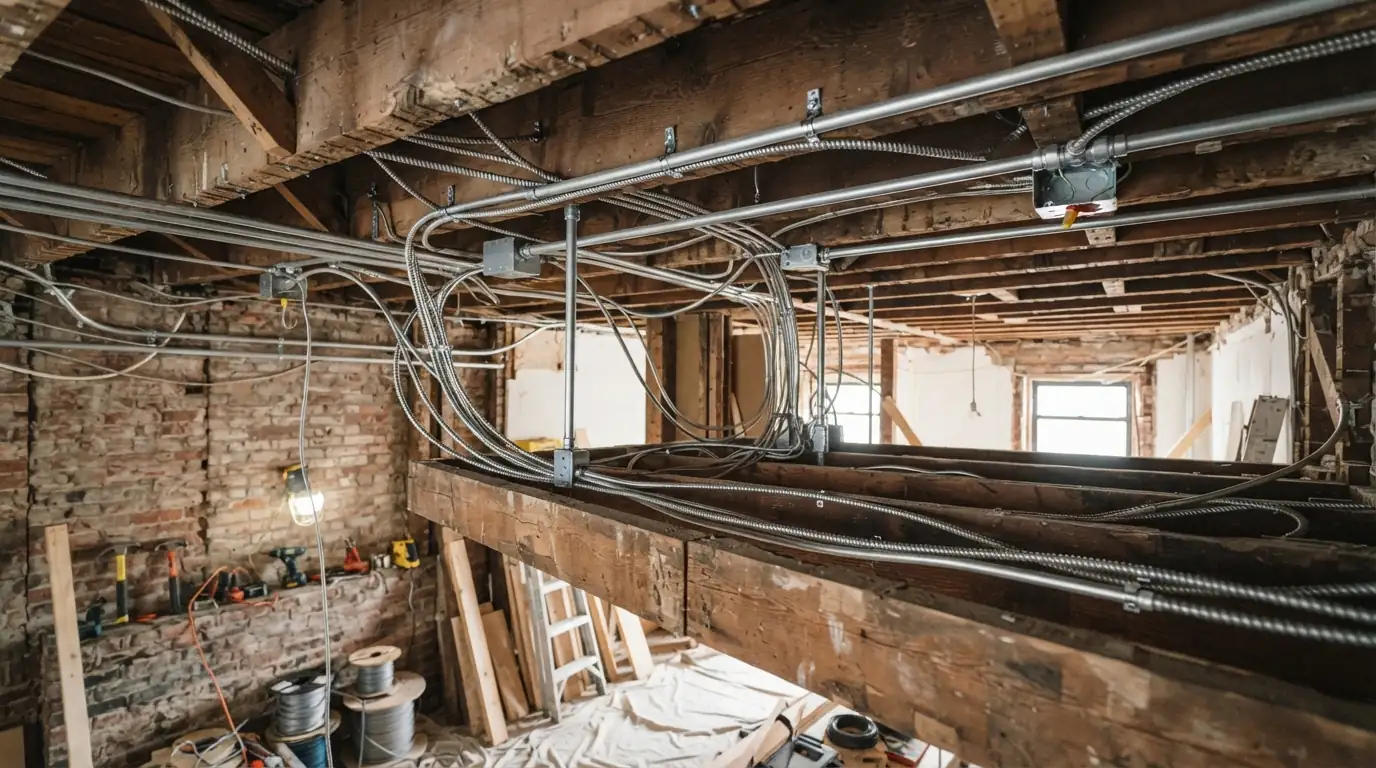
- Trace which knob and tube runs are still energized
- Written scope, room by room
- Permit filed for the new wiring
Knob and tube wiring in a New York home has no ground conductor and cannot sit under loose insulation, so most insurers and buyers treat it as a replacement item. Replacement means running new circuits in armored cable or conduit, disconnecting the old runs, and inspecting the work; it is planned room by room so part of the home stays powered.
Rather ask a person?(929) 755-0293What replacing knob and tube actually involves
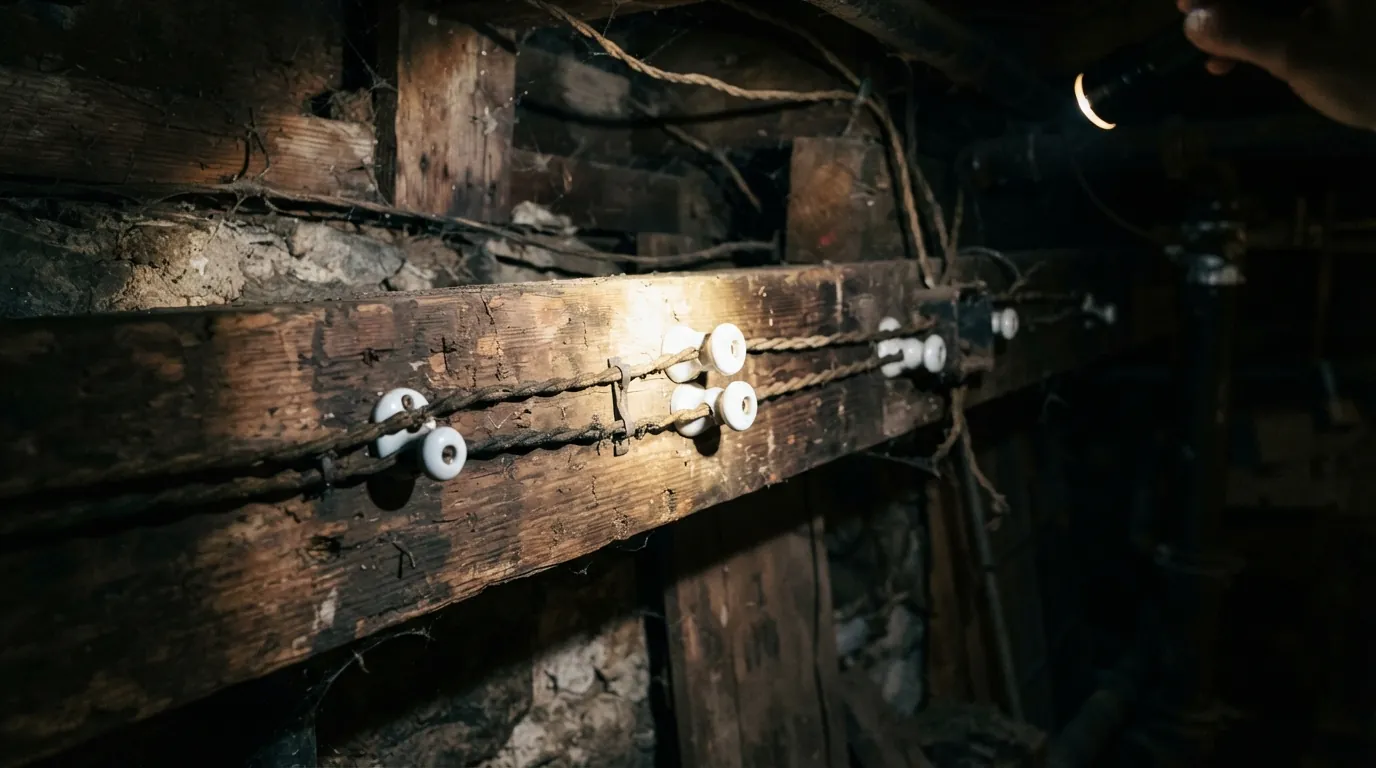
Knob and tube is two separate wires strung on porcelain knobs and sleeved through framing in porcelain tubes. It was built to shed heat into open air and carry the small loads of the 1920s. It was not built for a window AC, a space heater and a microwave on one circuit, and it has no ground.
The job starts by finding what is live. Many homes were partly updated long ago, so we test each circuit and map what remains. New circuits are fished through walls and ceilings in the cable the local code requires, the old runs are disconnected at the panel, and the openings are kept small. If the panel is original, a panel swap usually happens in the same project.
Updated September 2026
What drives the cost of a knob and tube replacement
The square footage matters less than how the walls let us in.
- How much is still livePartial updates in past decades can shrink the job a lot.
- Wall and ceiling finishPlaster on wood lath takes more care than drywall to open and patch.
- Cable methodArmored cable or conduit in the city costs more than sheathed cable upstate.
- Panel conditionAn original fuse panel usually has to go at the same time.
- Occupied or emptyWorking around furniture and daily life adds time; an empty home is faster.
Full rewire or partial replacement
| Factor | Replace live runs only | Full rewire |
|---|---|---|
| What changes | Only circuits still carrying knob and tube | Every circuit, new layout and new devices |
| Best for | Homes already mostly updated | Homes with original wiring throughout |
| Walls opened | Fewer, targeted | More, planned room by room |
| Result | No live knob and tube; mixed wiring ages | One wiring system, grounded throughout |
Partial is honest when most of the home was already rewired; when nearly every circuit is original, a full rewire costs less per circuit.
Two reasons people call about it
Knob and Tube Removal
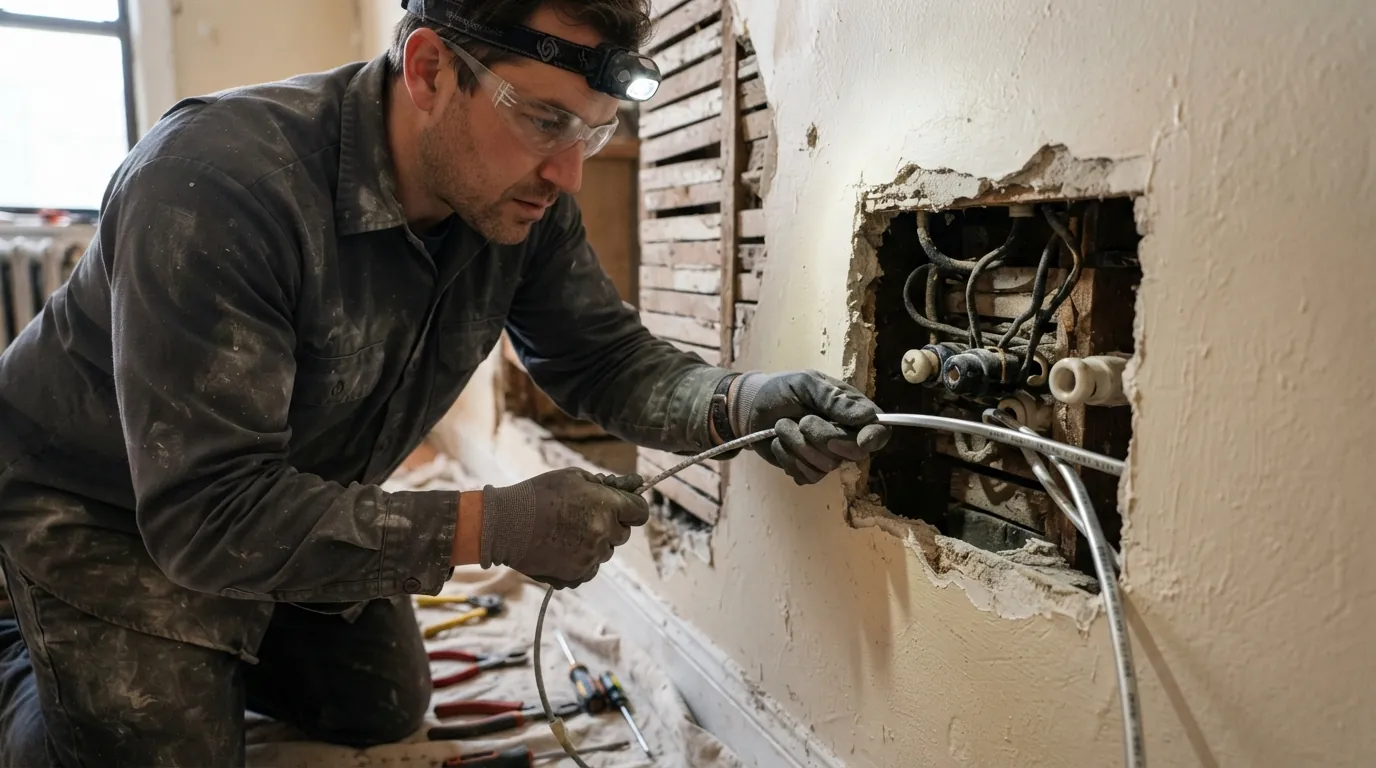
Most calls start with an inspection report or a renovation that opened a wall. We trace each live run back to its fuse or breaker, then replace it with new circuits sized for how the room is used today: dedicated kitchen circuits, AFCI protection for bedrooms, GFCI near water. The old conductors are disconnected and either removed where the walls are open or abandoned in place and documented. Nothing old stays connected to anything new, and the panel directory shows exactly which circuits were replaced.
Planning range (national sources, 2026): $4 to $15 per square foot; an 1,800 sq ft home $7,200 to $27,000. Coastal-market pricing and building access change the figure; this is a planning band, never a quote.
Insurance-Driven Replacement
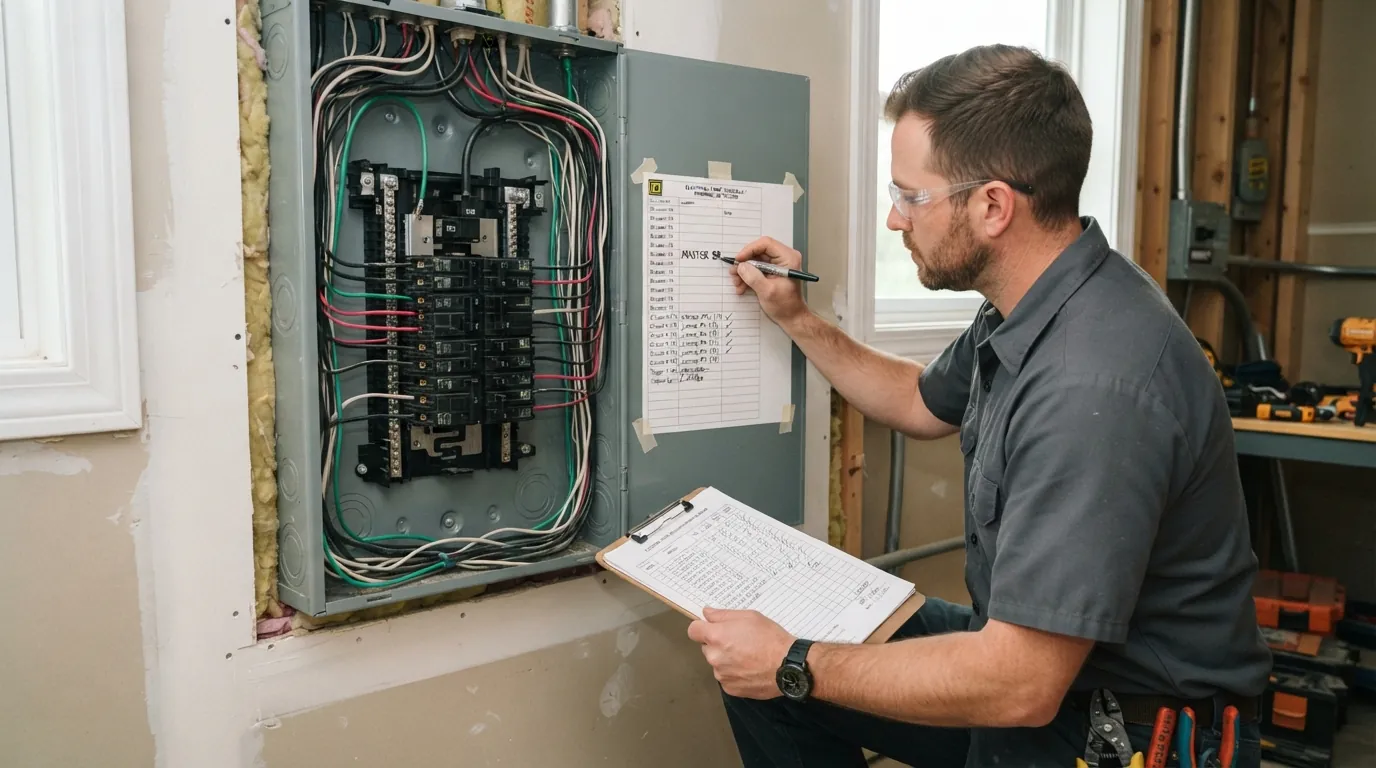
Some owners hear about knob and tube for the first time from an insurer or a buyer's lender. The request is usually specific: proof that no energized knob and tube remains. We scope the job to meet that, which sometimes means replacing only the circuits still live rather than the whole house, and we provide the permit and inspection paperwork the insurer asks for. If a partial replacement will not satisfy the carrier, we say so before the work is priced.
Why so much of it survives here
In New York City, 54 percent of homes sit in buildings raised before 1947, which is the whole era of knob and tube, so it still turns up in brownstones and small multi-family houses across the boroughs. Replacing it inside the city also means conduit or armored cable, because the code effectively rules out plastic-sheathed cable there. Out in Warwick the older farmhouses have the same wiring, but ordinary sheathed cable is allowed, which changes both the method and the labor.
How the work is sequenced while you live there
Duration depends on the number of circuits and how many walls we need to open, so we set the schedule after the trace, not before. We work one area at a time, restore power to finished rooms at the end of each day, keep the kitchen and one bathroom usable, and close the openings behind us so the home is never left open overnight.
How a knob and tube replacement runs
Trace and map
Every circuit tested, live knob and tube marked on a floor plan.
Scope and permit
Written room-by-room plan, then the filing.
Fish new circuits
Small openings, new cable, new devices and boxes.
Disconnect the old
Old runs cut off at the source and documented.
Inspect and patch
Inspection, then openings closed and cleaned up.

Selling, insuring or renovating an older home?
The trace answers what buyers and carriers ask. Call to set it up.
Signs knob and tube is still in service
- Porcelain knobs in the basement or attic
Insulators with separate wires between them.
- Two-prong outlets throughout
No ground path, often original wiring behind them.
- Fuses instead of breakers
Screw-in fuses usually travel with original circuits.
- Cloth-covered wire at a fixture
Brittle insulation that cracks.
- Warm switch plates or dimming lights
Old splices under too much load.
- An insurer or inspector asking about it
Often the first mention.
Knob and tube questions
Existing installations are not automatically illegal, but new work cannot extend it and it cannot sit in insulated cavities.
Not on knob and tube circuits; there is no ground to connect to.
Many carriers refuse or surcharge it; ask yours what proof they need.
Where walls are open, yes; elsewhere it is disconnected and left inert.
Usually not; we sequence rooms so part of the home stays powered.
Yes. New circuits and rewiring are filed and inspected.
We keep openings small and patch them; painting is separate.
Related work in the same system
Plan the knob and tube replacement
Call any hour to set up the trace. You get a room-by-room plan before anything is opened.