Signs your New York apartment wiring needs replacing
Old wiring rarely fails all at once. It fails one outlet, one splice, one warm switch plate at a time, until repairs stop making sense. These are the signs worth taking seriously.
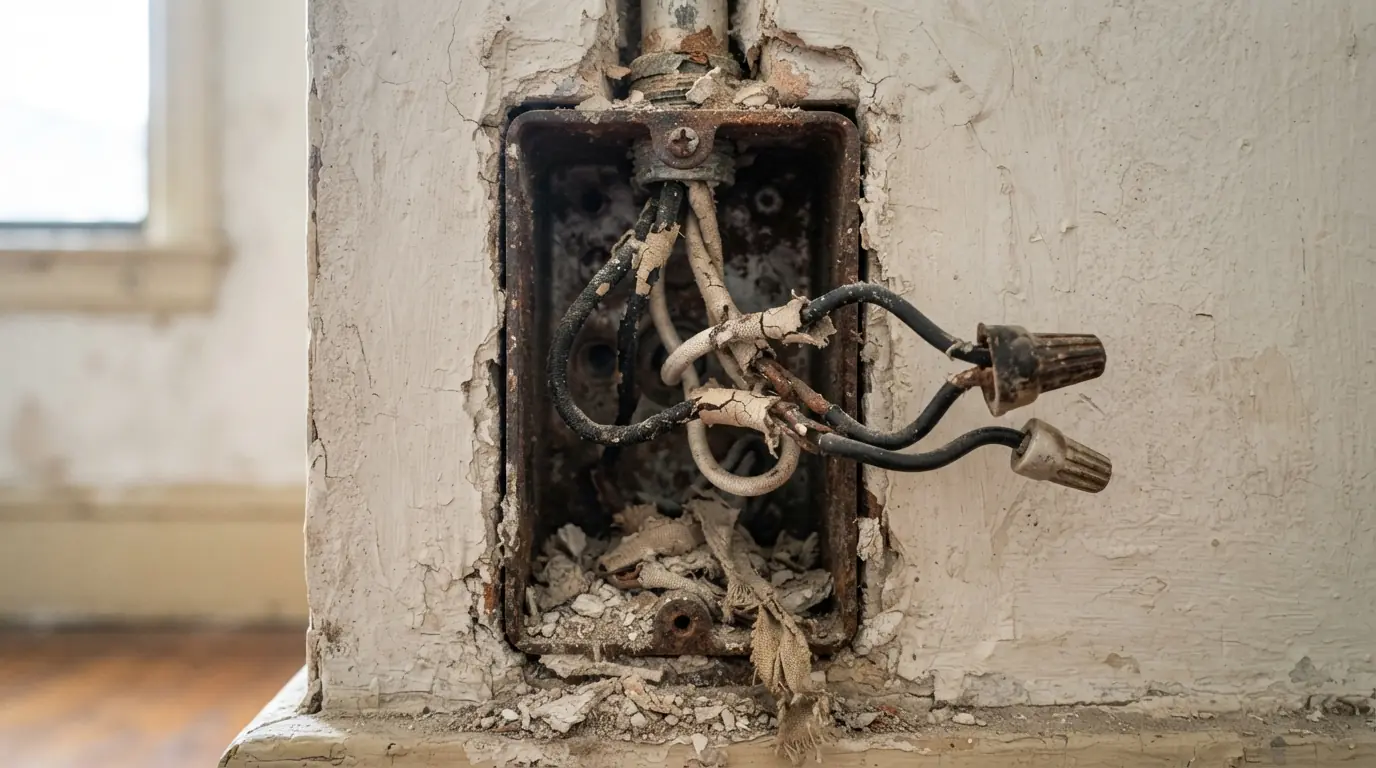
Signs that a New York apartment needs rewiring include two-prong ungrounded outlets throughout, cloth-covered or crumbling insulation, frequent device failures, warm switch plates or outlets, knob and tube or aluminum wiring, and circuits that trip under ordinary use. More than half of city homes are in buildings raised before 1947, so these signs are common.
Rather ask a person?(929) 755-0293Why so much old wiring is still in service
Fifty-four percent of New York City homes are in buildings raised before 1947, and only five percent are in buildings from after 2010. Much of the wiring in those older buildings has been patched rather than replaced, one renovation at a time.
Each patch made sense on its own day: a new outlet here, a kitchen circuit there, a switch replaced when it failed. Over decades those patches leave a mix of cable types, spliced in boxes nobody remembers, feeding loads the original wiring was never meant to carry. That mix is what makes older apartments hard to troubleshoot and why a survey is worth doing before the next repair.
The signs, from mild to urgent
None of these alone proves a rewire is needed, but several together usually do.
- Two-prong outlets in most rooms, or adapters on every three-prong plug
- Cloth-covered wire at fixtures or outlets that crumbles when moved
- Old armored cable where the armor is the only ground
- Outlets and switches that fail again soon after replacement
- Lights that flicker or dim when appliances start
- Warm outlets, switch plates or a burning smell, which call for an immediate visit
- An insurer, buyer or board asking about the wiring
What makes city wiring different
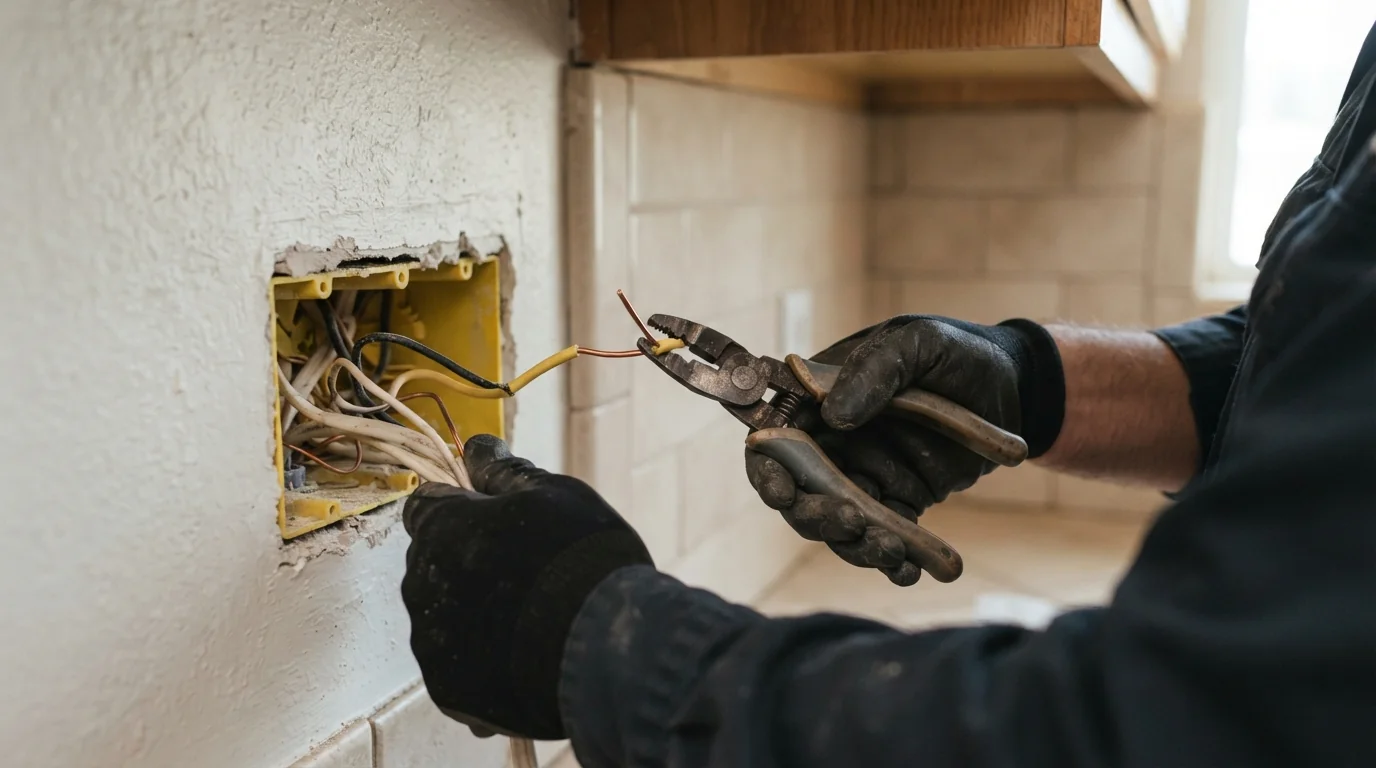
Inside New York City, new wiring runs in conduit or armored cable, not the plastic-sheathed cable used in much of the country. Older armored cable, often called BX, is common in prewar buildings, and early versions lacked the bonding strip that makes the armor a reliable ground. That matters when you want grounded outlets or when a device keeps failing.

Seeing more than one of these signs?
A wiring survey gives you a clear answer. Call any hour to book it.
What a wiring survey tells you
A survey tests every circuit, identifies the cable types, maps which rooms share circuits, and checks the panel. The result is a clear answer: sound wiring with a few repairs, a partial rewire of the worst areas, or a full rewire. It is also the document a board, insurer or buyer will want to see.
The survey is also where surprises are found early, such as a shared neutral between two rooms, a buried junction box, or a circuit that feeds a neighbor's outlet. Finding those before walls are opened saves time and argument later.
Rewiring without moving out
Most apartment rewires happen with people living in them. The work runs room by room through small openings, power is restored to finished rooms each evening, and the kitchen and a bathroom stay usable. The schedule depends on the circuit count and the building's working hours. Furniture is moved away from the walls being opened, openings are kept small, and dust is controlled so the rest of the apartment stays livable while each room is finished.
What insurers, buyers and boards ask
Wiring questions often arrive from outside: an insurer asking about knob and tube or aluminum wiring, a buyer's lender asking for proof of updated wiring, or a board asking for documentation before approving a renovation. The answer they want is usually a written survey with photos, followed by permitted work and an inspection sign-off. Having that paperwork ready turns a delayed sale or a declined policy into a scheduled job.
Partial or full rewire
A partial rewire makes sense when most circuits test sound and the problems sit in one or two areas, often the kitchen and bathroom. A full rewire makes sense when the survey finds the same aging cable throughout, because staging the work then costs more and leaves old wiring behind the new. Many owners combine the decision with a renovation, since open walls make either option faster and cheaper.
Rewiring in a co-op or condo
In a co-op or condo, a rewire is filed as an alteration. The board typically wants the scope, drawings and a schedule, and the work happens inside the building's hours. If the apartment panel or its feeder needs upgrading as part of the job, that touches the building's riser and needs coordination with the managing agent. Starting that paperwork early keeps the electrical from holding up the rest of a renovation.
What to do in the meantime
If the survey shows a rewire is needed but the work cannot start right away, a few precautions reduce the risk while you plan. Stop using any outlet or switch that is warm, discolored or crackling. Avoid extension cords and power strips as permanent wiring, especially for space heaters and window units. Test GFCI outlets monthly, and make sure every bedroom and hallway has a working smoke alarm. Most importantly, do not let a handyman add outlets or swap devices on old circuits without testing them first, since that is how open grounds and overloaded splices multiply.
Sources
Figures are planning ranges from published sources, not quotes. Every job is priced after we see it.
Old wiring questions
Not always. Where the cable provides a ground path, outlets can be grounded; elsewhere GFCI protection is a code-approved alternative.
Not by itself, but older versions may not provide a reliable ground, and the insulation inside can crumble when devices are moved.
Yes, when the rest of the wiring tests sound. The survey tells you whether a partial rewire is honest or only delays the rest.
Yes, rewiring is filed and approved under the alteration agreement.
It needs attention now; stop using it and call.
Where this guide leads
Apartment and house rewiring
See the serviceKnob and tube replacement
See the serviceGrounding two-prong outlets
See the serviceElectrical inspections
See the serviceMore guides: What an Electrical Panel Upgrade Costs in New York, NY and How to Choose an Electrician in New York, NY
Find out what your wiring needs
Call any hour to book a wiring survey. You get a clear answer and a map of every circuit.