Ceiling Fan Installation in New York
A ceiling fan hangs from a box that has to hold a spinning load for years. We install fan-rated boxes and braces, wire the controls you want, and balance the fan so it runs quietly.
- Calls answered 24/7
- Fan-rated box every time
- Wall control or remote
- Ceiling box checked or replaced for fan load
- Fan assembled, mounted and wired
- Balanced and tested at every speed
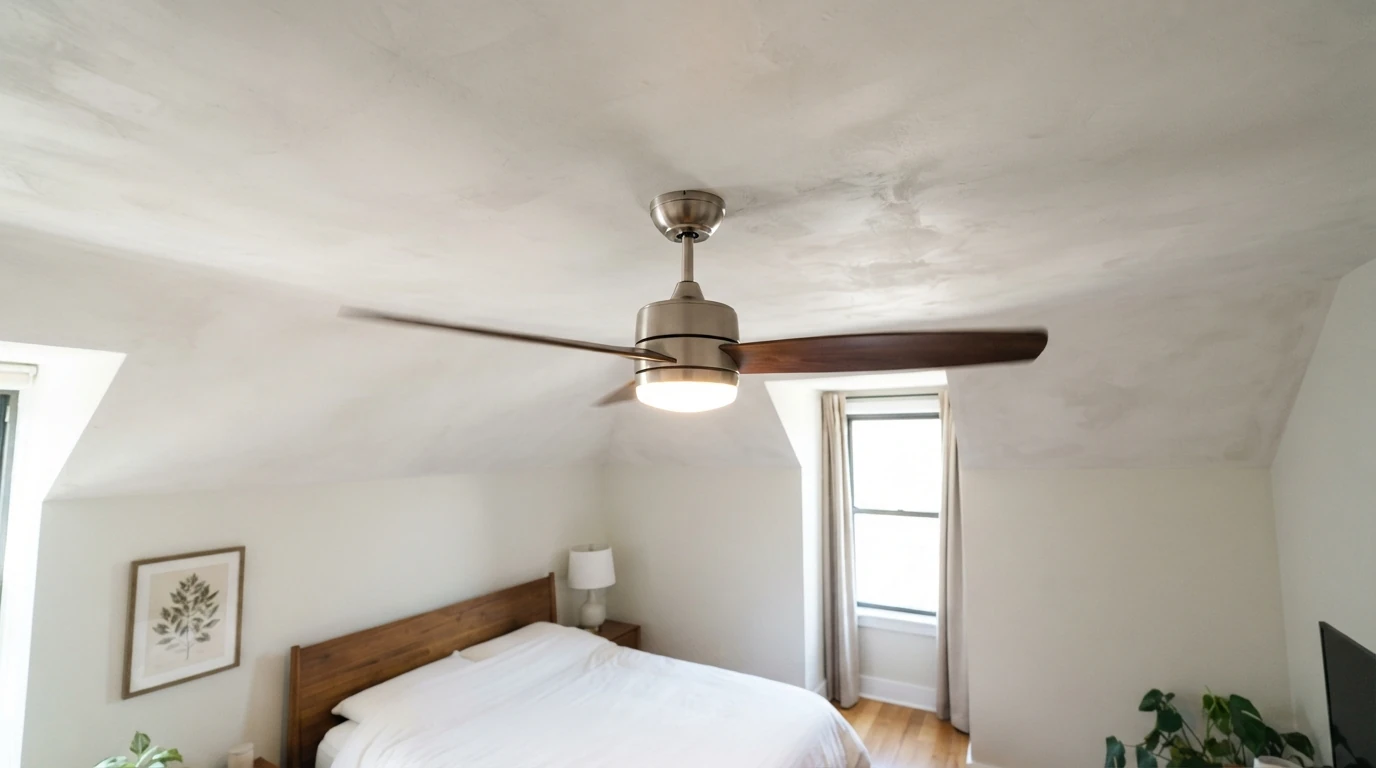
Installing a ceiling fan in a New York home requires a box listed for fan support, because an ordinary light box is not designed for a fan's weight and vibration; replacing it with a fan-rated box or brace is usually part of the job. Controls can be a wall switch, separate fan and light switches, or a remote.
Rather ask a person?(929) 755-0293What a ceiling fan install involves
A fan weighs more than most light fixtures and it moves. Hung from a light box, it can loosen over time, wobble or, in the worst case, pull free. So every install starts at the box: we check its rating and fastening, and replace it with a fan-rated box or an expandable brace between joists when needed.
Then the controls. One switch can run the fan and light together; two switches or a separate wire allow independent control; a remote works where only one switched wire exists. Where the ceiling has no box at all, we add one and fish power from a nearby source. For light fixtures without a fan, see light fixture installation.
Updated September 2026
What sets the cost of a ceiling fan install
The box and the control wiring decide the price.
- Existing boxA fan-rated box already in place saves most of the work.
- No box at allAdding a box and fishing power adds time.
- ControlsSeparate switching needs an extra conductor.
- Ceiling heightHigh and sloped ceilings need longer downrods and staging.
- Fan assemblySome fans take much longer to assemble than others.
Hanging it yourself versus calling us
| Task | Doing it yourself | With us |
|---|---|---|
| Using the old light box | Not rated for a fan's load | Fan-rated box or brace installed |
| Choosing a control | Standard dimmers make fans hum | Control matched to the fan |
| Balancing | Often skipped | Balanced at every speed |
| New wiring for a switch | Needs a licensed electrician in the city | Done where required |
Assembling a fan is a fine homeowner job. The box it hangs from and the wiring above it belong to an electrician.
Three ceiling fan jobs
Fan-Rated Box Installation
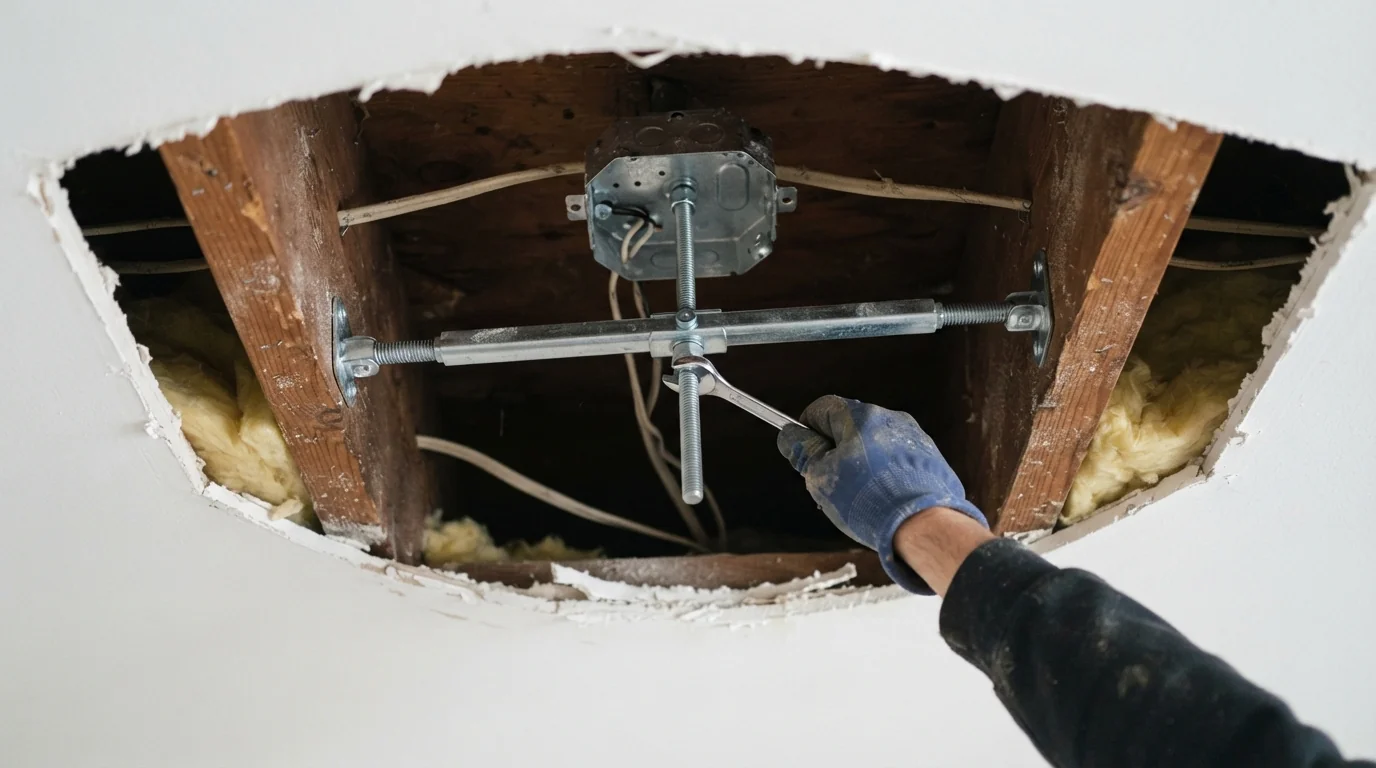
Most fan problems start with the box. A fan-rated box is marked for fan support and fastened to framing, not just to lath or drywall. In an older ceiling we often install an expandable brace through the existing opening, spanning between joists, so no large hole is needed. Where joists run the wrong way or the ceiling is plaster over wood lath, we adjust the method, but the result is always a box the fan can hang from safely for years.
Replacing a Light With a Fan
Swapping a ceiling light for a fan is the most common request. The existing box is almost never fan-rated, so we replace it. If the room has one wall switch, the fan and light can share it, or a remote can split control without new wiring. Where a separate switch is wanted, we check whether the existing cable has a spare conductor or whether a new one can be fished. Low ceilings get a flush-mount fan so the blades clear heads.
Remote and Wall-Control Wiring
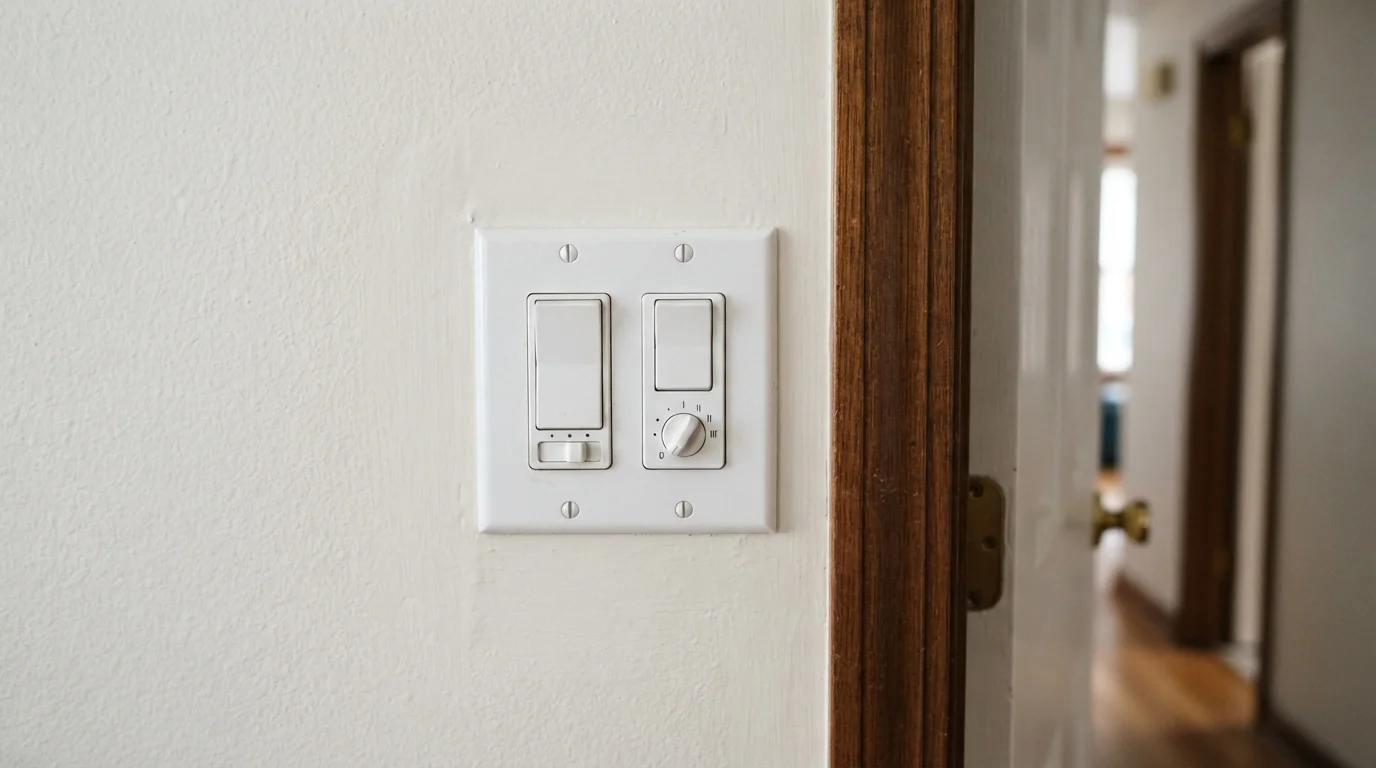
Wall controls with separate fan speed and light dimming are the most convenient, and they need the right wiring between the switch box and the ceiling. Remotes need no extra wire but use a receiver hidden in the fan canopy. Smart fan controls sit in between. We match the control to the fan's instructions, since many fans do not work with a standard dimmer on the fan motor and will hum or run erratically if one is used, which is also hard on the motor.
Houses versus apartment ceilings
Most housing near subway stops in the outer boroughs, about 92 percent, is three stories or less, and in those Brooklyn, Queens and Bronx houses a top-floor fan can often be braced and wired from the attic above, which keeps the ceiling work small. In an apartment there is usually another home above, so everything happens through the ceiling opening itself, and an expandable brace is the tool that makes that possible.
How a ceiling fan install runs
Check the ceiling
Box rating, joists and wiring.
Prepare the support
Fan-rated box or brace installed.
Assemble
Fan built on site, downrod sized to the ceiling.
Mount and wire
Hung, controls connected.
Balance and test
Every speed and the light checked.
Signs a fan needs attention
- Wobble that balancing does not fix
Often a loose or unrated box.
- Humming at low speed
A dimmer used where a fan control belongs.
- Canopy pulling away from the ceiling
The mounting is loosening. Stop the fan.
- Light works but fan does not
Control, capacitor or wiring fault.
- Clicking or grinding
Loose blade screws or a worn motor.
- Warm switch or control
Wrong control or a loose connection.
Ceiling fan questions
Only if the box is marked for fan support.
Yes, with two switches or a remote.
Often a standard dimmer used on the motor.
Blades should clear heads comfortably; low ceilings suit flush mounts.
Yes, by adding a box and fishing power.
Yes, on site.
Yes, with an angled mount and the right downrod.
Related work in the same system
Hang the fan on a box made for it
Call any hour with the fan model and the room, and we will plan the mounting.