Emergency and Exit Lighting in New York
Emergency lights only matter on the one night the power fails, which is why they have to be tested on all the others. We install, repair and test exit signs and emergency lighting, and give the building a written test record.
- Calls answered 24/7
- Battery duration tested
- Written test record

- Every exit sign and emergency light checked
- Failed units and batteries replaced
- Test results recorded for the file
Exit signs and emergency lights in New York buildings must stay lit on battery for 90 minutes when normal power fails, and life-safety codes call for a 30-second functional test monthly and a full 90-minute test once a year. Units that fail usually need a new battery; older fixtures often need replacing with LED units.
Rather ask a person?(929) 755-0293What emergency lighting work involves
Exit signs and emergency lights sit on normal power and switch to a built-in battery when it fails. Batteries weaken with age, lamps burn out, and a unit that looks fine with the power on may last seconds on battery. Only a test shows it.
We test each unit, replace batteries and failed fixtures, convert older units to LED where it helps, and add units where coverage is missing along an exit path. The building gets a list of every unit, its location and its result. For the rest of a building's electrical needs, see property management service.
Updated September 2026
What sets the cost of emergency lighting work
Unit count and access decide most of it.
- Number of unitsEach one is tested; larger buildings take longer.
- Battery or fixtureA battery swap costs less than a new unit.
- Ceiling height and accessStairwells and high lobbies need ladders or lifts.
- Missing coverageNew units along the exit path add wiring.
- Self-testing upgradesCost more up front, save monthly labor.
Two kinds of emergency lighting work
Exit Sign and Emergency Light Replacement
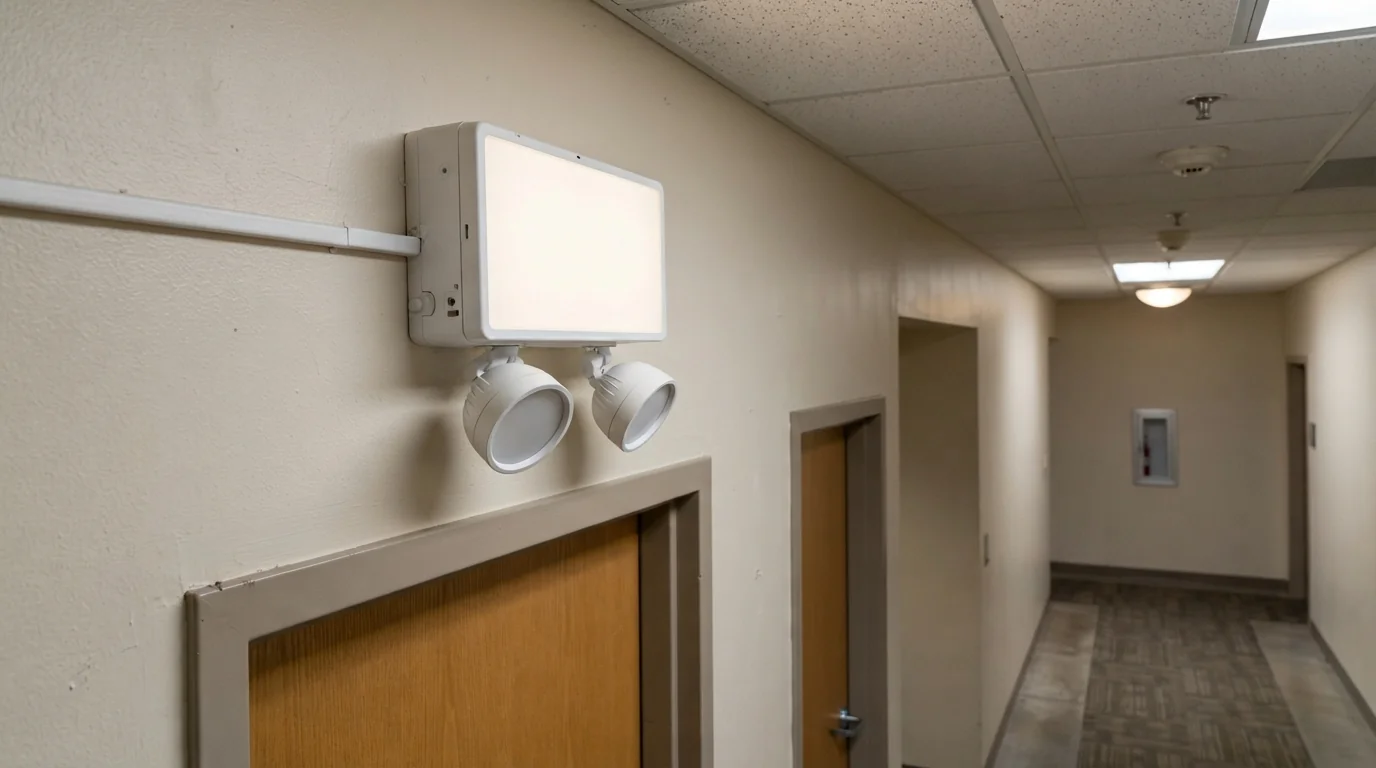
Older exit signs with incandescent lamps and old emergency units with sealed lead-acid batteries are the ones that fail tests most. We replace them with LED units that draw little power and run longer on battery, mount them where the exit path needs them, and connect them to the unswitched circuit so they stay charged. Combination units that include both the exit sign and emergency lamps save space in stairwells and corridors where two separate fixtures would crowd the wall.
Battery Backup Testing and Repair
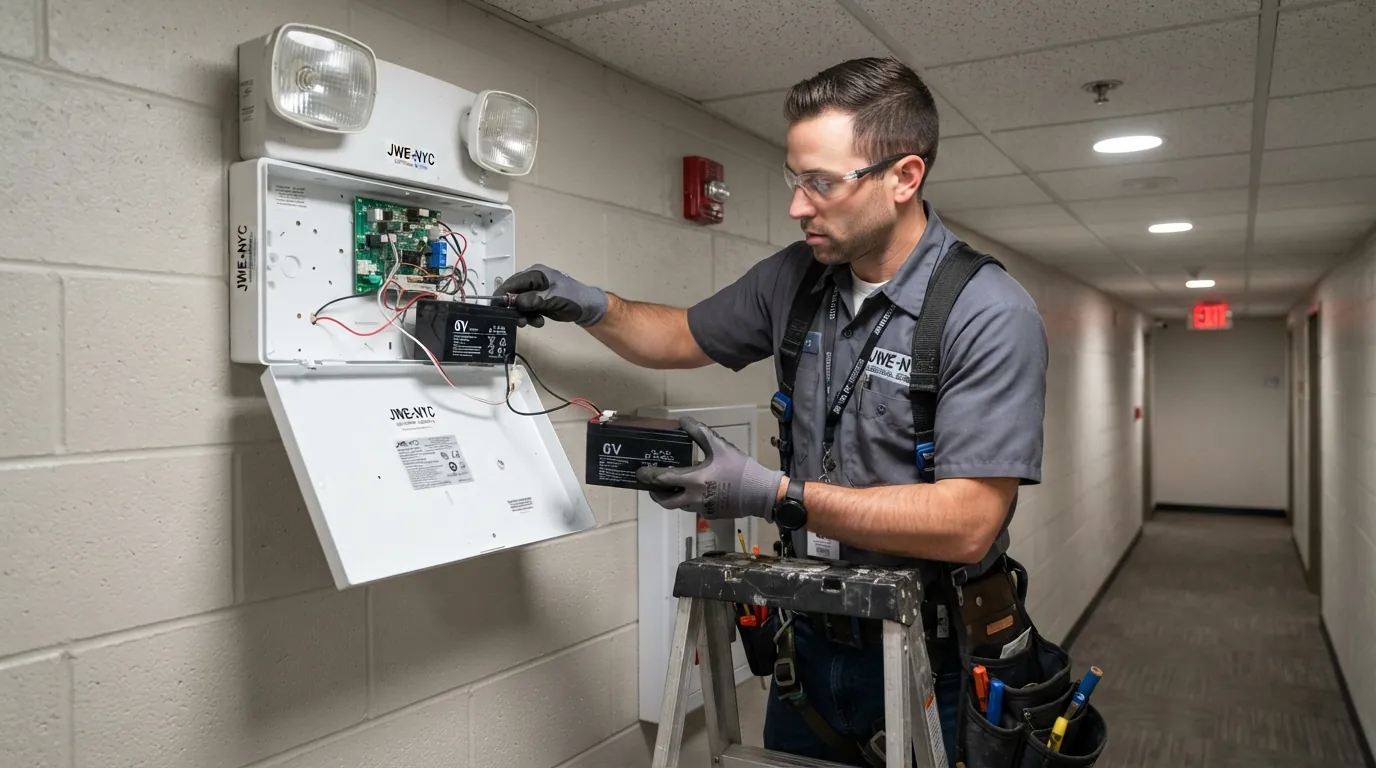
The monthly test is short: press the test button or cut power briefly and confirm each unit lights. The annual test runs them on battery for the full 90 minutes. We do both, replace batteries that cannot hold, and repair charging circuits that have failed. Self-testing units, which run their own checks and show a status light, reduce the monthly work, and we can convert existing locations to them when replacement time comes, one floor at a time if the budget calls for it.
What an emergency lighting visit includes
- Inventory of every exit sign and emergency light
- Monthly-style functional test on each unit
- Annual 90-minute battery test when due
- Failed batteries and lamps replaced
- Units connected to the correct unswitched circuit
- Coverage gaps along the exit path noted
- Written test record for the building file
Rental buildings and exit paths
New York City counted about 1,006,000 rent-stabilized apartments in 2021, most of them in multi-unit buildings with hallways and stairwells that serve as the exit path. In those buildings the owner is responsible for common-area life-safety equipment, and a dark exit sign is one of the easiest things for an inspector to notice. Keeping a simple test record for every unit is the practical defense.
How an emergency lighting visit runs
Inventory
Every unit located and numbered.
Test
Functional test, or full duration when due.
Repair or replace
Batteries, lamps or whole units.
Check coverage
Gaps on the exit path noted.
Record
Results written up for the building.
Signs the emergency lighting needs work
- Exit sign dark or flickering
Failed lamp or power supply.
- Test button does nothing
Dead battery or failed charger.
- Units last minutes on battery
Batteries near the end of life.
- Status light showing a fault
Self-testing units flag their own failures.
- Missing units along a corridor
Coverage gap on the exit path.
- No test record in the file
Testing may have lapsed.
Emergency and exit lighting questions
Ninety minutes on battery.
A short test monthly and a 90-minute test yearly.
Yes, and LED units run cooler and last longer.
Yes, unit by unit.
Fixtures that test themselves and show a status light.
Yes, with stairwells kept lit throughout.
Yes, any building with an exit path.
Related work in the same system
Keep the exit path lit
Call any hour to set up testing for the building.