Garage and Outbuilding Wiring in New York
An extension cord across the yard is not a garage circuit. We run a proper feed to the garage, shed or workshop, add a subpanel when the load calls for it, and ground the building correctly.
- Calls answered 24/7
- Buried or overhead feeds
- Sized for tools and chargers
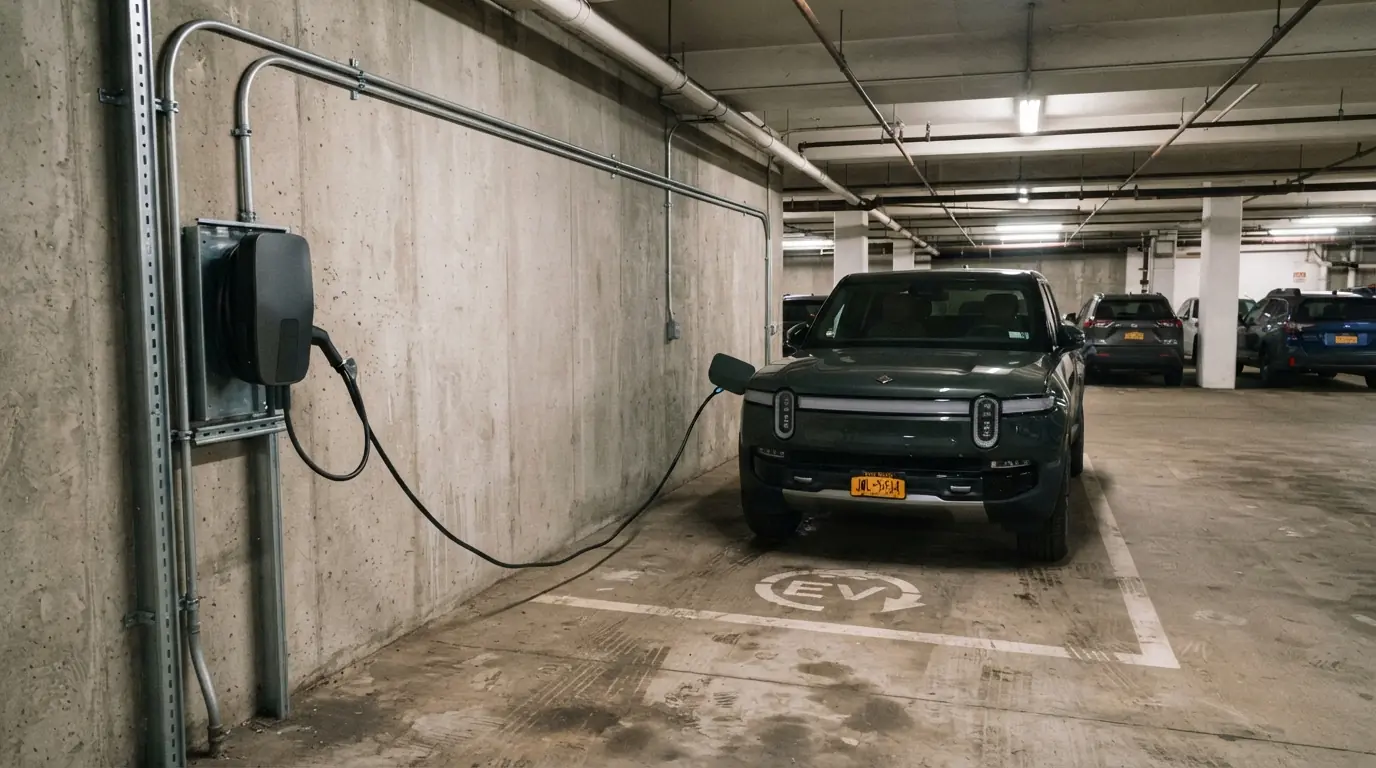
- Load plan for tools, lights and any charger
- Feed route and burial depth chosen
- Subpanel, grounding and inspection
Wiring a detached garage or shed means running a feeder from the house panel, usually underground in conduit, to either a single circuit or a small subpanel, then installing a grounding electrode at the outbuilding. The feed size depends on what will run there; a workshop with a compressor or an EV charger needs far more than lights and a freezer.
Rather ask a person?(929) 755-0293What an outbuilding job includes
Everything starts with what the building will do. Lights and a couple of outlets can ride on one circuit; a workshop, a heater or an EV charger needs a subpanel and a feeder sized to match. We list the loads with you, then size the feed so it does not have to be dug up again in five years.
The route comes next: buried in conduit at the depth the code requires for that wiring method, or overhead where the span and clearances allow. At the outbuilding we set the subpanel, drive the grounding electrode, and wire lights and GFCI outlets. If a charger is the goal, see home EV charger installation for the charger side.
Updated September 2026
What moves the price of an outbuilding feed
Distance and digging matter more than anything inside the building.
- Distance from the houseLonger runs mean more trench, conduit and heavier wire.
- Trenching conditionsRock, roots and driveways slow the dig.
- Single circuit or subpanelA subpanel adds a panel, breakers and a ground rod.
- Heavy loadsWelders, compressors and chargers need a larger feed.
- Interior finishOpen framing wires faster than finished walls.
One circuit or a subpanel
| Factor | Single circuit | Subpanel |
|---|---|---|
| Good for | Lights and a few outlets | Workshops, heaters, chargers |
| At the outbuilding | A switch and GFCI outlets | Panel with its own disconnect |
| Grounding | Equipment ground with the circuit | Grounding electrode at the building |
| Room to grow | Very little | Spare spaces for later circuits |
If there is any chance of a charger, a heater or serious tools later, the subpanel is the cheaper decision over the life of the building.
Doing it yourself versus calling us
| Task | Doing it yourself | With us |
|---|---|---|
| Extension cord to the shed | Overheats and gets cut by mowers | A buried, protected feed |
| Trench depth | Easy to bury too shallow | Depth matched to the wiring method |
| Grounding | Often skipped at the outbuilding | Grounding electrode installed |
| Permit and inspection | Needed, and often missed | Filed and inspected |
Digging the trench yourself can save money if we agree the route and depth first; the wiring and connections should stay with an electrician.
Three kinds of outbuilding power
Detached Garage Feed and Subpanel
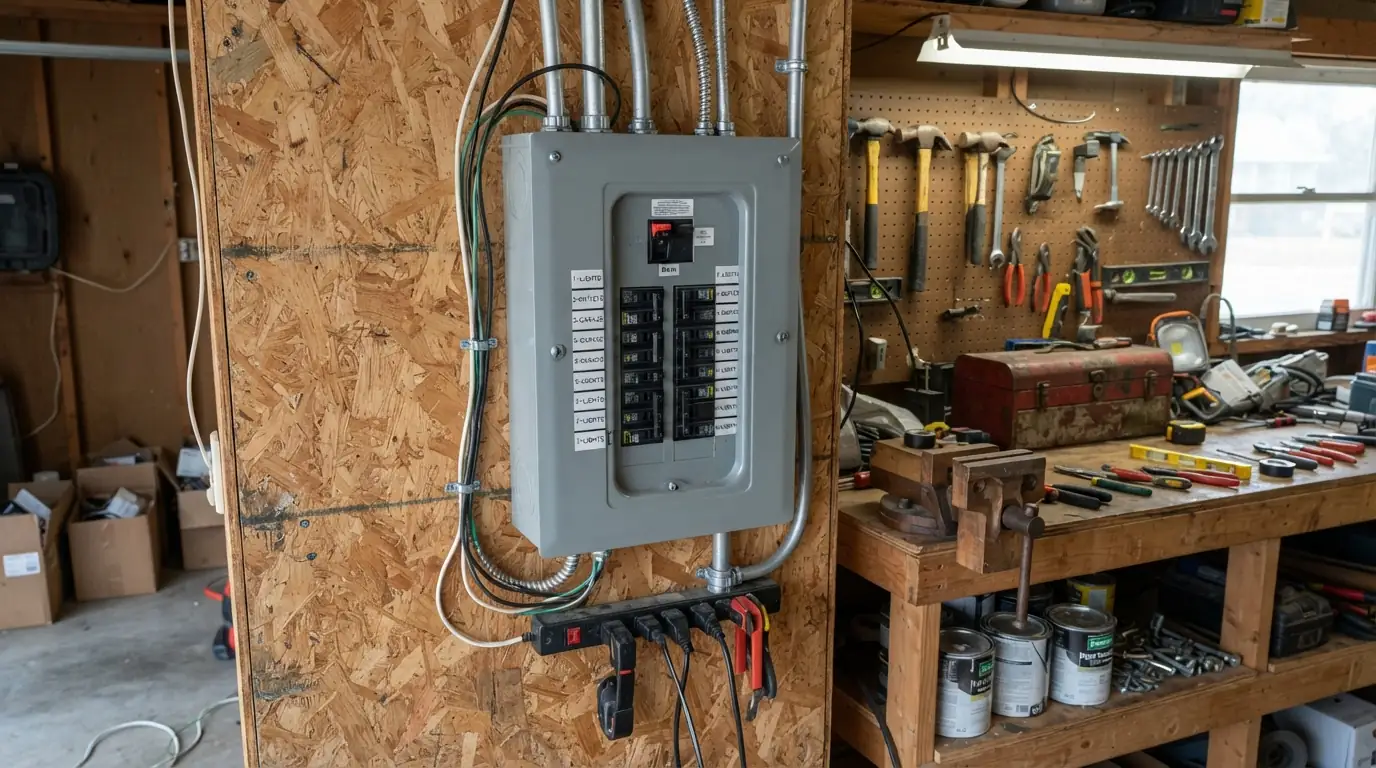
A detached garage with a door opener, lights, a freezer and a workbench is a typical subpanel job. We run a feeder from the house panel to a small panel in the garage, install a main disconnect there, and drive a ground rod so the building has its own grounding electrode. Separate circuits go to lights, outlets and anything heavy. Sizing the feeder with some headroom is cheap now and expensive later, especially if an EV or a heater might follow.
Planning range (national sources, 2026): $500 to $1,500. Coastal-market pricing and building access change the figure; this is a planning band, never a quote.
Shed and Workshop Circuits
A garden shed may need one circuit for a light and an outlet. A workshop is different: table saws, compressors, dust collectors and heaters draw hard on startup, and some need 240 volts. We match circuits to the actual tools, put outlets at bench height where you work, and add enough lighting to see a blade. Outlets in unfinished outbuildings are GFCI protected, and we keep the dust collector and compressor off the lighting circuit so a startup never plunges the shop into darkness.
Underground Conduit Runs
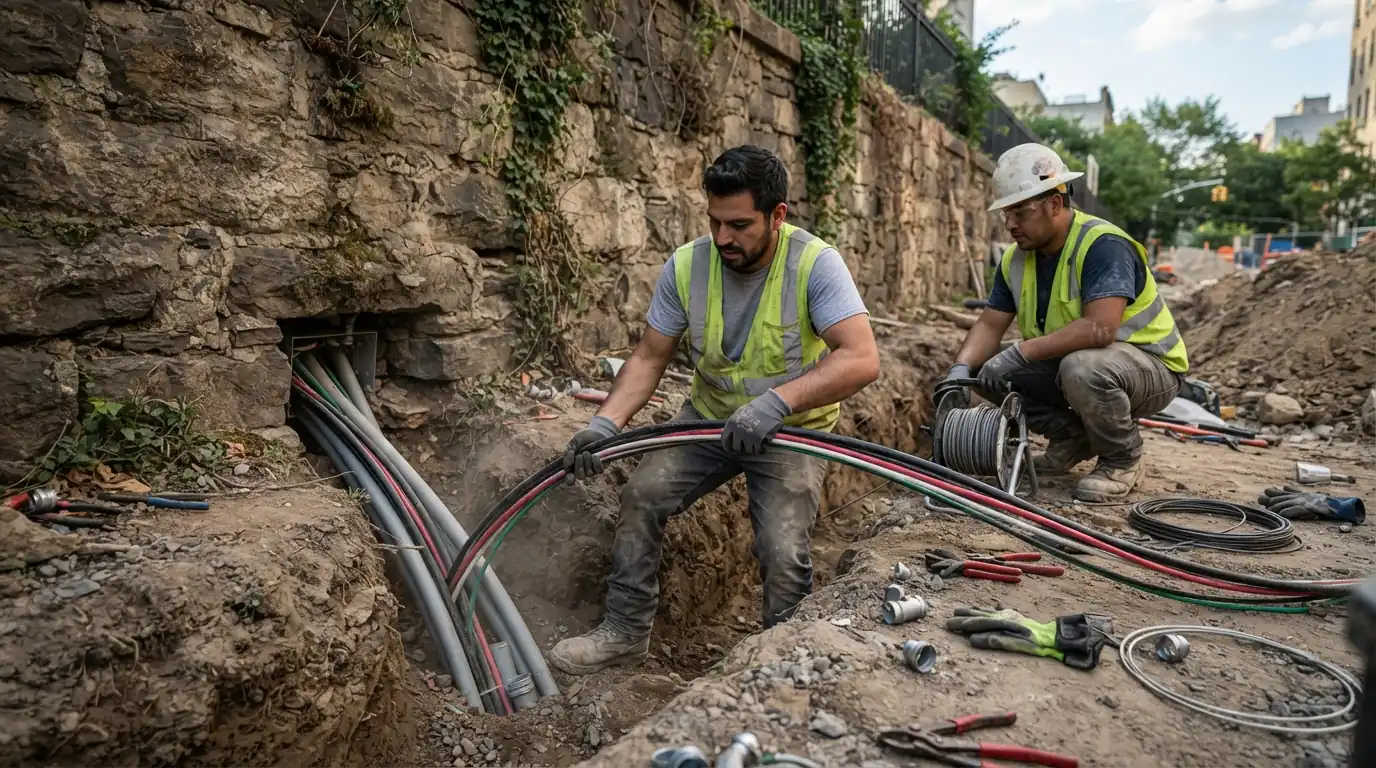
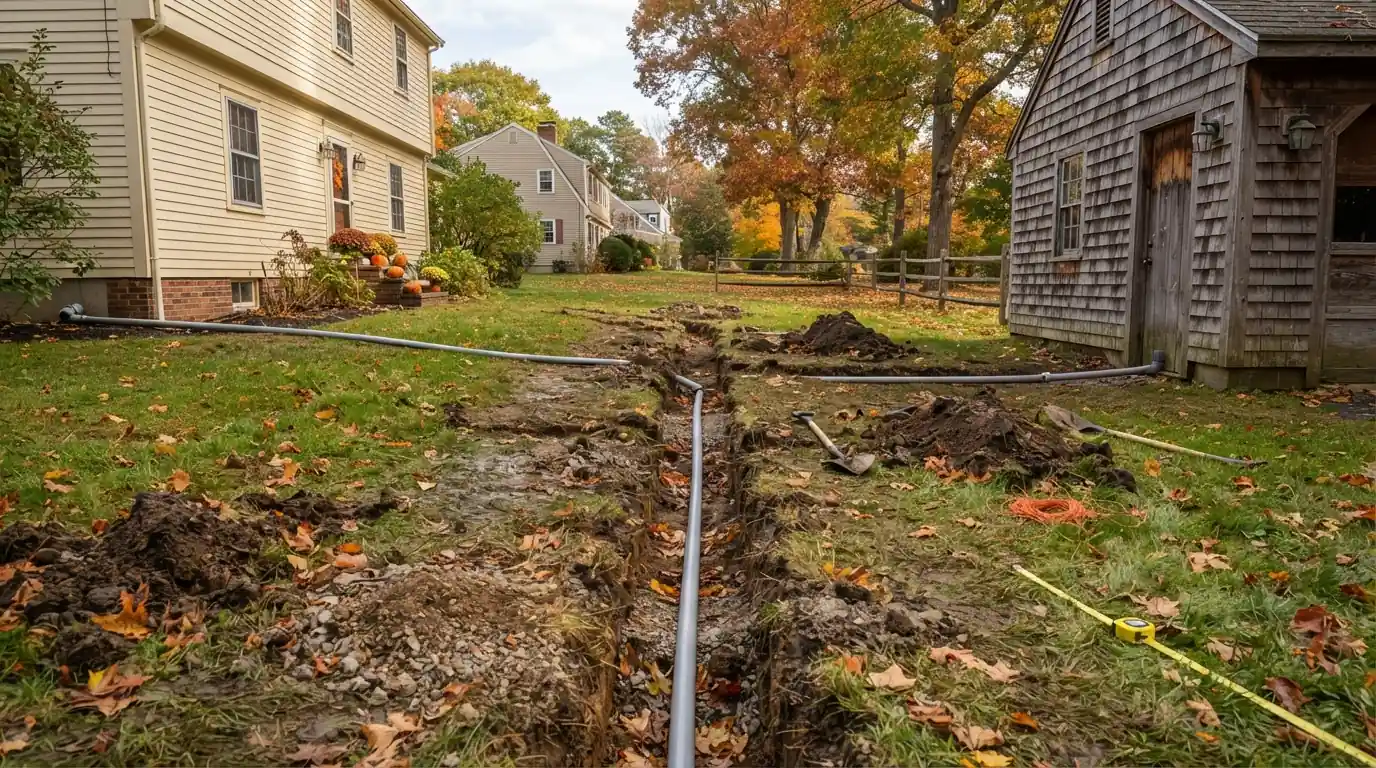
Most feeds to outbuildings go underground. Burial depth depends on the wiring method and whether the run crosses a driveway, so we choose the method first and dig to match. Conduit lets the conductors be pulled and replaced later without digging again. Before any trench, the utility locator service marks buried lines, and we route around septic fields, wells and tree roots where we can. A pull string left in spare conduit makes the next circuit an afternoon job instead of another trench.
Outbuildings around Warwick
Detached garages, barns and sheds are common across Orange County, and most of our outbuilding feeds are there rather than in the city. Work in Warwick follows the state code, which adopted the 2023 NEC at the end of 2025, and permits ordinary sheathed cable inside buildings where New York City would require conduit or armored cable. That difference keeps the interior wiring of a Warwick shed simpler, while the buried feed itself still goes in conduit.
How an outbuilding job runs
List the loads
Tools, lights, heat and any future charger.
Choose the route
Underground or overhead, utilities marked first.
Trench and conduit
Dug to depth, conduit laid and backfilled.
Panel and circuits
Subpanel, ground rod, lights and GFCI outlets.
Inspect
Inspection and a labeled directory at both ends.
Garage and shed wiring questions
With a feeder to a subpanel, yes, the building gets its own grounding electrode.
Yes, if the feeder is sized for it; plan that at the start.
It depends on the wiring method; conduit and cable have different depths.
Sometimes, where span length and clearances allow.
Yes, outlets in unfinished outbuildings need GFCI protection.
Yes, feeds and outbuilding circuits are permitted and inspected.
Yes, if we agree the route and depth first.
Related work in the same system
Electric Baseboard Heat
DetailsWell Pump Electrical
DetailsEV Charger Installation
DetailsHeat Pump Water Heater Wiring
DetailsGuides: EV charger installation cost
Get proper power to the garage
Call any hour. Tell us what will run out there and we will size the feed.