Electrical Troubleshooting and Fault Finding in New York
Intermittent electrical problems are the ones people live with longest, and the ones that end worst. We trace flickers, partial outages and warm devices to the actual cause, then fix that, not the symptom.
- Calls answered 24/7
- Tested under load
- Cause explained in plain words
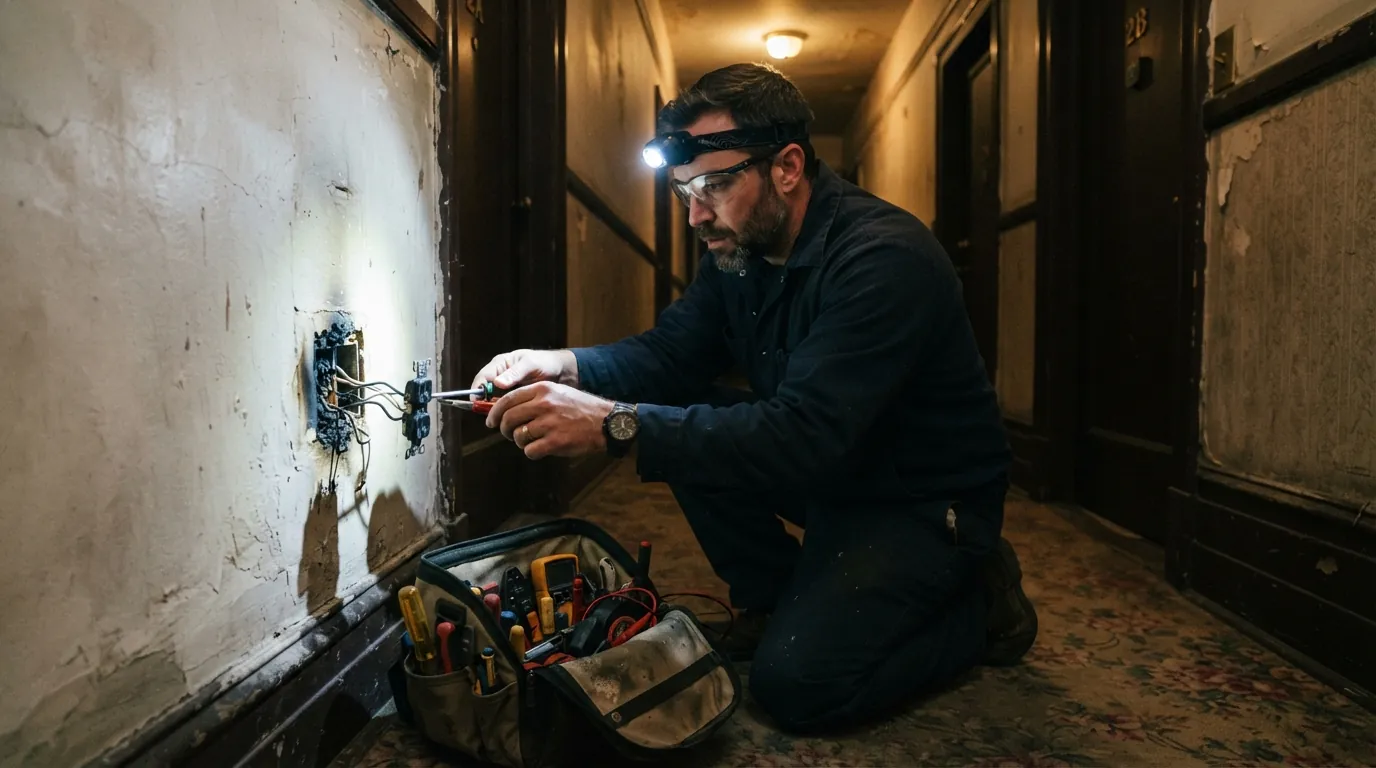
- Symptoms recorded and circuits mapped
- Fault traced with test equipment
- Cause fixed and circuit retested
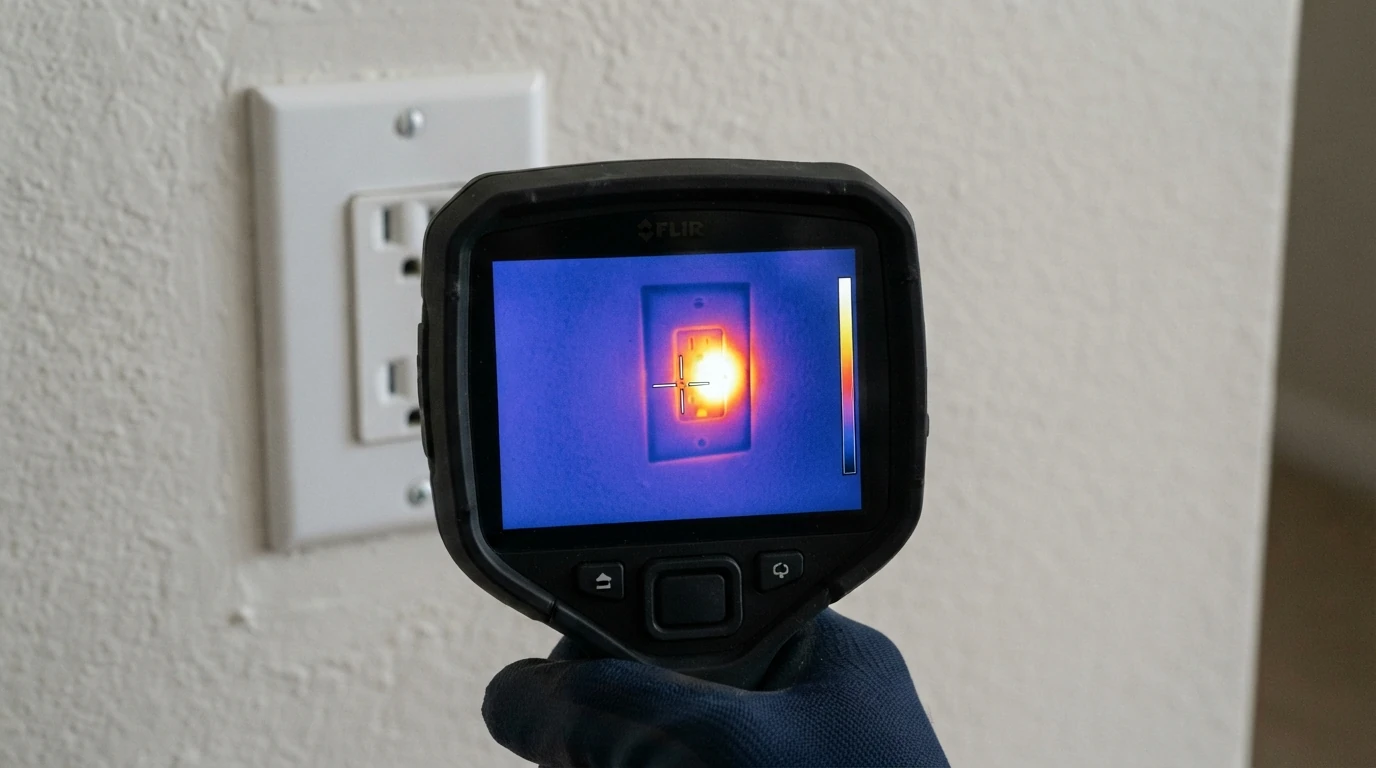
Electrical troubleshooting in New York means finding the cause of flickering lights, partial power loss, tripping or warm devices by testing circuits under load with a clamp meter, circuit tracer and thermal camera. Flicker across the whole home can mean a loose neutral at the service, which is urgent because it can damage appliances.
Rather ask a person?(929) 755-0293What troubleshooting involves
Most electrical faults leave clues: which rooms, which appliances, what time of day, whether it happens when the AC or the dryer starts. We start by writing those down, because an intermittent fault may not appear while we are standing there. Then we test under the conditions that trigger it.
Loose connections, failing devices, shared neutrals, overloaded circuits and problems in the building or utility supply all look similar from inside a room. Test equipment separates them: voltage under load, heat at connections, and continuity along the run. If the cause is a breaker that will not hold, see breaker repair.
Updated September 2026
Symptoms worth a call
- Lights flicker in several rooms
Possible loose neutral. Call soon.
- Appliances run weak or not at all
Possible missing leg of the supply.
- Warm or hot switch plates
A heating connection.
- Buzzing from the panel
Arcing or a loose connection. Keep clear.
- Outlets dead in several rooms
A tripped GFCI or a failed splice.
- Burning smell with no visible cause
Turn off the circuit if safe and call.
Why some faults take longer to find
A fault that is present all the time is usually found in one visit. One that comes and goes may need to be triggered by running the same appliances that were running when it happened, or traced by testing each box along the circuit. We tell you early which kind it is, make the circuit safe in the meantime, and never leave a suspected loose neutral or hot connection energized.
How troubleshooting runs
Record the symptoms
When, where and under what load.
Test at the panel
Voltage on each leg, breaker condition.
Trace the circuit
Tracer, thermal camera and load tests.
Fix the cause
Connection, device, breaker or wiring repaired.
Retest under load
Confirmed under the conditions that caused it.
Four faults we trace most
Flickering or Dimming Lights
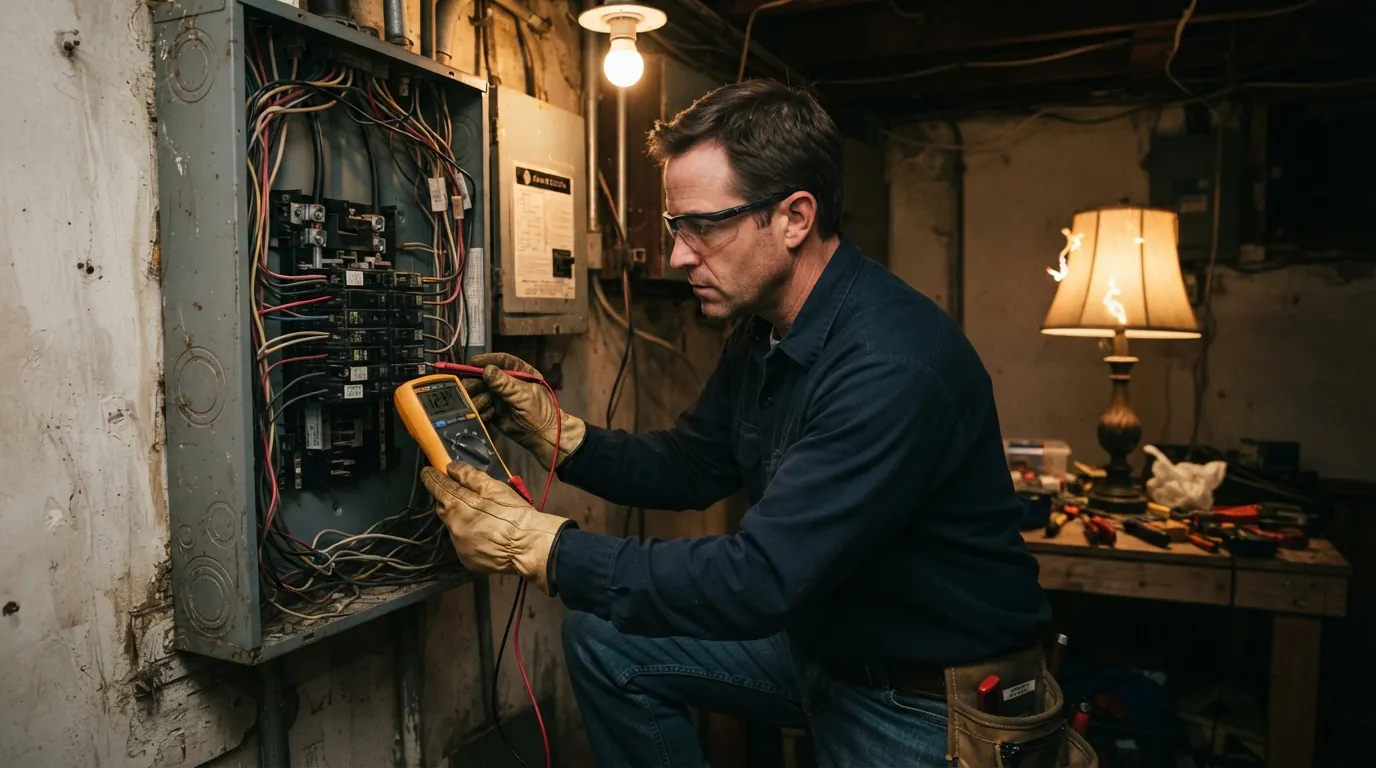
Lights that flicker in one room usually point to a loose connection, a failing switch or a dimmer that does not suit LED lamps. Lights that dim across the whole home when a large appliance starts suggest a weak connection at the service or panel, and flicker that affects several rooms at random can mean a loose neutral, which needs attention quickly because it can send uneven voltage to appliances. We measure voltage on each leg under load to tell these apart.
Planning range (national sources, 2026): $75 to $150 per hour; service call fees $79 to $179. Coastal-market pricing and building access change the figure; this is a planning band, never a quote.
Partial Power Loss
When some rooms lose power and others do not, the cause may be a tripped or failed breaker, one leg of the 240 volt supply missing, or a failed splice feeding several outlets. If large 240 volt appliances run weakly or not at all while some lights work, a missing leg is likely, and it may be the utility's or the building's problem. We test at the panel first, then along the circuits, and tell you plainly whose side the fault is on.
Breaker That Trips Under Load
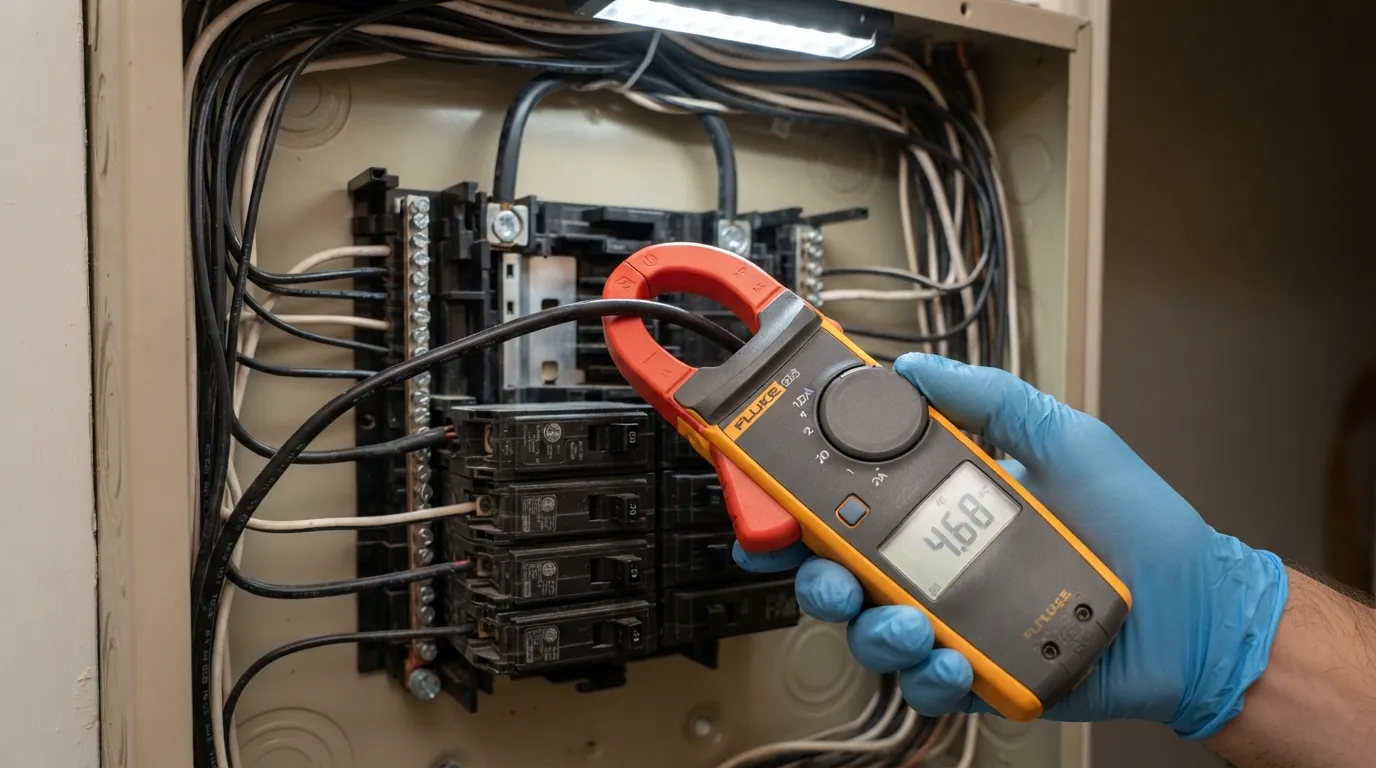
A breaker that trips only when the space heater, the microwave or the AC runs is telling you about load. One that trips at random or overnight suggests a wiring or device fault. We measure the running current, check the breaker's condition and test the insulation on the circuit. The fix may be moving a load, adding a circuit, repairing a fault or replacing a worn breaker, and we explain which it is before doing any of the work.
Warm Switch Plates and Buzzing
A switch plate that is warm, a dimmer that buzzes loudly or an outlet that crackles means current is passing through a poor connection or an overloaded device. Dimmers run slightly warm by design, but hot is not normal. We use a thermal camera to find the hot spot, open the box, and repair or replace the connection or device. Buzzing from the panel itself is treated as urgent, and the circuit stays off until the source has been found and fixed.
When faults show up after an outage
Storms test old connections. After a June 2024 thunderstorm, more than 1,200 Orange and Rockland customers in the Town of Warwick were still waiting for power the next day, and restoring power after an outage is often when weak connections, failing breakers and damaged devices first reveal themselves. Flicker or partial power that starts right after an outage deserves a call rather than a wait to see whether it settles down on its own.
What sets the cost of troubleshooting
Intermittent faults take longer to find than steady ones.
- How often it happensA constant fault is quicker to trace than an occasional one.
- Number of circuits involvedFaults that cross circuits take longer to isolate.
- Access to boxes and panelsBlocked or hidden boxes slow testing.
- Repair neededSome faults are one connection; others need new wire.
- After-hours visitsNight and weekend calls can carry a different rate.
Troubleshooting questions
A loose connection, an incompatible dimmer, or a supply problem; testing tells which.
It can signal a loose neutral, which can damage appliances. Call soon.
Usually a tripped GFCI or a failed connection upstream.
Usually, by recreating the conditions that trigger it.
We identify it and tell you whom to call.
Slightly warm is normal; hot is not.
Yes, calls are answered 24/7.
Related work in the same system
Infrared Electrical Scanning
DetailsStorm & Flood Electrical Repair
DetailsElectrical Safety Inspection
Details24/7 emergency service
DetailsGuides: Breaker keeps tripping: first steps and How to choose an electrician
Find the cause, not just the symptom
Call any hour. Tell us when it happens and what was running at the time.