LED Lighting Retrofits in New York
A flickering tube is usually a dying ballast, and replacing ballasts one by one is money spent on old technology. We convert fixtures to LED the right way for each space: new fixtures, retrofit kits or ballast bypass, with controls where they pay off.
- Calls answered 24/7
- Ballast bypass done to label
- Occupancy and dimming controls
- Fixture count and type surveyed
- Retrofit method chosen per space
- Controls and emergency lights checked
Controls and fixtures we install for retrofits include Lutron and Leviton sensors and dimmers and Halo LED downlights.
An LED lighting retrofit in New York replaces fluorescent tubes, ballasts or whole fixtures with LED, usually by fitting new LED fixtures, installing retrofit kits in existing housings, or wiring tubes to bypass the ballast. The right method depends on fixture age, ceiling type and how the space is used, and each changes the labor.
Rather ask a person?(929) 755-0293What an LED retrofit involves
Most retrofits start with a count: how many fixtures, what type, how old the ballasts are, and which spaces run all day versus a few minutes at a time. A hallway lit around the clock pays back far faster than a closet, so we rank spaces by hours and do the high-use ones first.
Then the method. Old fixtures with rusted housings or yellowed lenses are replaced outright. Sound housings take a retrofit kit or ballast-bypass tubes, wired and labeled so the next person does not put a fluorescent tube back in. Controls like occupancy sensors and dimmers go where the hours are. For single rooms at home, recessed LED lighting often replaces the old fixture entirely.
Updated September 2026
What drives the cost of an LED retrofit
Method and access matter more than the fixture price.
- Retrofit methodBypass tubes cost least; new fixtures cost most but last longest.
- Fixture countLarger jobs bring the per-fixture labor down.
- Ceiling typeDrop ceilings are quick; plaster and high ceilings are not.
- ControlsOccupancy sensors and dimming add parts but cut hours.
- Working hoursAfter-hours and floor-by-floor phasing adds time.
New fixture, retrofit kit or ballast bypass
| Factor | New LED fixture | Retrofit kit | Ballast-bypass tubes |
|---|---|---|---|
| Housing | Replaced | Reused, gutted | Reused as is |
| Ballast | None | Removed | Removed, sockets rewired |
| Best for | Old, damaged or ugly fixtures | Sound drop-ceiling troffers | Sound strip fixtures, tight budgets |
| Lifespan of the result | Longest | Long | Depends on the tubes |
We avoid plug-and-play tubes that still rely on the old ballast, because the ballast fails next and the problem returns.
Three retrofit situations
Fluorescent to LED Conversion
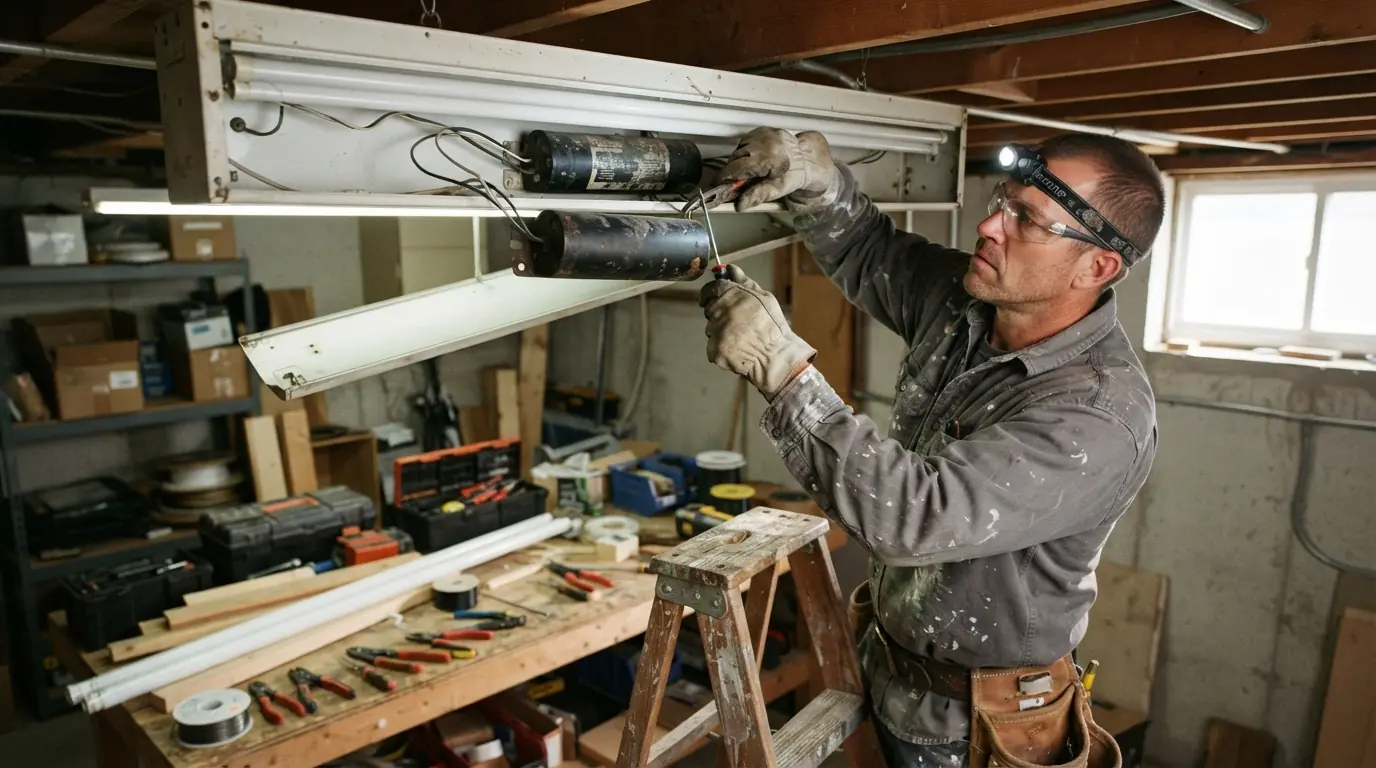
Kitchens, basements, garages and utility rooms often still run on fluorescent tubes. When the ballast fails, the tubes flicker, hum or refuse to start. We either replace the fixture with an LED unit or convert it: removing the ballast, rewiring the sockets for line-voltage tubes, and applying the label that tells anyone later the fixture no longer takes fluorescent tubes. Old magnetic ballasts from decades-old fixtures are disposed of properly, not left in the ceiling, and the new fixtures are checked for flicker on any dimmed circuit.
Common-Area and Stairwell Retrofits
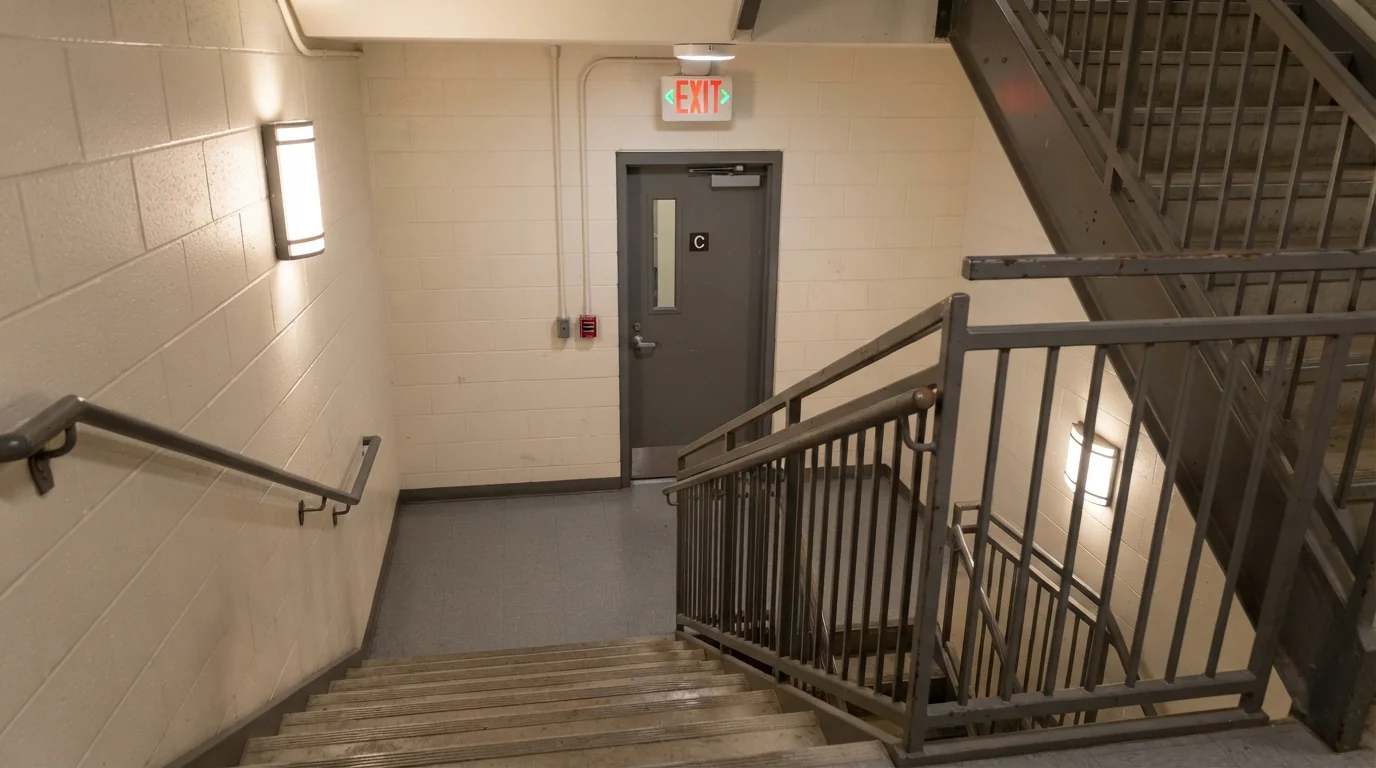
Hallways, lobbies and stairwells in apartment buildings run long hours, which makes them the best payback in any retrofit. We replace the fixtures or retrofit them, add occupancy-based dimming where the building wants it, and check that the emergency lighting on the same circuits still works on battery. The work is scheduled floor by floor so residents are never walking a dark stairwell, and the super gets a list of every fixture changed with its location, floor by floor.
Office Lighting Upgrades
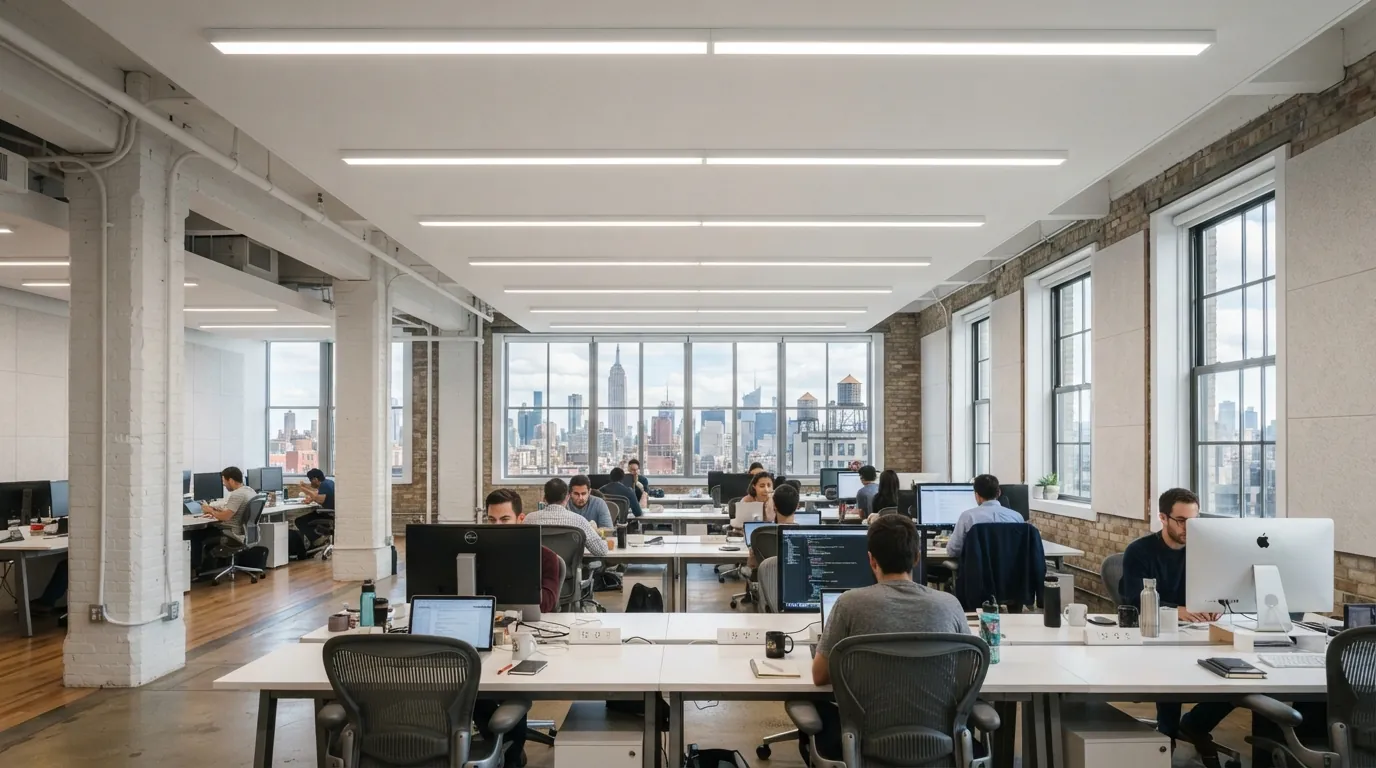
Offices usually have rows of lay-in troffers in a drop ceiling. Replacing them with LED panels or retrofit kits cuts the energy use and removes the flicker and hum that people notice all day. We work after hours or floor by floor so the office stays usable, keep the layout or adjust it for a new floor plan, and add zoning so meeting rooms and open areas can be switched separately rather than as one large block. Emergency fixtures on those circuits are checked before we leave.
What an LED retrofit includes
- Survey of fixtures, ballasts and running hours
- Method chosen for each space
- Fixtures replaced or converted and labeled
- Old ballasts and tubes removed for disposal
- Occupancy sensors and dimming where useful
- Emergency lighting checked on affected circuits
- Fixture list handed to the owner or super
Retrofits under the city's energy rules
New York City adopted its 2025 Energy Conservation Code with enforcement set for March 30, 2026, and lighting inside filed alterations is judged against it. A like-for-like fixture swap usually sits outside that process, but larger common-area or office retrofits often do not. For owners, the practical result is that LED fixtures with sensible controls are simply the path of least resistance in the city now, and we plan retrofits with that in mind.
How an LED retrofit runs
Walk-through
Fixtures counted, ballasts checked, hours noted.
Plan by space
Method and controls chosen for each area.
Schedule
Phased so every space stays usable.
Install
Fixtures replaced or converted, labels applied.
Check and hand over
Controls and emergency lights tested, list provided.
LED retrofit questions
Usually a failing ballast or tubes near the end of their life.
Yes, when the fixture is rewired and labeled for them.
Yes, floor by floor, with the super kept informed.
Only if the dimmer is rated for LED loads.
Yes, and dispose of them rather than leaving them in the ceiling.
Simple swaps usually do not; larger alterations may.
Yes, for offices and common areas.
Related work in the same system
Switch the old fixtures to LED
Call any hour to set up a walk-through of the fixtures and the hours they run.