TV Mounting Power and Hidden Wiring in New York
The TV is on the wall; the cords are still hanging below it. We put a proper outlet behind the screen and run low-voltage cables through the wall, so nothing shows and nothing is done the unsafe way.
- Calls answered 24/7
- Code-approved in-wall power
- Plaster and masonry walls
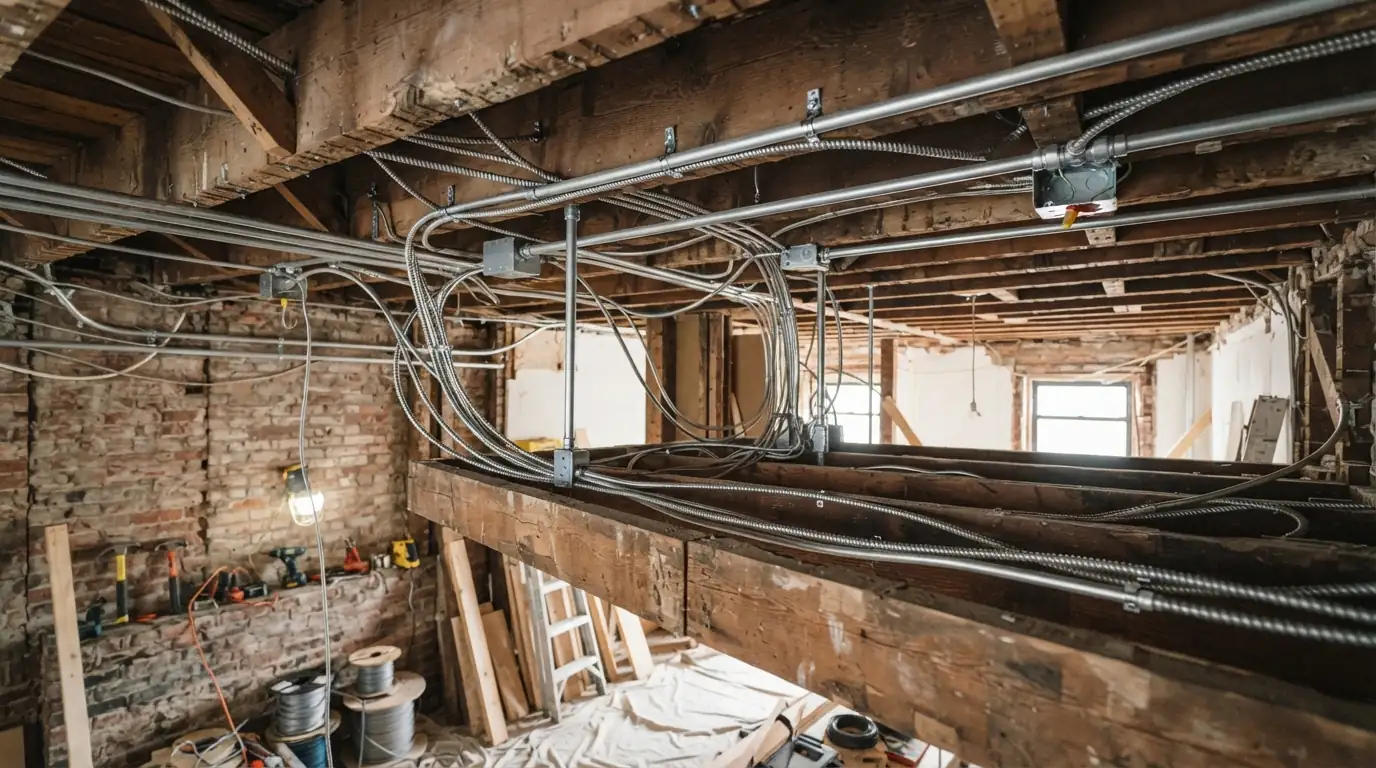
- Outlet location set behind the screen
- Power and cable routes hidden in the wall
- Everything tested with the TV mounted
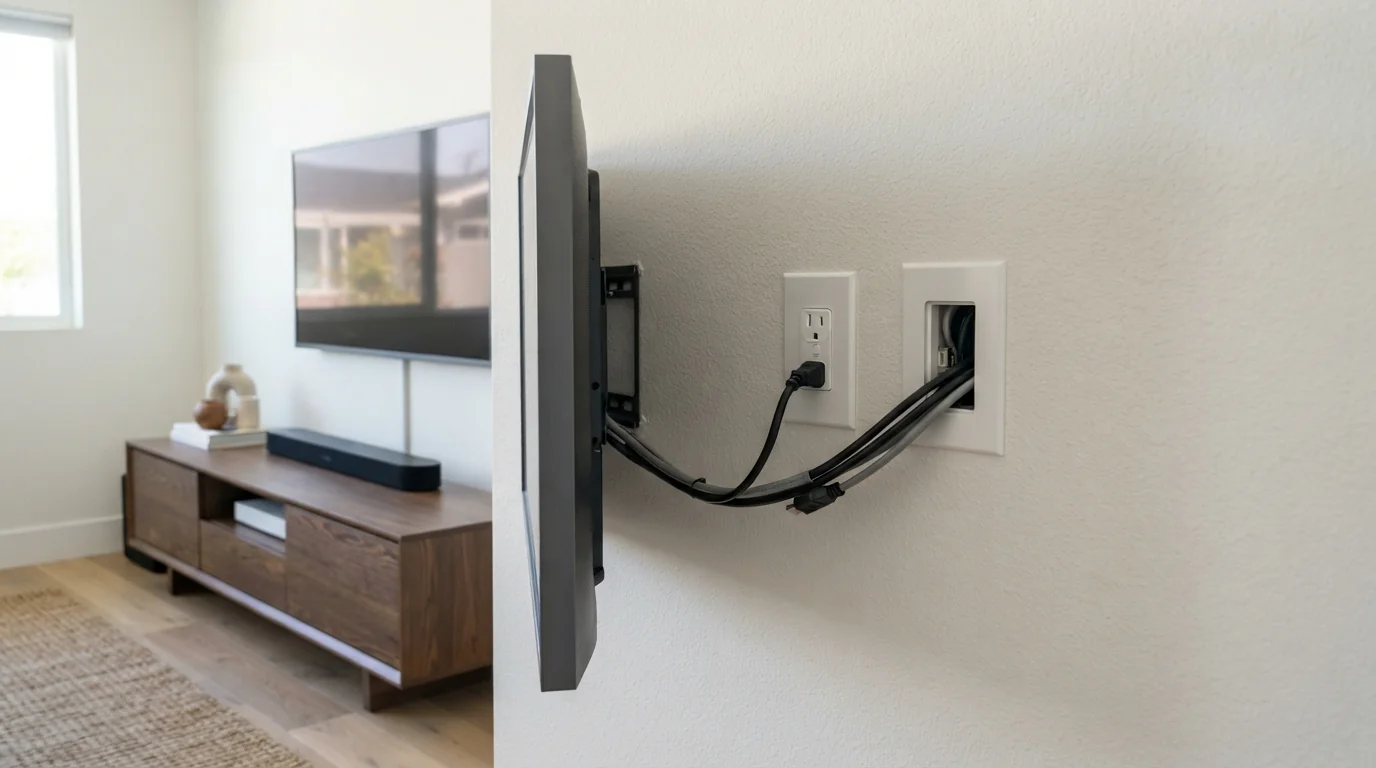
Hiding TV wiring in a New York home means installing a recessed outlet behind the screen, fed from a nearby circuit or a listed in-wall power kit, and running HDMI and network cables through the wall in low-voltage cable rated for it. Running the TV's own power cord inside the wall is not allowed, because appliance cords are not rated for concealed use.
Rather ask a person?(929) 755-0293What hiding TV wiring involves
The clean look comes from two separate things: power and signal. Power needs a real outlet behind the TV, recessed so the plug does not push the screen off the wall. Signal cables, such as HDMI, network and speaker wire, can run inside the wall in cable rated for in-wall use, usually through a low-voltage bracket at the TV and another near the media console.
What cannot happen is pushing the TV's power cord or an extension cord through the wall; appliance cords are not made for concealed installation. Apartment walls in the city are often plaster on lath or masonry, which changes how the openings are made. For the network side of a home theater, see data and cable wiring.
Updated September 2026
What sets the cost of TV wiring
The wall decides most of it.
- Wall typeDrywall is quick; plaster and masonry take more care.
- Power sourceA nearby circuit with capacity keeps the run short.
- Number of cablesEach HDMI, network or speaker run adds work.
- Mount height and locationOver a fireplace or on a corner adds complexity.
- Surge protectionProtecting the electronics adds a device.
In-wall outlet, power kit or raceway
| Factor | Recessed outlet on a circuit | Listed in-wall power kit | Surface raceway |
|---|---|---|---|
| What it is | A real outlet behind the TV | Plug-in inlet with a listed in-wall connection | Covered channel on the wall surface |
| Looks | Invisible | Invisible | Visible but paintable |
| Best for | Most installations | Where a circuit cannot be extended | Masonry walls |
| Wall work | Small openings | Two openings | None |
A recessed outlet on a real circuit is the cleanest and most durable. Raceway is the honest answer on solid masonry.
Hiding it yourself versus calling us
| Task | Doing it yourself | With us |
|---|---|---|
| Power cord through the wall | Not allowed; appliance cords are not rated for it | Recessed outlet or listed kit |
| Extension cord behind the TV | Overheats and is a fire risk | A real outlet |
| In-wall HDMI | Needs in-wall rated cable | Rated cable and plates |
| Cutting plaster | Easy to crack a large area | Scored and cut cleanly |
Mounting the TV itself is often a handyman's job. The outlet and anything electrical inside the wall should be an electrician's.
Three ways to clean up a TV wall
Recessed Outlet Behind the TV
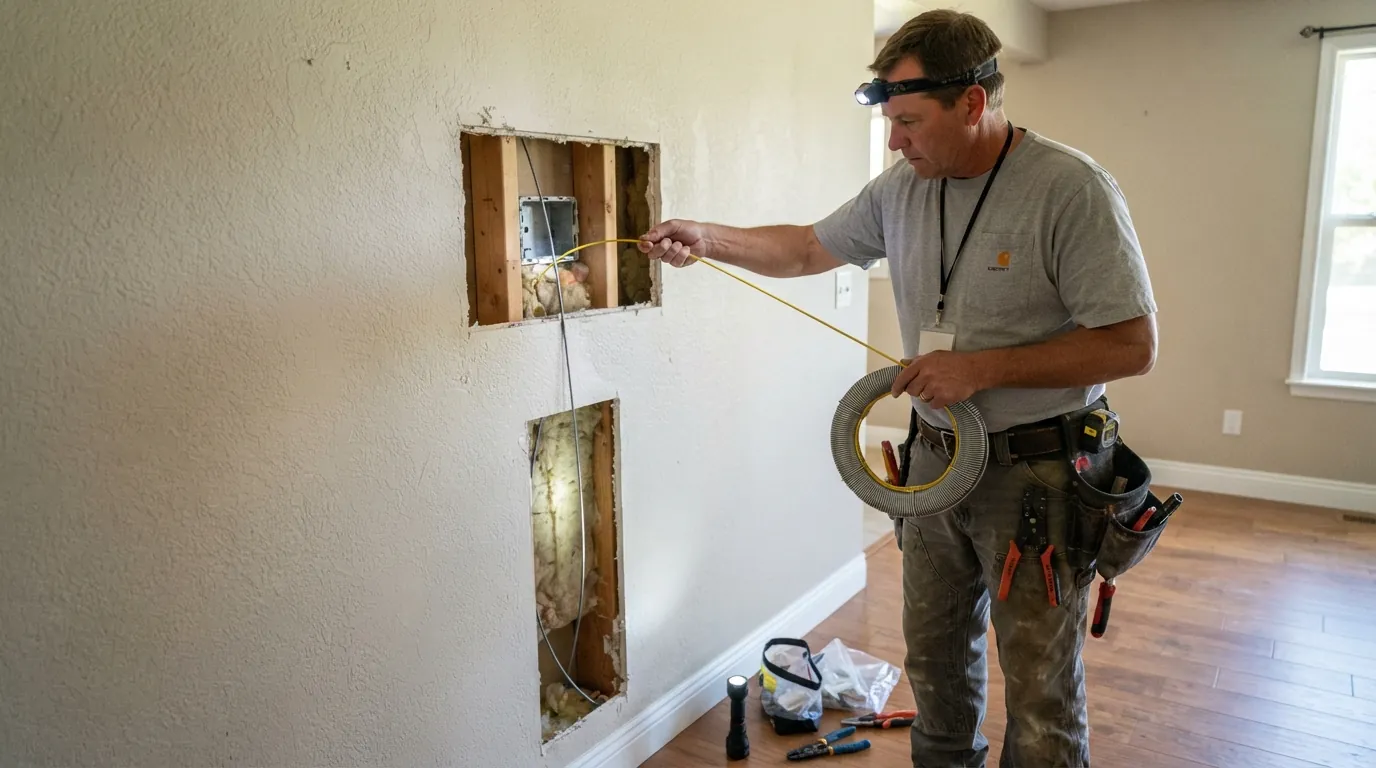
A recessed outlet sits back in the wall, so a standard plug does not stop the TV from mounting flush. We feed it from a nearby circuit that has capacity, usually the outlet at the baseboard below, and place it where the mount will cover it. If a soundbar or streaming box also lives behind the screen, the outlet can be a duplex or have space for both. The result is a TV that plugs in the way it was designed to, with nothing visible.
Planning range (national sources, 2026): $75 to $150 per hour; service call fees $79 to $179. Coastal-market pricing and building access change the figure; this is a planning band, never a quote.
Hidden In-Wall Cable Runs
HDMI, network and speaker cables run inside the wall between a low-voltage plate behind the TV and another near the console, in cable rated for in-wall use. We keep them apart from the power wiring and leave a pull string or conduit where the wall allows, so a new cable standard later does not mean opening the wall again. For long runs, a network cable often beats a long HDMI cable for reliability, so we plan the connection with the equipment you use.
Media Wall and Soundbar Power
A full media wall may hold a TV, a soundbar, a subwoofer, a game console and a streaming box, all wanting power in different spots. We plan outlets where each piece will actually sit, add surge protection for the electronics, and put the whole setup on a circuit that is not shared with a space heater or window AC. Over a fireplace, we check the heat and the mounting surface before recommending the TV go there at all, since heat shortens a television's life.
City walls change the method
Many New York apartment walls are plaster on wood or metal lath, and some are solid masonry, which makes hiding wires different from the drywall shown in most online guides. Plaster needs careful cutting to avoid cracks; masonry sometimes means a surface raceway painted to match rather than an in-wall run. We look at the wall first and tell you which method will give the cleanest result before anything is cut.
How a TV wiring job runs
Plan the wall
Mount height, equipment and wall type.
Mark the locations
Outlet and plates placed behind the mount.
Run power and cables
Small openings, rated cable, power kept apart.
Mount-ready check
Everything tested before the TV goes up.
Final test
Power, picture and sound checked with the TV mounted.
TV wiring questions
No, appliance cords are not rated for in-wall use; a recessed outlet is the right way.
Yes, with careful cutting; masonry may need a raceway.
We handle the electrical; mounting can be coordinated with your installer.
Only if the heat and wall surface allow it; we check first.
Cable rated for in-wall use.
It is worth adding for expensive electronics.
Usually small, behind the TV and near the console.
Related work in the same system
Get rid of the hanging cords
Call any hour. Tell us the wall type and where the TV and console will sit.