Electric Baseboard Heater Installation and Repair in New York
A cold baseboard heater is usually a thermostat, a breaker or a loose connection, not a dead heater. We find which, fix it, and add circuits when a room needs more heat than it has.
- Calls answered 24/7
- Thermostat and heater tested
- Circuits sized to the heaters
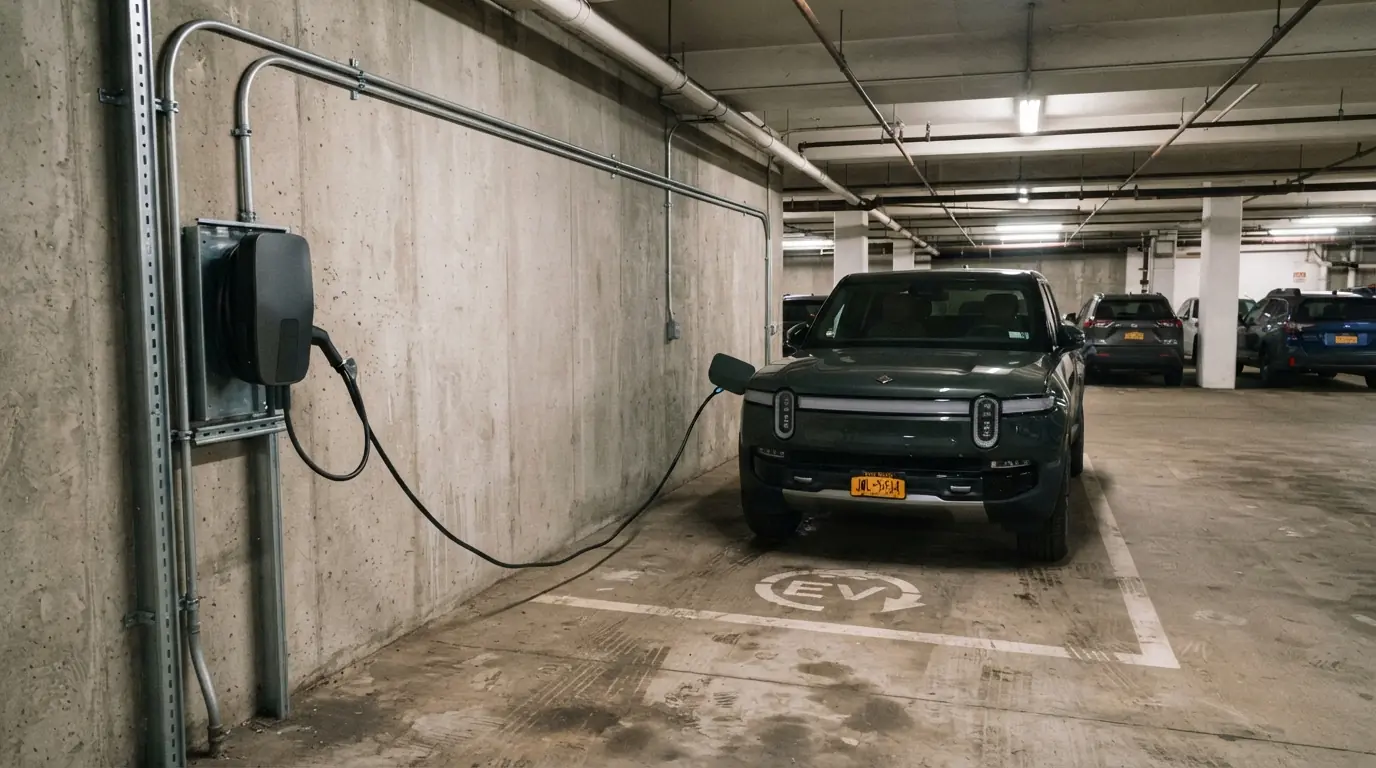
- Thermostat, breaker and heater tested
- Faulty part repaired or replaced
- Circuit load checked
Electric baseboard heaters in the Warwick area and in New York run on 240 volt circuits controlled by a wall or built-in thermostat, and most failures come from the thermostat, a tripped double-pole breaker or a loose connection at the heater. A heater that stays on constantly usually has a failed thermostat, which is a quick replacement.
Rather ask a person?(929) 755-0293What baseboard heat service involves
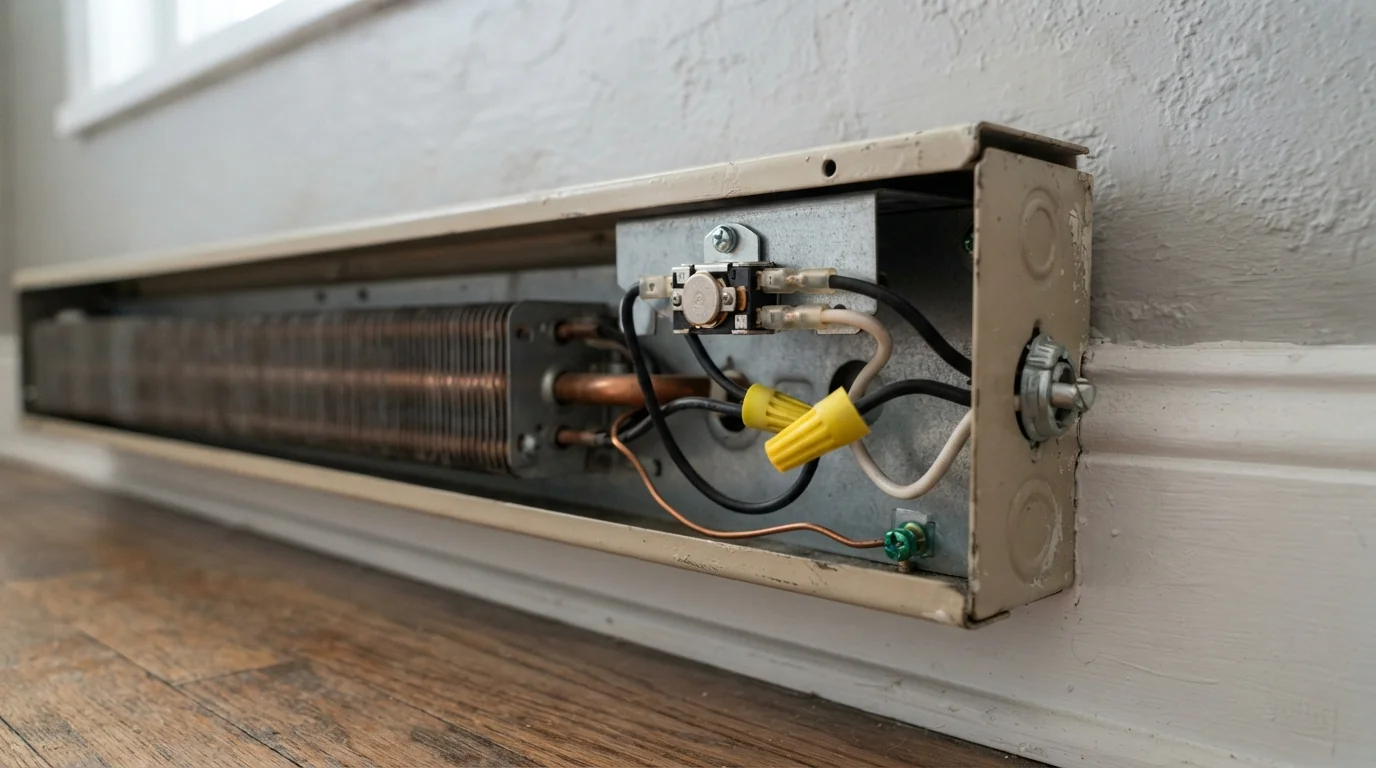
Baseboard heaters are simple: a heating element, a limit switch and a thermostat, on a 240 volt circuit. That simplicity makes them reliable, and it means problems are usually in the few parts around them. We test the circuit at the breaker, the thermostat and the heater's own connections before replacing anything.
Heaters also fail from the outside in: furniture pushed against them, dust packed into the fins, or a heater pulled away from the wall. Adding heaters to a cold room means checking whether the circuit has capacity, since several heaters on one line can exceed it. If you are replacing baseboard heat with heat pumps, see heat pump electrical.
Updated September 2026
What sets the cost of baseboard heat work
Most repairs are parts-light; new circuits are where cost grows.
- Diagnosis timeFinding which part failed is most of a repair visit.
- Thermostat typeProgrammable line-voltage models cost more than mechanical ones.
- Heater replacementNeeded only when the element itself has failed.
- New circuitsA new 240 volt run and double-pole breaker add work.
- Panel spaceA full panel may need tandems or a subpanel.
Doing it yourself versus calling us
| Task | Doing it yourself | With us |
|---|---|---|
| Vacuuming the fins | A good yearly habit | Checked during service |
| Replacing a thermostat | 240 volts on both wires, easy to miss | Rated thermostat, both legs verified off |
| Using a smart thermostat | Most are low voltage and will fail | Line-voltage model chosen |
| Adding a heater | Circuit capacity is easy to exceed | Load totaled per circuit |
Keep furniture and drapes clear and vacuum the fins each fall. Anything behind a cover plate carries 240 volts and belongs to an electrician.
Three baseboard heat problems
Baseboard Heater Repair
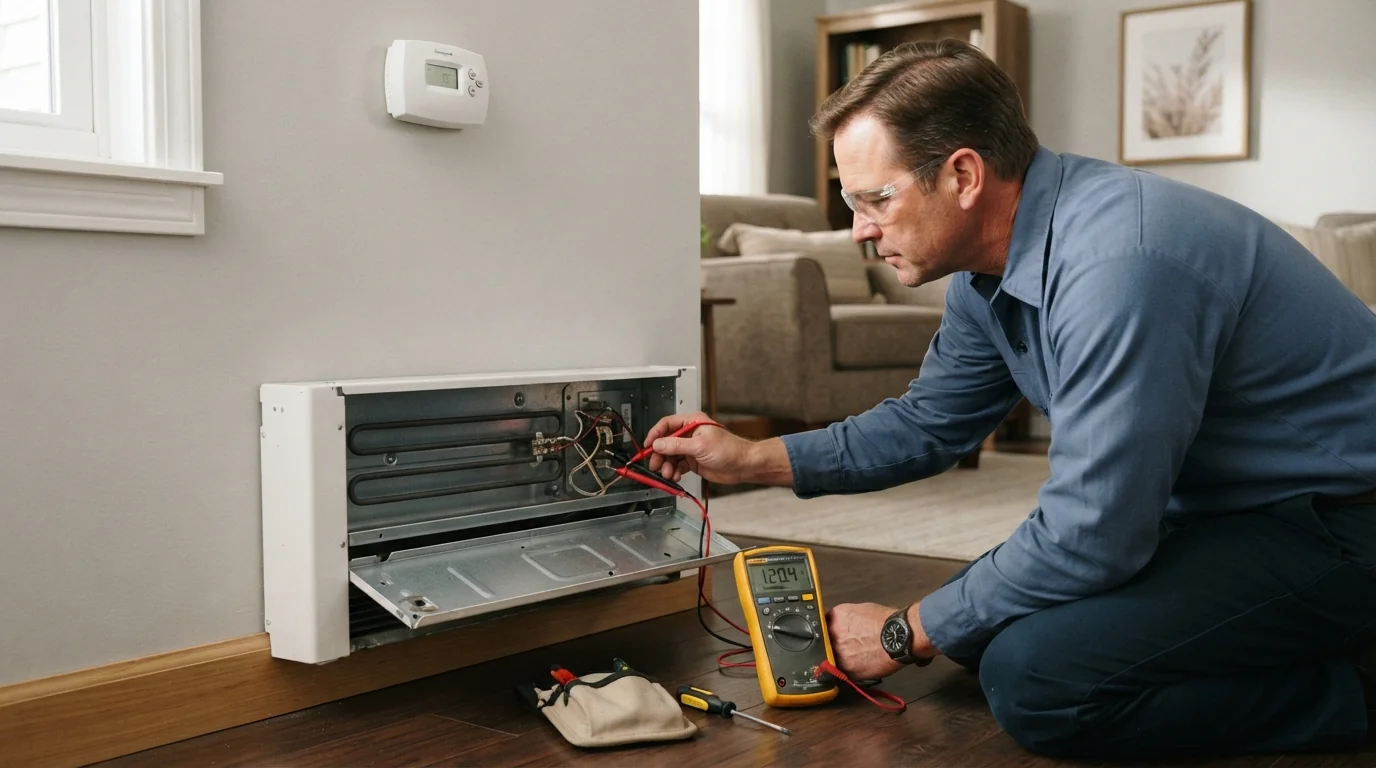
A heater that stays cold while the others work usually has a failed limit switch, a broken element or a loose wire in its junction box. One that smells burnt the first cold night is often burning off dust, but a smell that persists means a connection is heating. We test the element and limit switch, remake connections, and replace the heater only when the element itself has failed. Heaters pulled loose from the wall are reattached so the cold air stops leaking in behind them.
Planning range (national sources, 2026): $75 to $150 per hour; service call fees $79 to $179. Coastal-market pricing and building access change the figure; this is a planning band, never a quote.
New Baseboard Circuits
Adding a heater to a finished basement or a cold addition means a new 240 volt circuit sized to the heaters it feeds. We total the wattage of the heaters on each circuit, keep within the circuit's capacity, and place the thermostat where it reads the room rather than the draft from a window. Heaters under windows work best, since they counter the cold air falling off the glass. The panel needs two free spaces for each new double-pole breaker.
Line-Voltage Thermostat Replacement
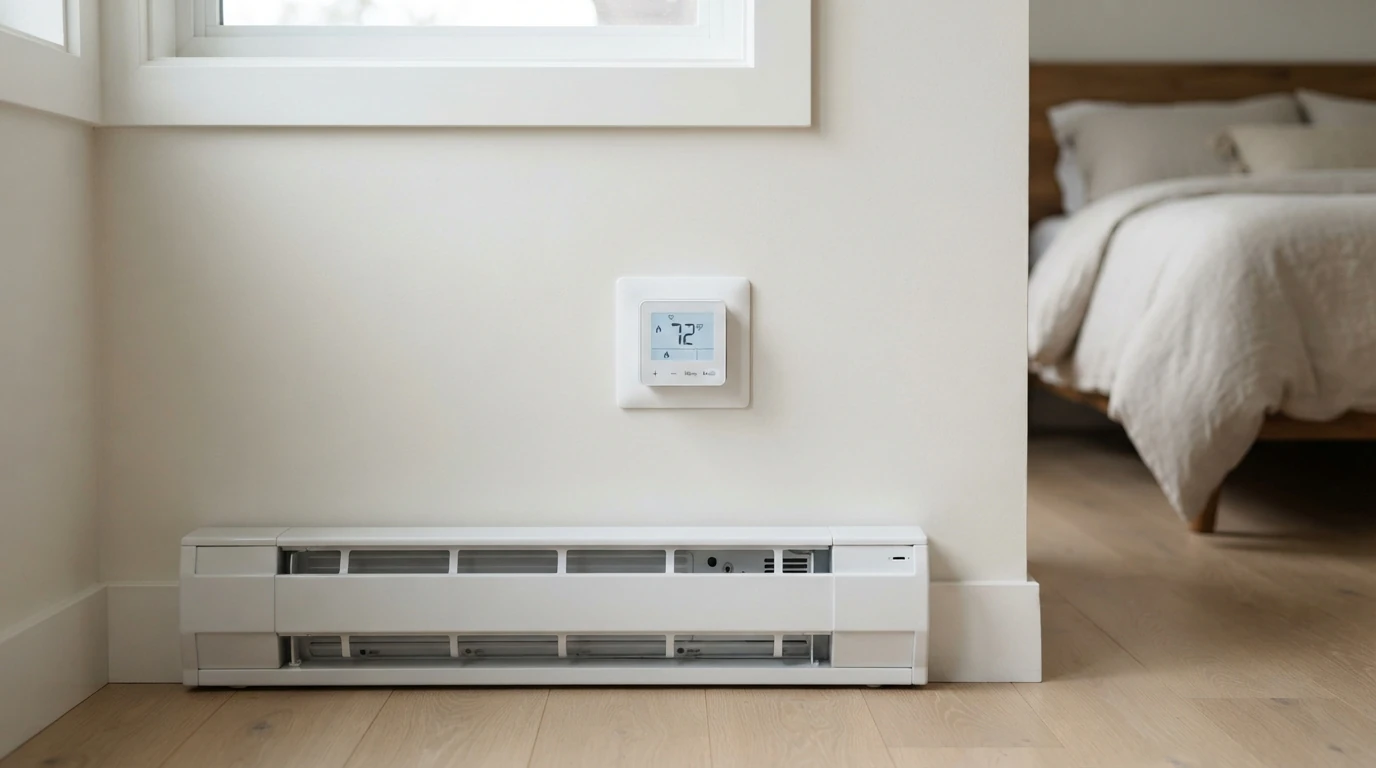
Most baseboard thermostats are line voltage, meaning they switch the full 240 volts to the heater. Old mechanical ones drift, click loudly and cause temperature swings of several degrees. A modern electronic or programmable line-voltage thermostat holds temperature closely and can lower the heat when nobody is home. Because these thermostats carry full heater voltage, a standard low-voltage smart thermostat will not work on them; the replacement must be rated for line voltage and for the total wattage of the heaters it controls.
Baseboard heat in Warwick houses
Electric baseboard heaters that stop working are a regular call in Warwick, often in older houses where a basement, an addition or a converted porch was heated with baseboard rather than tied into the main system. Many of those heaters are decades old and fine; what fails is the thermostat or a connection. Checking those first usually saves the cost of a new heater, and the visit ends with the circuit load confirmed.
How a baseboard heat visit runs
Describe the problem
Which heaters, which rooms, any smell or tripping.
Test the circuit
Breaker, thermostat and heater checked.
Repair
Thermostat, connection, limit switch or heater replaced.
Check the load
Heaters per circuit confirmed within capacity.
Confirm heat
Heater cycles on and off at the set point.
Signs the baseboard heat needs attention
- One heater stays cold
Limit switch, element or a loose connection.
- Heater never shuts off
Almost always a failed thermostat.
- Breaker trips when heat comes on
An overloaded circuit or a short.
- Burning smell that lingers
A connection is heating. Turn it off.
- Scorch marks on the wall or carpet
Furniture or drapes too close.
- Room swings hot and cold
Worn mechanical thermostat.
Baseboard heater questions
Usually the thermostat, a tripped breaker or a loose connection.
Dust burning off; a persistent smell needs checking.
Only one rated for line voltage.
It depends on wattage; we total it per circuit.
Yes, calls are answered 24/7.
Only if the element has failed; many old ones work fine.
No, keep clearance to avoid scorching.
Related work in the same system
Get the baseboard heat working again
Call any hour. Tell us which heaters are cold and whether anything smells or trips.