Co-op and Condo Electrical Work in New York
In a co-op or condo, the electrical work is only half the job; the other half is what the board and the managing agent need to see. We prepare the scope, drawings and filings for approval, then work inside the building's rules.
- Calls answered 24/7
- Board-ready scope and drawings
- Works within building hours
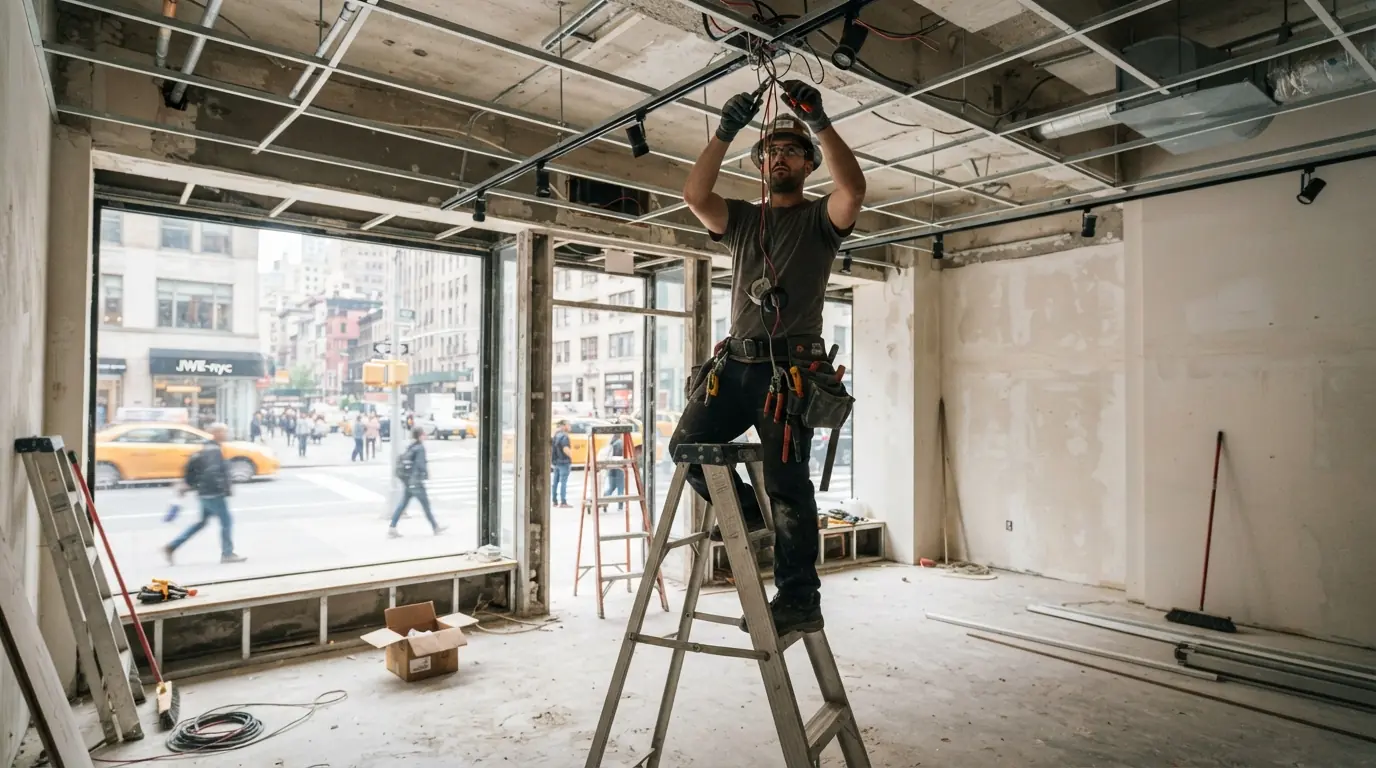
- Alteration requirements reviewed
- Scope and filings prepared for approval
- Work scheduled inside building rules
Co-op and condo electrical work in New York usually requires board or managing agent approval under an alteration agreement, a Department of Buildings filing for any new circuits or panel work, and scheduled access to shared risers and meter rooms. Planning the paperwork first keeps the job from stalling once walls are open.
Rather ask a person?(929) 755-0293What co-op and condo electrical work involves
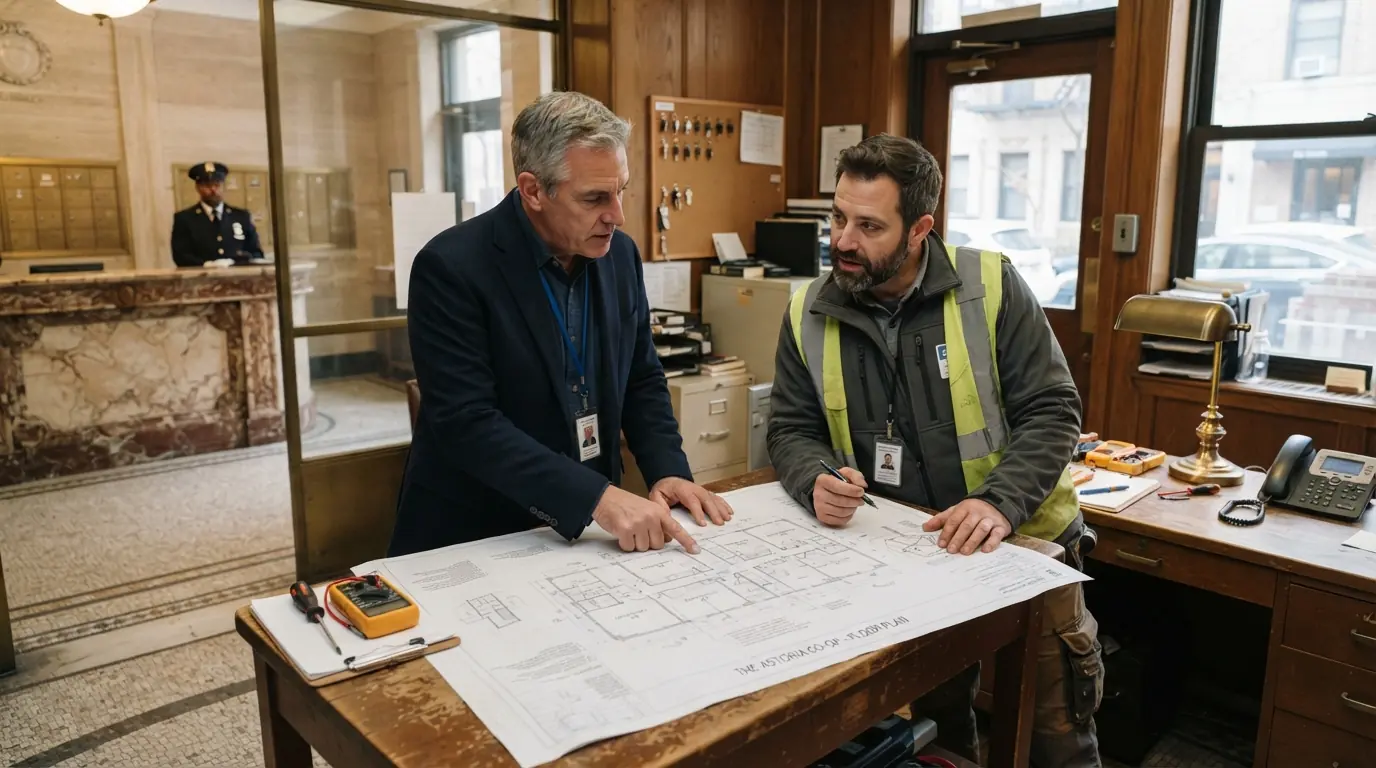
Every building has its own rules: approved working hours, which trades need to submit documents, whether the building's architect or engineer has to sign off on drawings, and how risers and meter rooms are accessed. The electrical scope has to fit those rules before any work starts, or it stops halfway.
We read the alteration agreement with you, prepare the electrical scope and drawings the board asks for, file the permit, and schedule anything that touches shared equipment through the managing agent. For the wiring side of a kitchen or bath remodel, see renovation electrical; this page covers the building side of the process.
Updated September 2026
What drives the cost of co-op and condo work
Building requirements add time that a house job does not have.
- Approval documentsDrawings and reviewer responses add office time.
- Working hoursRestricted hours stretch the calendar.
- Shared equipmentRiser and meter work needs scheduled shutdowns.
- Scope of the renovationMore circuits and a new panel mean more filings.
- Reviewer changesRevisions requested by the building's engineer.
Three kinds of building-approved work
Alteration Agreement Electrical Work
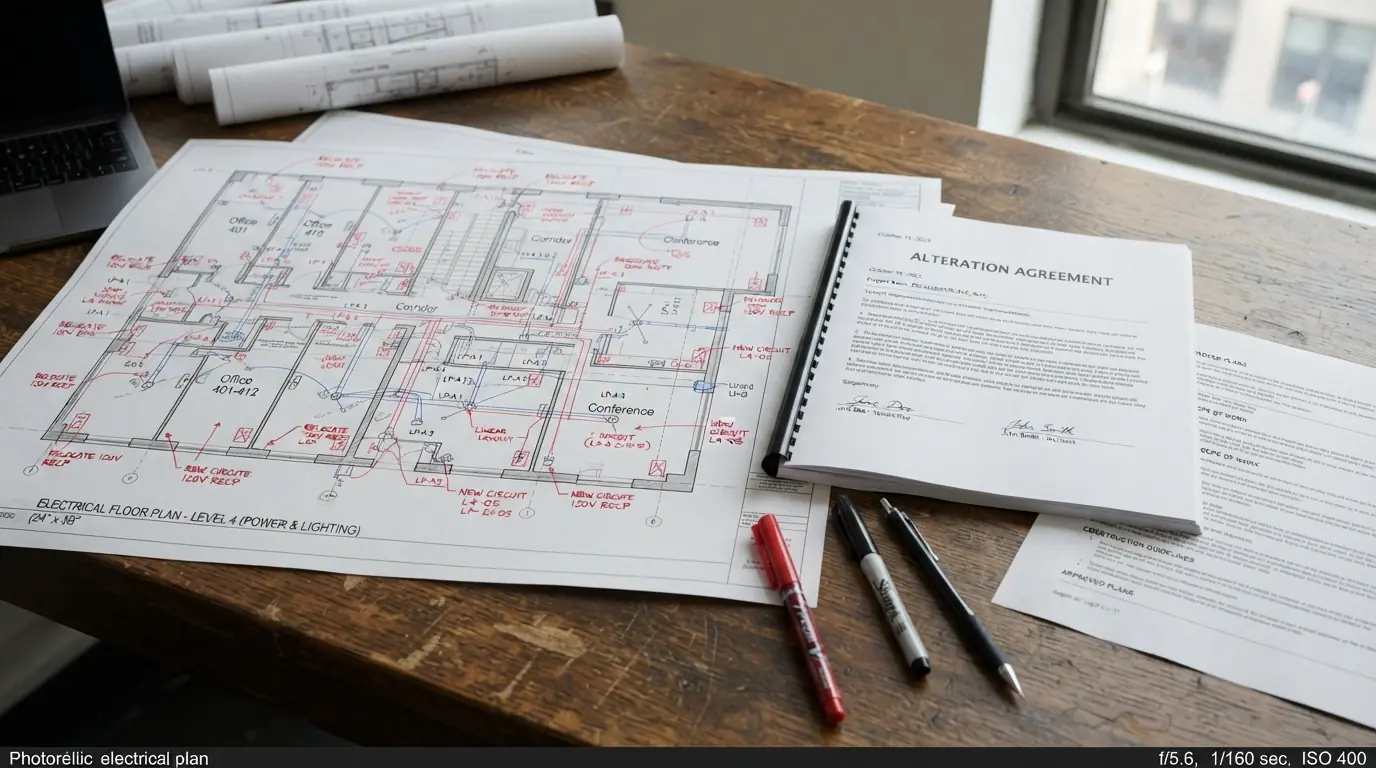
Most renovations in a co-op or condo run under an alteration agreement that lists what the board needs: a scope of work, drawings, a schedule and filings. We prepare the electrical part in the form the building's reviewer expects, answer their questions, and adjust the plan if they ask for changes. Approval before work starts is what protects the owner from a stop-work order halfway through, and from being told later to undo work the board never saw.
Apartment Combination Wiring
When two units become one, the building has to agree to how the electrical services combine: one meter or two, which feeder stays, whether the riser can carry the combined load. The board usually wants that answered in writing before approving the combination. We prepare the load calculation and the service plan the building's engineer reviews, then coordinate the meter change with the utility and the building on a scheduled date, so neighbors on the same riser know exactly when power will be interrupted and for how long.
Building-Approved Panel and Riser Work
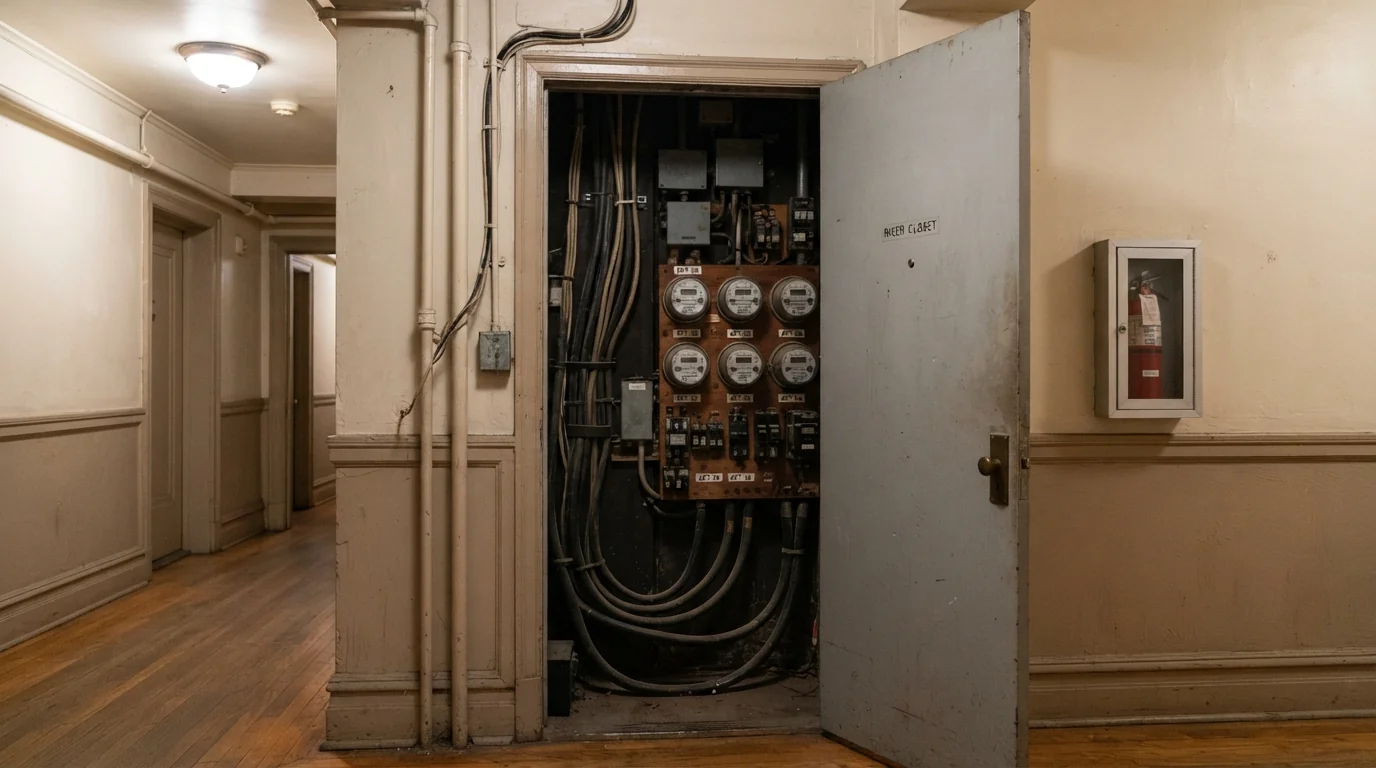
Replacing an apartment panel or its feeder often means work in the riser or the meter room, which the building controls. We request access through the managing agent, schedule any shutdown that affects neighbors with advance notice, and document the condition of the shared equipment before and after. The building gets a record of what changed in its risers, which matters to the next contractor and the next board review, and photos of the riser before and after go into the close-out package.
What we prepare for the building
- Electrical scope written for the alteration agreement
- Drawings or circuit layout in the reviewer's format
- Load calculation where capacity is in question
- DOB filing for the electrical work
- Access requests through the managing agent
- Shutdown notices for any shared equipment
- Close-out documents for the building's file
Filings and existing buildings in the city
Electrical filings and inspection requests in New York City now run through DOB NOW, and the Department of Buildings can issue OATH violations when electrical work breaks the code. The 2025 Electrical Code also added its own chapter on existing installations, which is what applies to the older risers and panels most co-ops and condos contain. Boards increasingly ask contractors to show both the filing and how existing equipment was handled.
Why co-op jobs take longer to start
Board review is usually the longest step, and it happens before any wiring. Building hours then set how many working days the electrical takes, and shared-equipment work waits for a scheduled shutdown. We submit the electrical package early so the review runs while the rest of the design is finished, rather than after.
How co-op and condo work runs
Read the agreement
Building rules and required documents confirmed.
Prepare the package
Scope, drawings and load information for review.
Approval and filing
Board sign-off and DOB filing.
Scheduled work
Inside building hours, shutdowns noticed ahead.
Close out
Inspection and documents for the building's file.
Co-op and condo questions
For anything beyond simple repairs, usually yes.
Yes, for the electrical scope.
The managing agent, with our request and notice.
Often, if the building and the utility approve.
Yes, for filed electrical work.
Only where the building allows it.
We revise the electrical package and resubmit.
Related work in the same system
Riser & Meter Bank Upgrades
DetailsEmergency & Exit Lighting
DetailsTemporary Construction Power
DetailsRestaurant Electrical
DetailsGuides: EV charging in an apartment building and NYC permits and the 2025 code and Gas to induction in an apartment and Rewiring a prewar apartment
Get the electrical approved and done
Call any hour. Send the alteration agreement and we will tell you what the board will want to see.