Whole-House Surge Protection in New York
Today's appliances run on circuit boards, and circuit boards are what surges destroy. A panel-mounted surge protector guards every circuit at once, including the heat pump, the charger and the refrigerator you cannot plug into a power strip.
- Calls answered 24/7
- Mounted at the panel
- Status light you can check
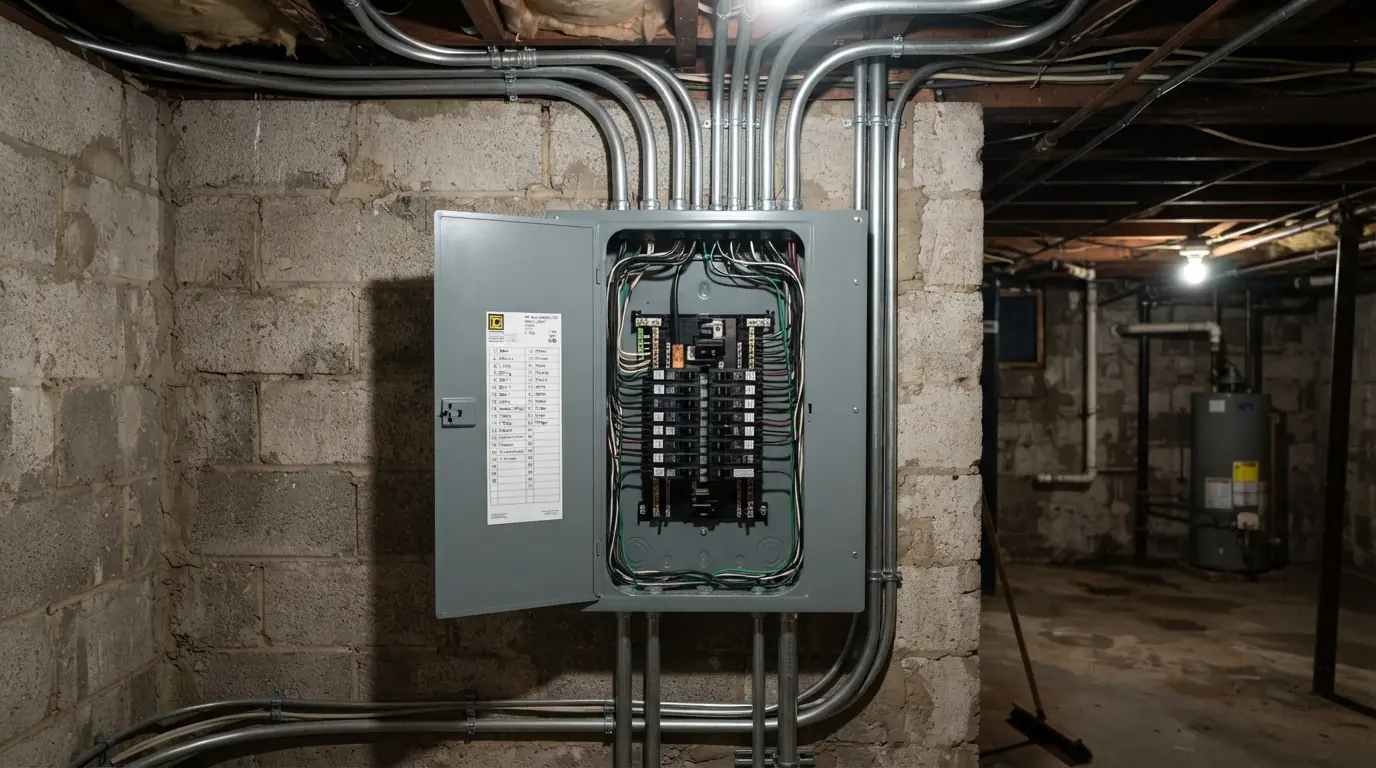
- Panel checked for space and grounding
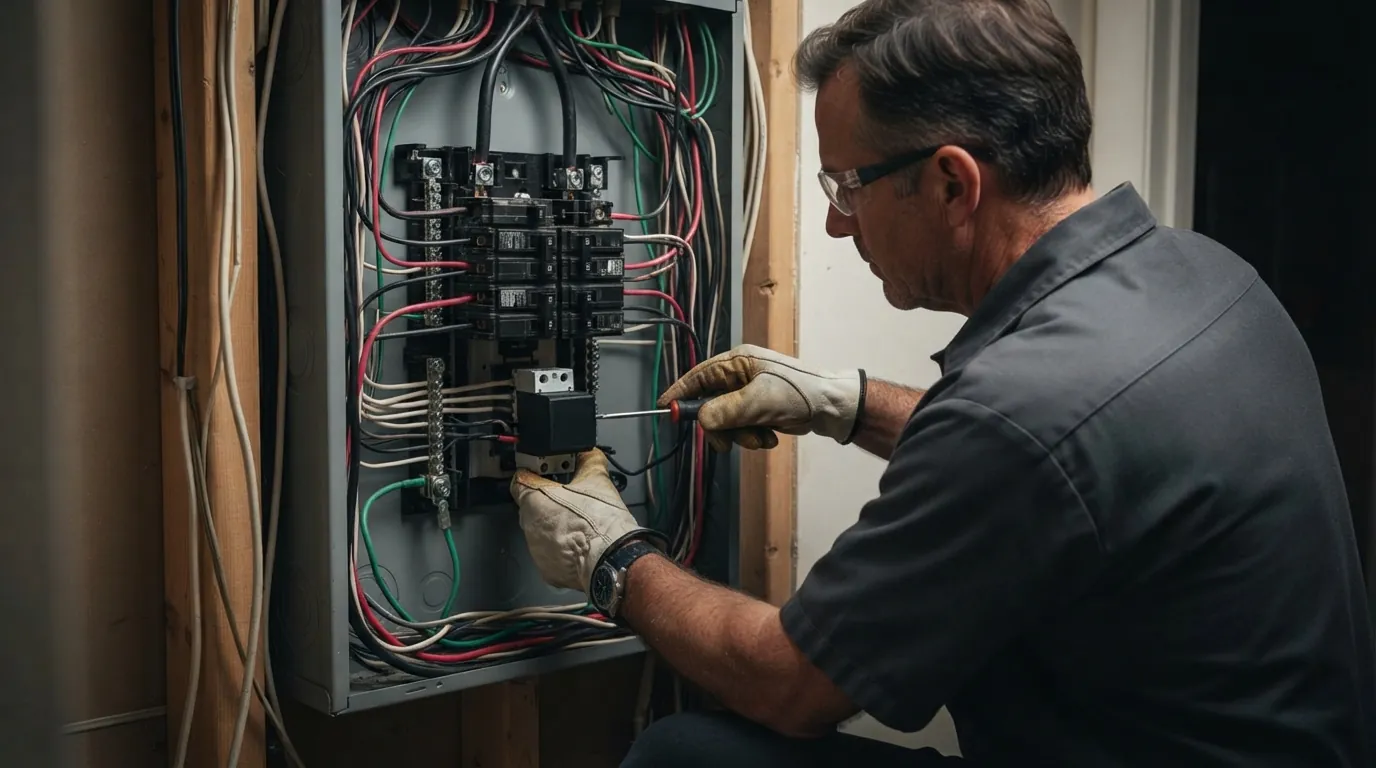
- Surge protector sized and mounted
- Status verified and labeled
Surge protectors we install include Square D, Siemens, Eaton and Leviton panel-mounted units.
A whole-house surge protector in New York is a Type 2 device mounted at the main panel that diverts voltage spikes to ground before they reach circuit boards in appliances, chargers and electronics. 2026 consumer cost data puts installation at about $300 on average, with most jobs between $70 and $700.
Rather ask a person?(929) 755-0293What a surge protector install includes
- Panel space and breaker availability checked
- Grounding and bonding verified
- Device matched to the panel and service
- Mounted with the shortest possible leads
- Status indicator placed where it can be seen
- Panel directory labeled for the device
- Advice on point-of-use protection for electronics
What a whole-house surge protector does
Surges come from outside, like utility switching and lightning on the lines, and from inside, like motors in a compressor or elevator switching on and off. A panel-mounted protector catches most of the large ones where power enters, and point-of-use strips catch what is left at sensitive electronics. The two work together.
Installation is quick when the panel has space and a sound ground. The device lands on a breaker or directly on the service, its leads kept as short as possible, and its status light placed where you can see it. Recent editions of the national code call for surge protection when a dwelling's service is replaced, so we often add it during panel upgrades.
Updated September 2026
Two parts of surge protection
Type 2 Panel-Mounted Surge Protector
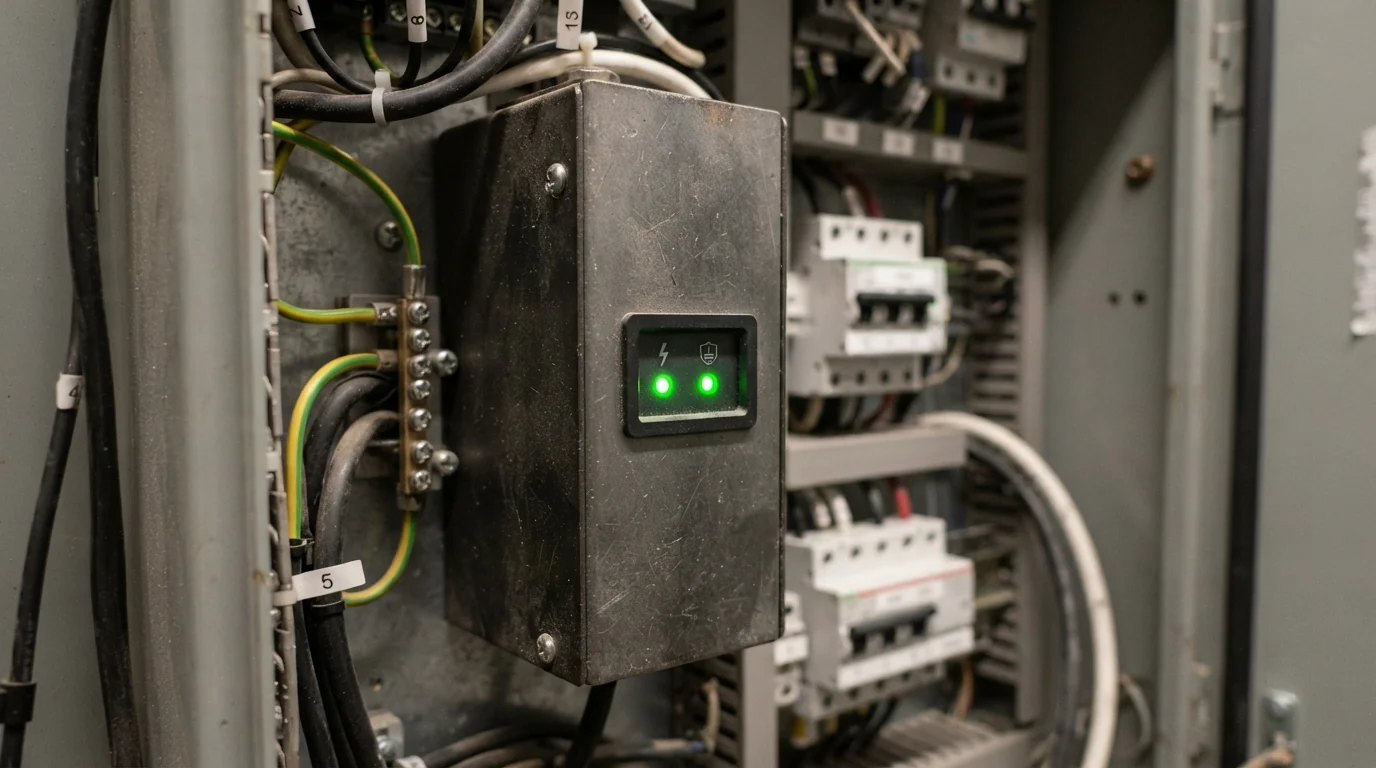
A Type 2 surge protector mounts at the main panel, usually on a dedicated double-pole breaker, and protects every circuit in the house from spikes arriving on the service. Lead length matters more than most people realize: every extra inch reduces how well it works, so we mount it right beside the breaker it connects to. Most units have indicator lights that show whether protection is still active, since the device sacrifices itself over time as it absorbs surges.
Planning range (national sources, 2026): about $300 on average, most projects $70 to $700. Coastal-market pricing and building access change the figure; this is a planning band, never a quote.
Protecting Heat Pumps, Chargers and Electronics
The equipment most exposed to surges is the equipment with the most electronics: variable-speed heat pumps, EV chargers, induction ranges, refrigerators with control boards, and the home office. A panel device protects all of it from outside surges. Where a heat pump or charger sits far from the panel, a second protector at that equipment adds a layer, and point-of-use strips protect computers and televisions from what remains. We check the grounding first, since a surge protector depends entirely on it.
How a surge protector install runs
Check the panel
Space, breaker type and grounding confirmed.
Choose the device
Rated for the panel and the service.
Install
Mounted beside its breaker with short leads.
Verify
Status lights checked, ground confirmed.
Label
Directory updated so it is not mistaken for a spare.
More electronics on every service
More than 29,000 electric vehicles were registered in New York City and Westchester by early 2022, and Con Edison's long-term plan targets support for 400,000 charging plugs by 2035, so chargers are becoming ordinary household equipment. Outside the city, in Warwick and across Orange County, the state's 2023 NEC also adds requirements like outdoor emergency disconnects and expanded GFCI. Both trends put more sensitive electronics on the same service a surge can reach.
What sets the cost of surge protection
Most installs are short; the panel's condition decides the rest.
- Device typeHigher-rated units with replaceable modules cost more.
- Panel spaceA full panel may need a tandem swap to free a double-pole space.
- Grounding conditionA weak ground must be corrected before protection works.
- Additional devicesA second protector at a heat pump or charger adds cost.
- Done with other workAdding it during a panel job saves a separate visit.
Panel protector, equipment protector or power strips
| Factor | Panel (Type 2) | At the equipment | Point-of-use strips |
|---|---|---|---|
| Protects | Every circuit from outside surges | One appliance, both directions | Plugged-in electronics only |
| Covers hardwired equipment | Yes | Yes, that unit | No |
| Installed by | Electrician | Electrician | Homeowner |
| Best used | In every home | Heat pumps, chargers far from the panel | Computers and TVs |
The panel device is the foundation. Strips at the television and computer still help, because they catch the smaller surges the panel device lets through.
Surge protection questions
It reduces it; a direct strike can exceed any device.
Yes, for computers and televisions.
Until it has absorbed enough surges; the status light tells you.
Recent code editions call for it when a dwelling service is replaced.
Usually, if there is space and a sound ground.
From outside surges, yes; a local device adds more.
2026 data puts the average around $300 installed.
Related work in the same system
Fuse Box to Breaker Conversion
DetailsPanel replacement
DetailsInduction Range & Cooktop Wiring
DetailsElectrical Service Upgrade
DetailsGuides: Standby vs portable generator
Protect everything on the panel
Call any hour. A quick look at the panel tells us which device fits.